‘Shameful’ Transformation: Trump’s EPA Accused of Prioritising Big Business Over Public Health
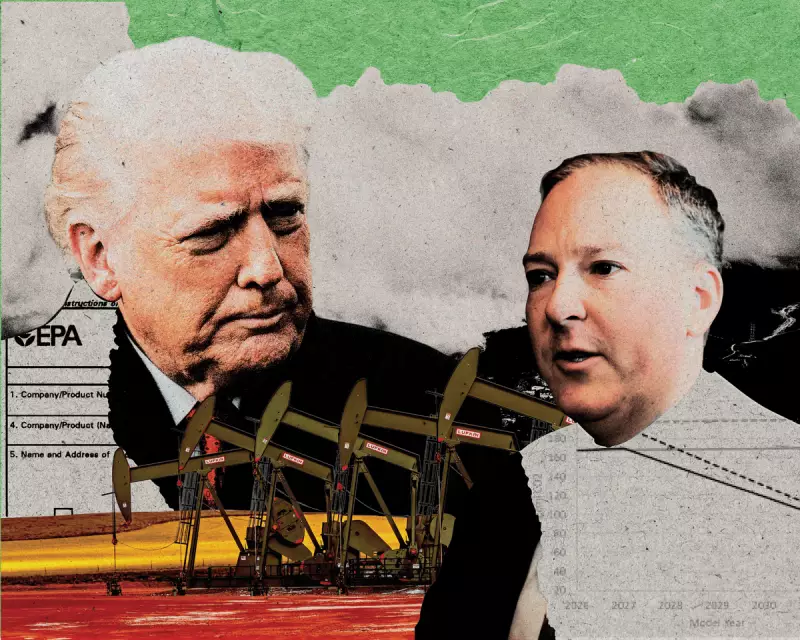
As Donald Trump’s second term reaches its one-year mark, the Environmental Protection Agency (EPA) stands accused by numerous critics of effectively abandoning its core mission to safeguard public health and the environment. The agency, established in 1970, is undergoing what observers describe as a radical transformation that favours industrial interests over regulatory protection.
A Dramatic Shift in Regulatory Philosophy
While some anticipated a loosening of pollution standards under the Trump administration, the scale and nature of recent changes have surprised even seasoned environmental policy experts. The EPA appears to be systematically dismantling its foundational purpose as an environmental regulator, according to William Reilly, who served as EPA administrator under President George H.W. Bush.
“The EPA was designed to protect public health and the environment and did a remarkably effective job of that,” Reilly stated. “That record is now at risk. The administration seems to conceive the purpose of the agency as solely promoting business, which has never been the agency’s mission. That’s revolutionary – it’s not been seen before.”

Unprecedented Regulatory Rollbacks
Under current administrator Lee Zeldin, the EPA has initiated an astonishing 66 environmental rollbacks during Trump’s first year back in office, according to data compiled by the Natural Resources Defense Council. This comprehensive list includes:
- Paring back limits on mercury and soot emissions from vehicles and power plants
- Cancelling grants for renewable energy projects
- Withdrawing aid for communities affected by toxic contamination
- Weakening clean water protections
- Removing references to the climate crisis from official EPA communications
Perhaps most significantly, the agency has announced its intention to rescind the landmark 2009 “endangerment finding” that established greenhouse gases as harmful to human health. This move would effectively dismantle all federal climate-related regulations.
Controversial Valuation of Human Life
In a particularly contentious development, the EPA has unveiled a new approach to regulatory cost-benefit analysis that assigns zero monetary value to human lives when setting air pollution standards. The agency will continue to weigh compliance costs for industry while disregarding the health costs borne by the public.
This represents a dramatic departure from previous practice, where the EPA calculated substantial public health benefits from pollution reduction. Previous analysis suggested that reducing emissions of harmful soot particles delivered approximately $77 in benefits for every $1 spent by businesses on compliance.
“This move ignores the incredible success we’ve had in reducing air pollution while growing our economy,” commented Jenni Shearston, an environmental epidemiologist at the University of Colorado Boulder. “It appears the EPA is putting more importance upon the cost to industry than the cost to the public. I’m worried this will mean more air pollution will be emitted as a result.”
Administrator’s Unconventional Priorities
Lee Zeldin, a former New York congressman, has emerged as an enthusiastic advocate for the Trump administration’s agenda, making numerous appearances on conservative media outlets. However, his focus has raised eyebrows among environmental professionals.
Rather than emphasising traditional EPA priorities like reducing toxic exposures, Zeldin has publicly declared his intention to thrust “a dagger straight into the heart of the climate change religion,” advocated for coal revival, and promoted gasoline vehicles over electric alternatives. In an unusual move for an environmental regulator, he has also made advancing artificial intelligence development a stated agency priority.

Internal Dissent and Staff Reductions
The EPA’s transformation has generated significant internal turmoil. The agency’s workforce has been reduced by approximately 25% through firings and early retirements, with entire divisions including the office of research and development facing closure. Enforcement actions against polluters have declined substantially.
Hundreds of EPA employees signed an open letter last summer accusing the administration of “recklessly undermining” the agency’s mission and fostering a “culture of fear.” This protest resulted in 140 staff suspensions. Anonymous testimonials collected by employee unions reveal widespread demoralisation, with one staffer describing the experience as “hard, insulting, demeaning, horrific, stressful.”
Agency Response and Future Implications
The EPA has vigorously defended its approach, citing approximately 500 environmental “wins” achieved during Trump’s first year back, including addressing cross-border sewage issues and regulating certain chemicals. An agency spokesperson stated that “clean air and water depend on stable infrastructure, reliable energy, and innovation that allows us to reduce pollution more efficiently.”
Nevertheless, critics remain deeply concerned about the long-term implications. Jeremy Symons, a former EPA policy adviser, warned: “EPA’s current leadership has abandoned EPA’s mission to protect human health and safety. Human lives don’t count. Childhood asthma doesn’t count. It is a shameful abdication of EPA’s responsibility to protect Americans from harm.”
As the Trump administration enters its second year, the fundamental reorientation of America’s primary environmental regulator continues to generate intense debate about the proper balance between economic interests and public health protection.