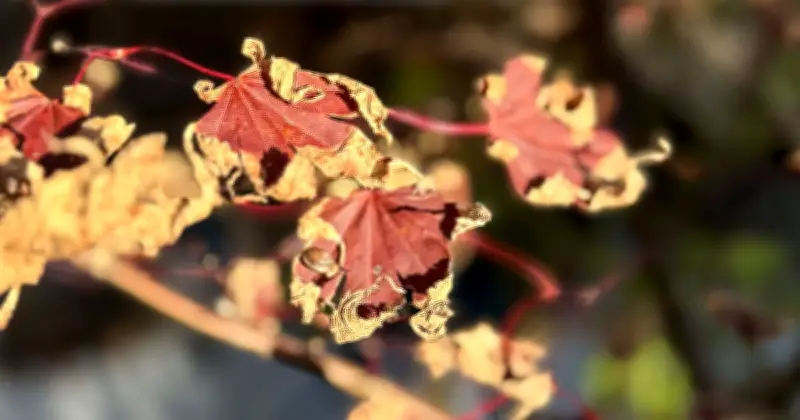
Japanese maples are a stunning addition to any garden, with their vibrant red leaves adding a splash of colour. However, these beautiful plants can suffer during the summer if not cared for properly. Exposure to too much direct heat, sunlight, or wind can cause the leaves to become scorched, shrivel up, and drop off. In severe cases, leaf scorch can lead to premature leaf drop and even dieback of small branches. Once this happens, the leaves will not grow back until the following year.
Why Do Japanese Maple Leaves Scorch?
Gardening expert and TikTok creator Ish recently shared three simple jobs that every gardener can do to protect their Japanese maples from scorching during the summer. In a video, Ish explained that the most common causes of leaf scorch are wind, excessive sunlight, and dry soil.
1. Protect from Wind
One of the most common reasons for scorched leaves is exposure to wind. Ish noted: “A lot of people put them in shady areas or partial shady areas but don’t take into account the wind, which is drying the leaves directly on top. So it’s not ideal for somewhere like a coastal area.” Wind dries out the leaves quickly, regardless of temperature. To minimise wind exposure, place your Japanese maple near a sheltered spot, such as a fence or a larger plant, to provide extra protection from gusts. Additionally, keep the plant well-watered so that if it does encounter wind, it has sufficient hydration to cope. Be especially vigilant in late winter and early spring, when cold winds and frost can also scorch the leaves.

2. Provide Adequate Shade
Too much sunlight is another main culprit behind damaged leaves. When Japanese maples are exposed to excessive heat and sunlight, their red leaves crisp up and shrivel, eventually dropping off and leaving the plant looking bare. Choose a location with plenty of shade; Japanese maples thrive in partial shade, which significantly reduces the risk of leaf scorch. If your acer is already in a shady spot but still looks unhealthy, check the soil hydration and quality.
3. Maintain Soil Moisture
Ensuring the soil retains moisture is crucial. Ish advised: “You don’t want really dry soil; it likes well-drained soil but not dry. So make sure you keep it well-watered, and that should help it thrive massively.” Water the plant generously in the early morning or evening. To keep the soil cool and reduce evaporation, Ish recommended covering the soil with a light layer of white stones to reflect sunlight. Alternatively, use mulch or bark as a protective barrier.
By following these three key tasks—protecting from wind, providing shade, and maintaining moist soil—you can keep your Japanese maple healthy and vibrant throughout the summer.