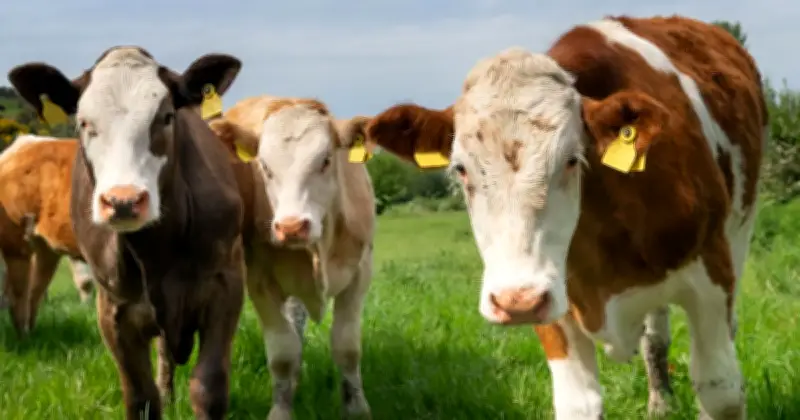
A major new cattle vaccination programme in England is set to begin in 2030, with the goal of eradicating bovine tuberculosis (TB) by 2038. The ambition is to deploy the 'game-changing' vaccination as part of a comprehensive strategy to tackle the disease, which has long plagued the farming industry.
Strategy Details
The cattle vaccination forms a key plank of recommendations for achieving TB-free status for England within 12 years. These recommendations have been drawn up by a steering group comprising farmers, vets, scientists, industry representatives, and government officials. The strategy also includes a 'diva' test that can differentiate between vaccinated animals and those infected with the disease.
However, the rollout requires negotiations with the European Union, where TB vaccination is currently prohibited, to ensure that beef and dairy products from vaccinated animals can be exported to the bloc. The government has welcomed the strategy and will respond 'in due course'.

Additional Measures
The strategy also includes expanding badger vaccinations, voluntary additional testing alongside statutory tests to help farmers better manage their herds, and using more frequent and sensitive testing to uncover cases of disease. TB in livestock is in decline, with prevalence in cattle herds in England falling from a peak of 6.4% at the end of March 2018 to 3.5% by the end of December 2025.
Despite this progress, TB remains a devastating disease for farmers, particularly in hotspots such as the South West and Midlands, costing £100 million a year in England and leading to the slaughter of 20,000 cattle in 2025. The new approach aims to meet the long-standing goal for England to achieve TB-free status by 2038 while delivering Labour’s commitment to end badger culls associated with tackling the disease.
Past Controversies
Past efforts to control the disease have been mired in controversy over the focus on a multimillion-pound cull of badgers, which can spread the disease to cattle. This led to the killing of close to 250,000 badgers. Members of the steering group said previous efforts, including on-farm biosecurity and more testing alongside badger culling, had been effective, and the cull had likely played a part in that. However, they noted that most transmission of TB occurs between cattle, so the new approach focuses on that to secure the 'big wins'.
Norfolk livestock farmer John Cross, who chaired the steering group, said: 'TB is a pernicious, endemic, notifiable zoonosis that’s dangerous to cattle and dangerous to people. Past interventions against this disease have been effective, but decline in bovine TB has not been rapid enough.' He added that there needed to be a 'laser, fairly brutal, focus on delivery' to meet the 2038 goal.
Scientific Evidence
Professor James Wood from the University of Cambridge said genome sequencing studies showed more than 15 times more transmission occurs between cattle than from wildlife. Research in Ethiopia, where bovine TB is a huge problem, showed a 74% reduction in transmission and 89% efficacy overall with vaccination. 'This is a really exciting element, and I think a game-changer in the new strategy,' he said.
Professor Rosie Woodroffe from the Zoological Society of London’s Institute of Zoology said: 'Controls focusing on cattle are front and centre in the strategy, because that’s what the science shows to be the place where the big wins are going to be.' Evidence showed badgers were not driving the TB epidemic, but they were 'not irrelevant to TB eradication'. The strategy proposes badger vaccination in priority areas, with surveillance to evaluate performance.
Trade Implications
Dr Ele Brown, Defra’s deputy chief veterinary officer, said there was a 'real global change' in emphasis on animal vaccination. 'There is a strong interest in the cattle vaccination, not just in the EU and closer to home, but also further afield, because it could be a real game-changer for many countries that struggle to control TB,' she said. British officials are working to ensure the vaccine and diva test are recognised by the World Organisation for Animal Health and are engaging with the EU about trade implications.

Responding to the strategy, National Farmers’ Union deputy president Paul Tompkins said: 'Despite progress, TB continues to devastate farming families and their herds. That’s why this strategy is so important and we back its goal of building on the progress achieved so far. We now need some real urgency behind its delivery.'