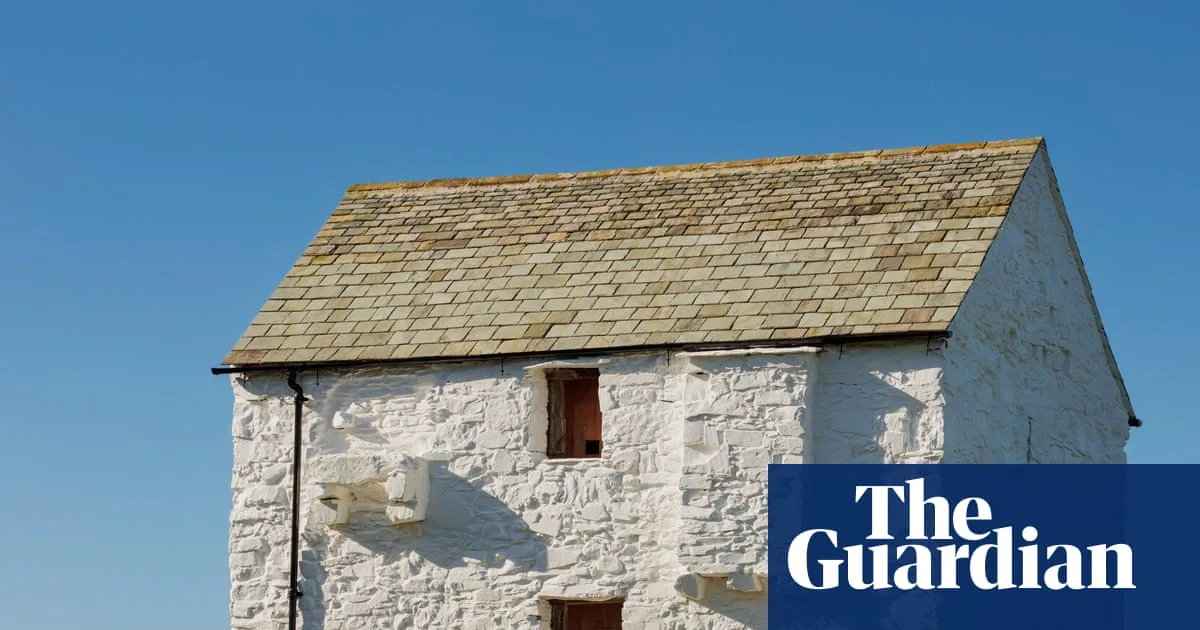
A mysterious limestone rubble barn in the Lake District, known as Henry’s Castle, has been granted Grade II* listed status by the Department for Culture, Media and Sport on the advice of Historic England. Only 5.8% of listed buildings achieve this level, which denotes structures of more than special interest.
The building, most recently used as a shelter for sheep and cows, sits on a grassy knoll near Kendal, a half-hour walk from the village of Underbarrow. Research suggests it may date back to the 14th century and bears hallmarks of a high-status building, though its original purpose remains unknown. “Henry’s Castle is one of those rare buildings that raises more questions than it answers,” said Sarah Charlesworth, Historic England’s listing team leader.
Rose Lord, built environment adviser at the Lake District National Park Authority, visited the barn in 2022 and recognised its significance despite layers of animal manure. She noted a corbelled chimneystack and garderobe, plastered and limewashed interiors, and evidence of a fireplace. “The whole arrangement of fireplaces, windows, doors was something way different to anything I had ever seen,” she said.

Archaeologists, architects and conservation engineers have spent four years restoring the building. Its most remarkable feature is an oak roof structure with a precisely hand-finished, chamfered and pegged central truss typical of high-quality 14th- or 15th-century carpentry. Theories on its original role include a lookout dwelling, a hunting lodge for a deer park, or a glamorous summer house.
Historic England notes that Henry’s Castle shares characteristics with bastles—fortified farmhouses common to the Anglo-Scottish borders—but lies too far south to be classified as such. In the 16th or 17th century it was converted for domestic use, and by the 19th century it became a field barn. It takes its name from a farmer, Henry Willison, who once owned it. Interpretation panels will be installed soon, and a box has been added to encourage owls to nest.