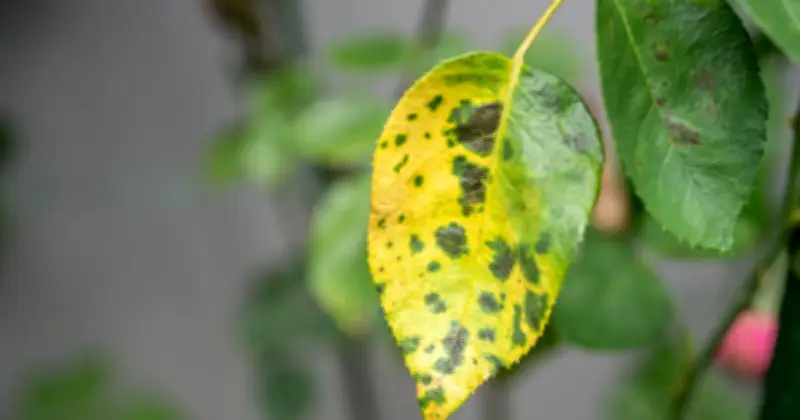
June is the peak season for roses to bloom, one of the most satisfying moments in the gardening year. But all gardeners who cultivate roses will be aware of the dreaded black spot. Rose black spot is a fungal disease of roses where purple or black spots develop on the leaves, which will often drop early. It is the most serious problem most rose-growers face.
Caused by a fungus, Diplocarpon rosae, black spot adapts very quickly to the resistance bred into new rose cultivars. Aaron, host of The Herefordshire Gardener YouTube channel, is an enthusiastic proponent of David Austin Roses and has hit on a number of tactics to fight this horticultural menace.
Methods to Avoid Black Spot
Aaron explains that black spot spreads through microscopic fungal spores, which can be thrown up onto rose bushes when raindrops hit the soil. He says: "For those spores to actually infect the leaf, the surface needs to stay wet for several hours."

To avoid black spot, Aaron recommends arranging your garden for maximum airflow, helping leaves dry quickly, and ensuring that no fallen rose leaves are left lying around on the ground. Raindrops hitting those fallen leaves will send spores back up onto your growing plant, leading to more black spot-infected leaves falling before their time and spreading spores on the ground.
"If you don't interrupt that cycle, it just keeps repeating itself and you'll end up with a rose that's covered in black spot. Not a very pretty sight!" Aaron adds.
Aaron advises a multi-pronged approach to fight black spot. Placing roses in your garden so that there is plenty of airflow to dry their leaves properly, as well as gathering up any leaves as soon as you see them, is a good starting point. When he prunes his roses, he makes sure to create a nice open structure that promotes good airflow across the leaves. "I'm also keen to space my roses and stagger them," he says. "Again, it just improves the air movement throughout the garden."
You should also ensure that your roses are well-fed and watered. He adds: "You'll also come across other fungal diseases on roses such as powdery mildew and rust. They behave slightly differently, but the general principles are very similar; good air flow, good hygiene, and keeping your plants healthy."
To make the most of your June roses and keep them blooming beautifully throughout the summer, you should dead-head any faded or spent blooms to redirect the plant's energy away from seed production and into fresh, healthy flower stems. Give your blooming roses plenty of liquid feed while they are flowering to promote glorious blooms. Be sure to provide ample water, especially during dry spells, as drought is the biggest threat to early summer blooms.
One Ingredient to Spray on Leaves
Aaron adds: "One of the things I also use as part of that overall approach is sulphur." Sulphur Rose, which is readily available from garden centres and online retailers, is the natural enemy of black spot and powdery mildew.
"Sulphur has been used in gardening for a very long time," Aaron explains. "What it does is to sit on the surface of the leaf and create an environment that fungal spores simply don't like. So rather than curing an infection, it works much more as a preventative, helping to reduce the chances of spores taking hold in the first place."
The product should be sprayed in a thin layer over every leaf, Aaron advises. "What you're aiming for is a fine layer of sulphur particles sitting on the leaf surface, and that creates an environment that fungal spores struggle to survive in, helping to prevent infection," he adds.
Ideally, you should start spraying in early spring, just as new growth begins. "I'll also use it when pruning," Aaron says, "applying it to the cut ends, which helps keep those cuts really clean and reduces the risk of dieback."
You should reapply the product after rain, as it will tend to wash off the leaves during a downpour. Avoid spraying during hot weather, but be ready to start again as soon as temperatures start to fall again. Aaron advises: "It's all about working with your roses and staying one step ahead of the conditions that the fungus needs."