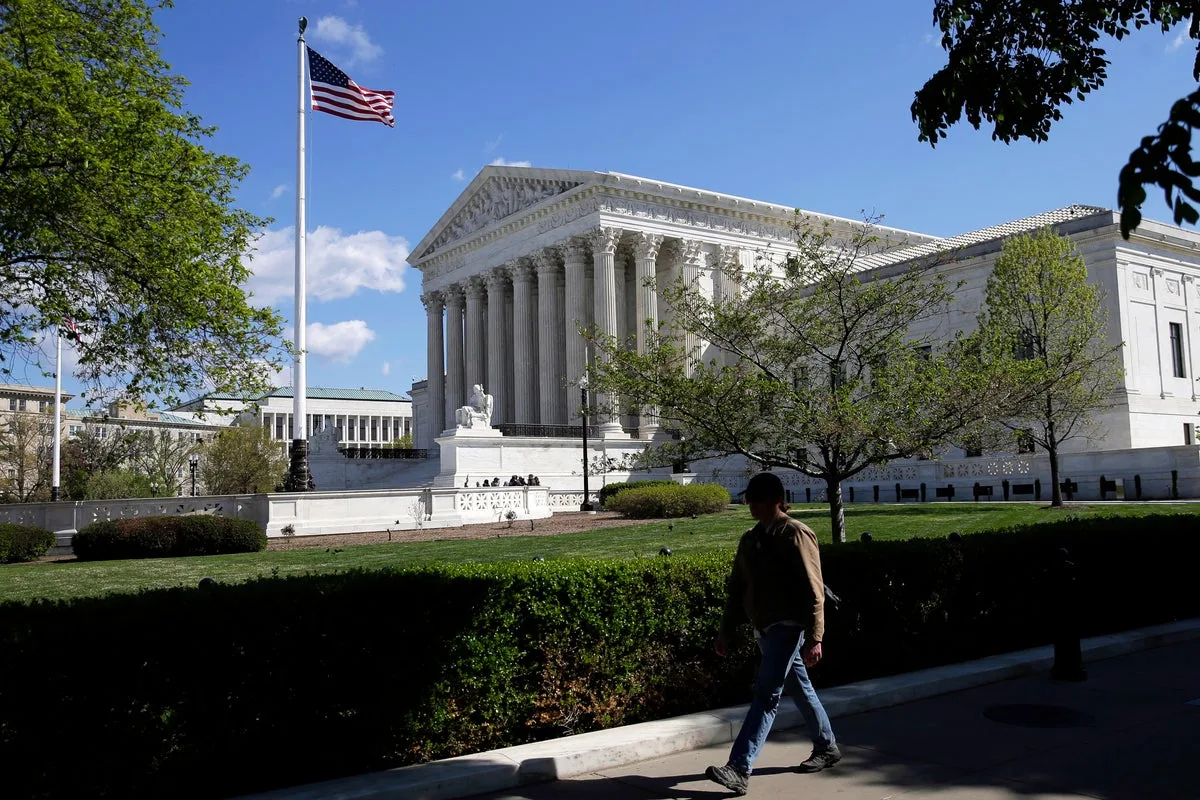
The US Supreme Court on Wednesday ruled unanimously in favour of Michigan in a dispute over an ageing energy pipeline beneath the Straits of Mackinac, deciding that the case will remain in state court. Justice Sonia Sotomayor wrote the opinion, stating that Enbridge, the pipeline operator, waited too long to move the case to federal court.
The case concerns a 4.5-mile section of Enbridge's Line 5 pipeline, which has transported crude oil and natural gas liquids between Superior, Wisconsin, and Sarnia, Ontario, since 1953. Michigan Attorney General Dana Nessel sued in state court in June 2019, seeking to void the easement that allows the pipeline to operate under the straits. In June 2020, a state judge issued a restraining order shutting down the pipeline, though Enbridge was allowed to continue operations after meeting safety requirements.
Enbridge attempted to move the lawsuit to federal court in 2021, arguing it affected US-Canadian trade. However, the 6th US Circuit Court of Appeals sent the case back to state court in June 2024, finding that Enbridge missed a 30-day deadline to change jurisdictions. The Supreme Court upheld that decision.

Concerns over the pipeline's safety have grown since 2017, when Enbridge revealed it had known about gaps in the pipeline's protective coating since 2014. A boat anchor damaged the section in 2018, intensifying fears of a catastrophic spill. Michigan Governor Gretchen Whitmer revoked the easement for Line 5 in 2020, a move Enbridge is challenging in a separate federal lawsuit.
Enbridge is seeking permits to encase the pipeline section in a protective tunnel. While the Michigan Public Service Commission granted relevant permits in 2023, the company still needs approval from the US Army Corps of Engineers and state environmental agencies. The pipeline is also at the centre of a legal dispute in Wisconsin, where a federal judge ordered Enbridge to shut down part of Line 5 crossing the Bad River Band's reservation within three years.