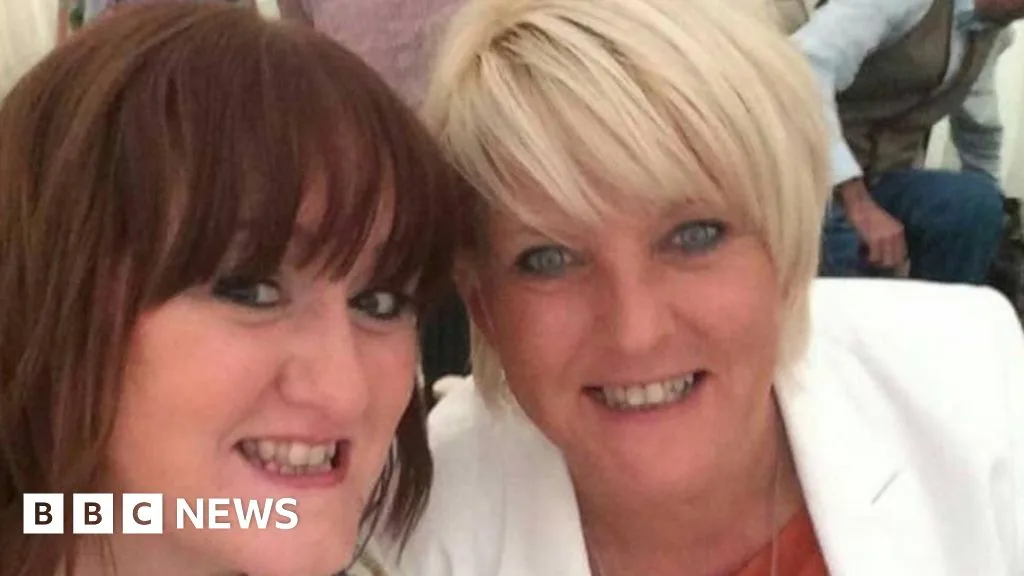
The daughters of a Lincolnshire couple who both tragically died from pancreatic cancer are urging the public to learn the warning signs of this silent but deadly disease. Susan Smith, a former nurse, passed away in February 2012 at just 55 years old after experiencing various gastrointestinal issues before her diagnosis. Her husband, Richard, 70, outlived her by 11 years before succumbing to the same fate after a three-month battle with the cancer.
A Family's Double Tragedy
Now their daughters, Rebekah, 44, and Laura, 36, are speaking out about the importance of recognising different symptoms associated with what they describe as "the deadliest common cancer." Pancreatic cancer is typically diagnosed at a late stage when treatment is less effective because it produces few early symptoms. Consequently, only one in four patients survives more than a year after diagnosis.
These grim statistics became painfully real for this close-knit family when Susan was diagnosed in October 2011. "Not only did mum die of it, then dad did too. You couldn't write it," Rebekah said. Remarkably, both Richard and Susan were unexpectedly diagnosed with pancreatic cancer within just a decade of each other.
No Obvious Risk Factors
"They weren't smokers, and they weren't drinkers. They went to a fitness club and looked after themselves. There were no obvious risk factors," Laura added. "They were both health-conscious people, but yet both then developed pancreatic cancer."
Looking back, Laura, who works as a nurse, recalls noticing changes in her mother during the summer of 2011. Susan complained of extreme thirst and would swallow repetitively as if something was stuck in her throat. She also suffered from acid reflux and general malaise. Her GP prescribed antacids for indigestion and heartburn.
Rapid Deterioration
However, her health deteriorated rapidly. Within weeks, the whites of her eyes and her skin began turning yellow—a condition known as jaundice, which is a tell-tale warning sign of pancreatic cancer. Initially, Susan attributed her symptoms to irritable bowel syndrome as she experienced nausea, abdominal pain, and changes in bowel habits.
"Because mum was a nurse, I think she knew she had something nasty going on," Laura said. "I remember her looking in the mirror and thinking it, and she was right."
Diagnosis and Treatment
Susan underwent an ultrasound in October 2011 and was formally diagnosed with pancreatic cancer. "They basically said that she had a tumour on the head of her pancreas and it had spread to the bile ducts, which had become blocked, causing her skin to turn yellow," Laura explained.
She had surgery to unblock her bile ducts, followed by chemotherapy. However, because she was too unwell for pancreas removal surgery, the cancer progressed. After another procedure to drain fluid from her abdomen, Susan struggled to keep anything down, including pain medication. She died just weeks later.
"It was quite a sudden death," Rebekah recalls. "She had been sitting in bed and talking to us and been quiet. And then, unfortunately, she had a big seizure and passed away quite unexpectedly. Dad had actually gone to have a look around a hospice for her. Then he returned and mum was no longer here. That must have been very difficult."
A Second Diagnosis
After Susan's death, the sisters cared for their maternal grandmother, who had dementia. Just a year after the grandmother died in February 2022, their father began complaining of right-side back pain. Richard visited a physiotherapist, believing it was a musculoskeletal issue. When symptoms persisted, he consulted his GP.
In July 2021, blood tests and scans revealed liver damage, later discovered to be caused by cancer. "So dad was then faced with going through everything that his wife did and knowing what might lie ahead," Laura said.
Different Treatment Approach
Richard's treatment differed slightly from his wife's. Doctors tried pancreatic enzyme replacement therapy (PERT), which involves taking digestive enzymes to assist with fat, carbohydrate, and protein digestion—something pancreatic cancer patients often struggle with. However, before starting chemotherapy, he was involved in a car accident initially thought to be caused by a stroke.
Scans revealed the cancer had spread to his brain. "His personality wasn't the same," Rebekah said. "He seemed to lose his mobility. He was really weak too; he couldn't even put his PIN in his phone."
Richard deteriorated much faster than his wife, with few treatment options available. As the cancer spread through his brain, he became "aggressive and challenging" to the point where his daughters no longer recognised him. He died three months later in October 2023.
Raising Awareness
The orphaned sisters have resolved to help others recognise warning signs before it's too late, sharing their story with Pancreatic Cancer UK. The charity announced last year it will fund a world-first clinical trial that could lead to pancreatic cancer being diagnosed with a breath test.
"Hopefully, that'll be successful," Laura said. "It's a quicker route to diagnosis than surgery so that's got to be positive. It's hard and really tough that neither of our parents survived."
Understanding Pancreatic Cancer
The pancreas is a pear-shaped gland located behind the stomach, responsible for producing hormones that aid digestion and convert sugar into energy. Due to its location and relatively small size, doctors often cannot feel pancreatic tumours during physical examinations, creating another barrier to early treatment.
While aging is one of the biggest risk factors—with almost half of cases diagnosed in people over 75—experts warn that pancreatic cancer is increasing among younger age groups, particularly women.
Rebekah and Laura now hope their family's story will encourage greater vigilance about symptoms that might otherwise be dismissed, potentially saving lives through earlier detection and intervention.