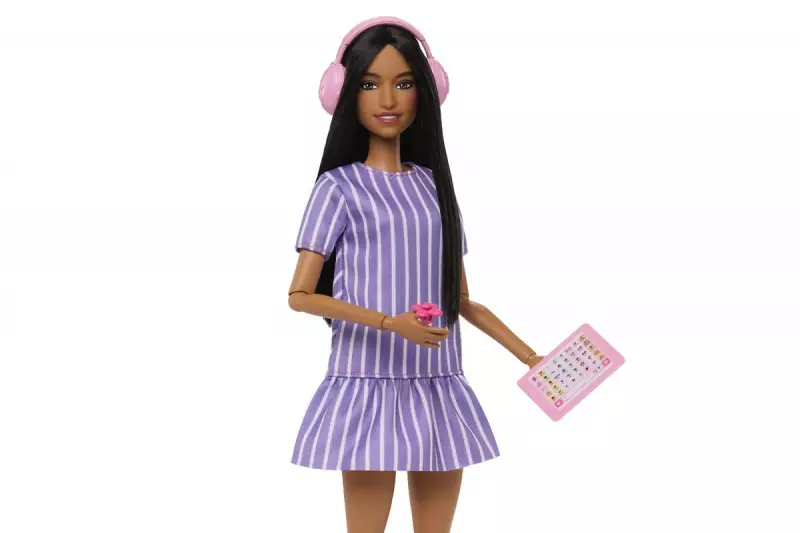
In a landmark move for inclusive toy design, the iconic brand Mattel has launched its first-ever autistic Barbie doll. The new figure was developed in close partnership with the Autistic Self Advocacy Network, a leading advocacy group run by and for autistic people.
Thoughtful Design Details Reflect Real Experiences
The doll is distinguished by a series of carefully considered accessories and design elements that mirror common autistic experiences. Among its key features is a tablet displaying an Augmentative and Alternative Communication (AAC) app, a tool used by some non-speaking autistic individuals. It also comes with a pair of noise-cancelling headphones, acknowledging the sensory sensitivities many autistic people face in loud environments.
Further subtle but significant details include a gaze directed sideways, reflecting discomfort with direct eye contact. The doll's clothing is designed for comfort, made without itchy labels, and it wears flat, Mary Jane-style shoes instead of the traditional high heels. Perhaps most notably, the doll has bendable elbows and wrists and includes a fidget spinner accessory. This is a direct nod to stimming—a self-stimulatory behaviour like rocking or fidgeting that is a crucial self-regulation method for many on the autism spectrum.

A Step Forward for Representation and Education
The launch, which took place on Wednesday 14 January 2026, has been broadly welcomed by autistic researchers and advocates. While experts acknowledge that a single toy cannot possibly represent the vast diversity within the autistic community, and that the Barbie brand itself has faced historical criticism, the consensus is positive.
Researchers view this collaboration as a meaningful step. It promotes greater visibility for autistic people, aids in educating the public about autism, and helps to normalise common disability accommodations. The partnership with the Autistic Self Advocacy Network ensures the doll's design is informed by authentic lived experience, moving beyond superficial representation.
Balancing Celebration with Critical Perspective
The introduction of the autistic Barbie arrives at a time when demand for diverse and authentic toys is growing. By focusing on specific, real-world details like AAC devices and sensory-friendly clothing, Mattel has attempted to create a doll that resonates with the community it aims to represent.
Ultimately, while no product is perfect, the launch signals a shift towards more inclusive play. It highlights the importance of consulting directly with marginalised communities in the creation of products meant to represent them, setting a new standard for the industry.