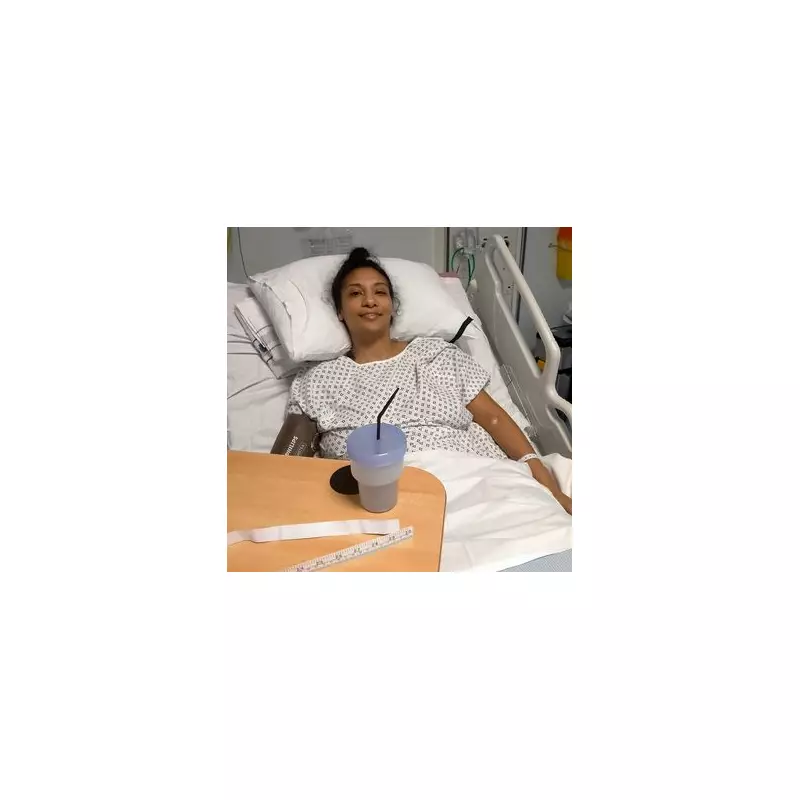
A woman has been left permanently paralysed after a horrific attack by her abusive ex-partner on New Year's Eve, following her refusal to give him a kiss.
A Night of Celebration Turns to Tragedy
Janine Kazmi, 38, had expected to see in the New Year with her former partner, Barry Shankly, 45, at his home in Dalmarnock, Scotland. The pair had remained friends after ending their relationship. However, as they were leaving, Shankly leaned in for a 'New Year's kiss' and became enraged when Janine refused.
In a fit of violence, Shankly shoved Janine over the bannister of his hallway balcony. She fell and suffered a catastrophic spinal injury, fracturing two vertebrae. Janine woke up in Glasgow Royal Infirmary with no memory of the fall, initially believing Shankly's story that it had been an accident.

A Pattern of Abuse and a Fight for Justice
The attack on December 31, 2020, was the culmination of months of controlling and violent behaviour. Janine described how Shankly had checked her phone, locked her in his flat, and isolated her from friends. In a previous incident in Lisbon, he had stamped on her mobile phone and pushed her over.
As her memory gradually returned, Janine realised Shankly's account was false and reported him to the police. Barry Shankly was arrested and pleaded not guilty to engaging in a course of abusive conduct towards a partner or ex-partner between September 2019 and May 2021.
The case went to trial at the High Court in Glasgow in July 2024. Janine gave evidence via video link from Southend Court. Shankly was found guilty and sentenced to a 14-year extended sentence, with 13 years to be served in prison.
A Lifetime of Adaptation and Advocacy
The injuries Janine sustained have changed her life irrevocably. She is now a full-time wheelchair user and has been told she will never walk again. The spinal damage also means she is unable to have children.
Following the attack, she faced a gruelling two-year wait in inaccessible temporary housing before securing a council property in Southend-on-Sea, Essex. She then had to campaign for a further two years to get the necessary adaptations, such as a suitable bathroom and kitchen.
Janine, who works as a peer support worker, is now channelling her experience into advocacy. She is campaigning for better disability rights and encouraging other survivors of domestic abuse to speak out. "I'm not ashamed," she says. "It's important to spread awareness." She highlights the high suicide rates among people with spinal injuries and the mental fortitude required to rebuild a life.
A spokesperson for the local council stated they are committed to supporting disabled residents but could not comment on individual cases due to privacy.