It was the worst day of my life. I was alone with my mum in a bright, top-floor hospital room overlooking the Houses of Parliament in London. I was in my late twenties, and a surgeon had just done the rounds and told us that there was nothing else they could do about the progression of my mum's stage 4 cancer.
“Mum,” I sobbed. “I just want you to meet my children.” Those were the first words that came out of my mouth as I flung my arms around her as she lay in her hospital bed. It was primal.
I didn't even want children at this stage of my life, but the need for her to be around when I did felt visceral. How could I ever do it without her by my side? I needed her unconditional love and support; her sense of humour and perspective. I'd always imagined her getting overly involved with my children, looking after me as I looked after them; worrying about if I'd had enough sleep, babysitting, doing granny duties. She would be there treading the fine line between guiding me and trying not to be bossy.

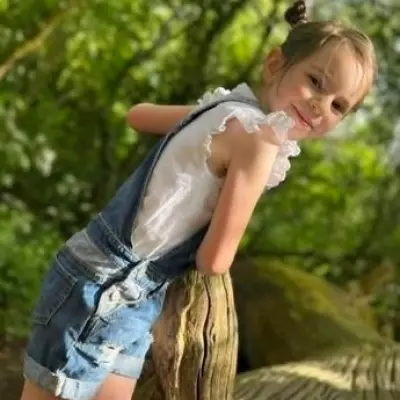
But Mum never got to meet my future daughters, Lola, 10, and Liberty, eight. She died aged 54, just a few years older than I am now. Twenty years on, hardly a day goes past without me missing her.
Recently, that grief has intensified too. Waves of sadness come out of nowhere, such as at my daughter's recent eighth birthday party, or if one of my children is unwell, as happened last week. I often wish I could just magic my mum into the room to sort it all out.
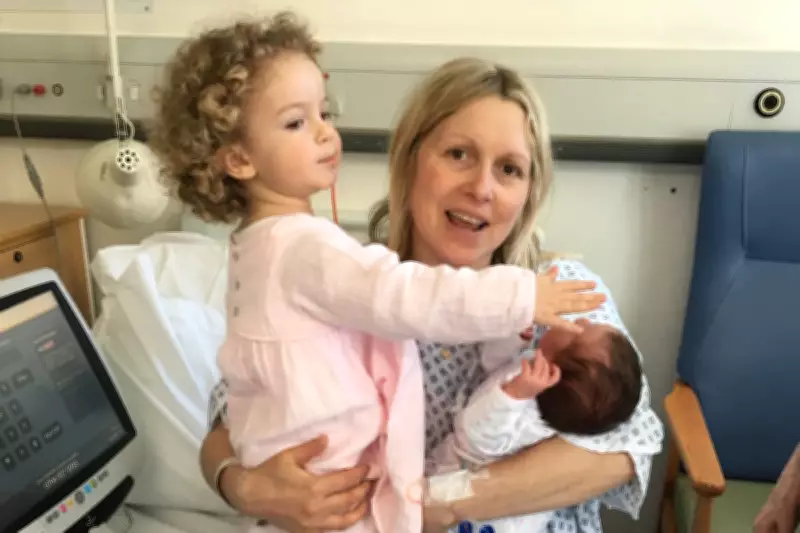
I had my children in my early forties and much of my life had happened without her, but nothing really could have prepared me for being a motherless mum. I couldn't show her the 12-week scan, or tell her I was having girls. I couldn't ask her about how she felt when she was pregnant with me – or what her first night at home with me was like. When I came out of my C-sections, her absence felt crushing.
What did she wear to the hospital? How did she feel when she first met me? I had so many questions. I felt untethered, like I was missing a generational link. There were no hand-me-down pieces of advice or revealing family stories that are passed between mother and daughter like precious batons.
Being without her didn't feel normal, and I have always struggled with the loss alone. It is why the recent statistic that one in three new mums in the UK are motherless caught my eye. I had always assumed everyone else was playing happy families, but so many others feel the same absence, according to research by Peanut and The Motherless Mothers.
Until now, there has been little research into how significantly losing your mum can impact a woman's mental health, bonding, and identity in motherhood. And this first large-scale study, based on the experiences of new motherless mums (expecting or with young babies), has highlighted a hidden crisis. In many cases, the grief resurfaces with new intensity at the “threshold of motherhood”, according to the report, with 67 per cent reporting depression, 71 per cent reporting anxiety, and 95 per cent feeling unsupported, with 85 per cent saying motherhood reopened their grief.
Motherless mothers are also around five times more likely to report experiencing postnatal depression, and 68 per cent of new mums had their grief misdiagnosed or brushed off as other causes, such as postnatal depression. It also came to light that many motherless women put off motherhood out of concern about how they would cope without maternal support during pregnancy and early parenthood.
But despite the numbers, it remains an “invisible” problem in maternal healthcare systems, according to the report, with 74 per cent claiming that a healthcare professional didn't even ask them about available maternal support.
I am lucky not to feel lacking in confidence as a mother, partly because I feel my mum's spirit so ingrained in me. For me, being motherless was initially the last thing on anybody's mind when I first got pregnant in 2016. I was ushered into grief counselling on the NHS, not to deal with a lack of maternal support, but the immediate grief of having lost my partner, Alex, who tragically ended his life midway through our IVF journey. I went on to have Lola and Liberty after his death in 2014, using his frozen, banked sperm.

The maternal call was strong and complex. It wasn't just the need to keep a part of him alive – he had been the love of my life – but also my mum. First, it became important for me not to carry the recent heartache of losing Alex into motherhood. But somewhere along the line, I missed the whopper: the loss of Mum.
As I sat with my first newborn, I felt grief and love concurrently – and a profound sadness that my mum wasn't there. I knew that even if Alex had been around, it would have been my mum who would have been my anchor. After everything I had been through, I was silently yearning for her reassurance, guidance and practical help.
It never dawned on me to seek support for that, and find solace in other like-minded motherless mums. Today, I see online communities like The Motherless Mothers offer virtual drop-ins, Facebook forums, free counselling and WhatsApp parenting chats to connect with others in similar motherless positions.
I had my best friends, and my mum friends – even my half-sister, and Alex's mum – but while they could step into mum's shoes momentarily, they couldn't really fill them.
Memories of how she had been with me came flooding back and continue to this day. I mourned the fact that she wasn't there to read my children The Lion, the Witch and the Wardrobe, as she had done with me, nor take them to buy their school uniforms. I try to hold onto nostalgia and bring out my mum's old china that I used to eat on as a child, or I take my kids to Cornwall, to give them the same summer holiday magic that she had given me. I show them photographs of Mum in albums, but she isn't there to ask how old I was when I learnt to walk, or if I was a fussy eater.
It becomes a never-ending miss-you situation. Sometimes I just want her to give me a much-needed break – particularly important for me in a one-parent family.
Even now, when friends casually mention, “Mum's coming over to look after the kids,” the loss hits me hard. I always try to talk to my children about their Granny Caroline, and we think of her every time we spot a robin redbreast. I try to make her part of my children's life by speaking to them in her wise and reassuring tone – as if I were her.
Over time, I have realised that somehow my children and I get what we need from all sorts of people close to us. I am lucky not to feel lacking in confidence as a mother, partly because I feel my mum's spirit so ingrained in me. I know that I can't be everything for my children, and trying to be means I will end up feeling like I'm not good enough.
By the time my children went to school, I was juggling work and caring for my elderly dad, too. It meant life was too intense to feel much other than overwhelmed. It was only when my dad died in 2024 that I think the dust settled, and I had the time to truly reflect.
As I grieve my dad, the loss of my mum feels even greater than ever before. Perhaps it is because I have no living parents and I know how much she would have shaped my children – and that becomes more important as they grow up.
What I would do to be able to pick up the phone and say “Mum” and for her to answer. But, instead, I get on with it. I have learnt to trust my gut instincts and try not to sweat the small stuff, but I can now see why she got fed up with wet towels on the floor.
I know she'd tell me how well I'm doing, and I know people say it takes a village to raise a child. But the truth is, I'd be doing so much better if she were here, and that village feels just a bit lonelier without her.
Support is available at themotherlessmothers.com