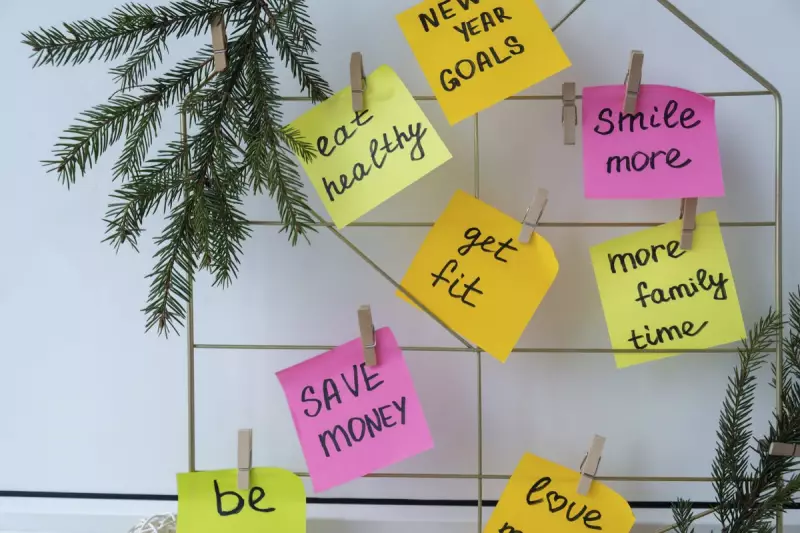
For many, the first of January has long been a day of grand promises and ambitious self-improvement plans. But a significant shift is underway across the UK, as new data reveals a growing public disillusionment with the tradition of setting New Year's resolutions.
The Resolution Graveyard: A Personal History of Broken Promises
Zesha Saleem, like countless others, once approached the new year with fervent hope. The period between Christmas and New Year was dedicated to crafting vision boards, stocking up on fresh notebooks, and compiling exhaustive lists of personal changes in iPhone Notes. Yet, year after year, the momentum faded by February, leaving a trail of abandoned goals.
In 2023, a pledge to quit social media spectacularly backfired, leading to increased Instagram use. The following year, a vow to abandon Uber Eats resulted in an ironic achievement: reaching the top one per cent of the app's users in the UK, as highlighted by a Monzo Wrapped summary. Another resolution to maintain a diary petered out by March, leaving an unfinished notebook buried in a drawer.

Saleem notes that only one resolution has ever been sincerely kept: quitting nail-biting. Even that was a staggered process, begun in 2023, abandoned in 2024, and finally conquered in 2025. This pattern of quiet, imperfect change, she argues, works far better than the pressure of annual grand declarations.
The Data: A Nation Moving Away from Annual Promises
This personal experience reflects a broader national trend. Recent survey data from SuperNutrio Milk, involving 2,000 people, indicates that 77 per cent of the British public now believe New Year's resolutions are old-fashioned and outdated. Furthermore, 58 per cent advocate for a more moderate approach to the new year, focusing on small, positive habits rather than drastic changes they are unlikely to maintain.
The core issue, as Saleem identifies, is that resolutions often serve little purpose if they lead to a year-end reckoning filled with guilt over everything abandoned. The shame of failure can overshadow any appreciation for genuine progress made outside the calendar's arbitrary schedule.
Expert Insight: Sustainable Change Beats the January Gimmick
Mental health experts support this move towards a more forgiving and flexible approach to self-improvement. Psychotherapist Noel McDermott states, "resolutions are for life, not just for New Year." He points to a growing health and wellbeing culture that prioritises sustainable lifestyle changes as the true key to health and happiness, making the "gimmick of a New Year's resolution" less appealing.
Alexa Knight, Director of Policy and Influence at the Mental Health Foundation, echoes this sentiment. "The start of a new year can feel like a natural time to reflect, but there's no rule that says changes have to happen in January," she says. "Positive steps for your wellbeing can be made at any time of year, and small, achievable goals often work best."
For Saleem, working in hospitals has reinforced this perspective. She now sees simply surviving a year fit and healthy as an achievement worth celebrating. Her resolution for 2026 is a definitive break from the cycle: not to make any resolutions at all.
Instead, she has learned to value the quieter, more unassuming changes that happen on a random Thursday in May, free from the pressure of colour-coded vision boards. These are the gradual, unimpressive-looking shifts that slowly become part of life—like finally having nicer fingernails after years of trying. In 2026, the goal is not perfection, but the freedom to fail as many times as necessary until a positive habit sticks.