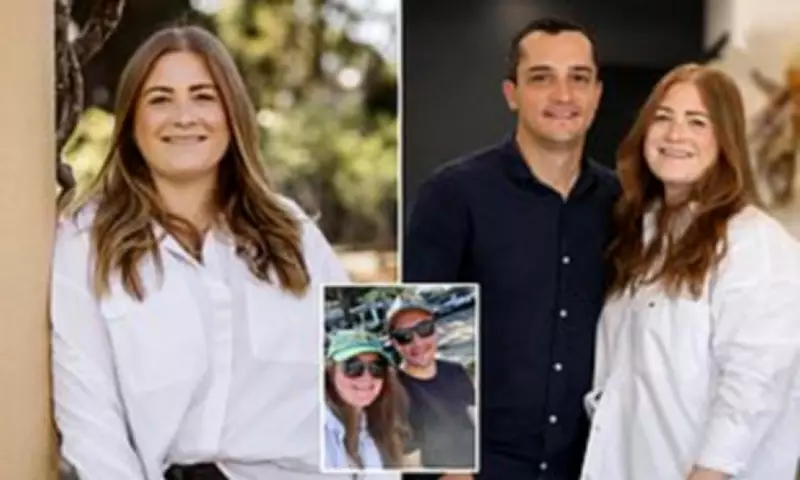
Sydney Jeweller's Bushfire Ordeal Unveils Hidden Multiple Sclerosis Diagnosis
Amid the thick, orange haze of Australia's catastrophic 2019-2020 bushfires, Sydney-based jeweller Meg Maskell experienced her world literally narrowing. Trapped on the New South Wales South Coast during Christmas with her husband as flames encroached and roads were severed, the 30-year-old found herself enveloped by dense smoke that permeated everything.
The air scorched, visibility plummeted, and like countless Australians that brutal summer, Meg assumed any physical distress stemmed from the extreme conditions. When her vision began blurring in one eye—refusing to clear despite repeated blinking—she remained calm. 'I thought it was just the smoke,' Meg, who received a multiple sclerosis diagnosis months later, revealed. 'It was so intense, and we couldn't escape it. I just assumed my eyes were reacting to that.'
From Smoke Irritation to Medical Mystery
With smoke saturating the atmosphere and irritation anticipated, her symptoms didn't appear urgent—merely another consequence of an unprecedented environmental disaster. However, upon returning to Sydney a week later, unease settled in. Her vision hadn't recovered. 'I started to wonder if I'd actually damaged my eye. It just wasn't going back to normal,' she explained.

Meg promptly scheduled an optometrist appointment the following week, receiving reassurance that nothing was amiss. She was dispatched home with eye drops and instructions to monitor the situation. Yet, instead of subsiding, her symptoms intensified. 'I felt like I wasn't being taken seriously,' she admitted. 'I was a healthy 30-year-old woman. There was no reason for anyone to think something serious was going on.'
Nevertheless, her instincts signalled otherwise. In a pivotal moment she now credits with altering her life's trajectory, Meg opted to pursue further investigation—checking herself into the emergency department at Sydney Eye Hospital.
Neurological Red Flags Emerge
There, specialists began probing beyond superficial issues. While initial eye tests echoed previous findings, deeper examination—particularly of her optic nerve—raised alarming red flags. Doctors started suspecting the problem might not reside in the eye itself, but somewhere more profound. 'It was the first time anyone suggested it could be neurological,' she recalled.
Abruptly, possibilities shifted from minor irritation to gravely serious conditions. She was informed it could be a brain tumour, motor neurone disease, or multiple sclerosis. 'It was terrifying. You go from thinking it's just your eye to being told it could be something life-changing.'
What ensued was a whirlwind of testing: MRIs, spinal taps, and agonising weeks awaiting answers. By April 2020, diagnosis was confirmed—Meg had multiple sclerosis, commonly termed MS, a chronic condition impacting the brain and central nervous system.
Navigating Diagnosis Amid a Global Pandemic
The timing exacerbated difficulties. Australia—and the globe—was entering the early phases of the COVID-19 pandemic. Medical systems strained, telehealth remained nascent, and specialist access grew increasingly fraught. Meg found herself in limbo. 'I had the results, but I couldn't get proper answers. The neurologist I was seeing stopped taking patients because of COVID, and suddenly I was left trying to navigate this on my own,' she recounted.
Once again, she had to champion her own cause—pushing for referrals, seeking specialists, and relying on unexpected support networks. Through connections with an MS charity—one she had previously supported via her jewellery business—she eventually secured a neurologist willing to accept her case.
Confronting Professional and Personal Challenges
For Meg, the diagnosis proved confronting on multiple fronts. As a handmade jeweller, her work hinges on precision—lengthy hours focusing on minute details, often under magnification. The notion that her vision, one of her most vital tools, could be impaired was profoundly unsettling. 'I thought I might have to stop working, or step away from the business,' she confessed.

Additionally, Meg highlighted one of the most unforeseen hurdles: managing others' reactions. Friends and family expressed deep concern, yet often seemed uncertain how to respond. 'Some people were talking to me like I was about to die,' she noted. While stemming from care, Meg emphasised this revealed how scant many Australians' understanding of the condition is—and how swiftly assumptions dominate. 'It made me realise that people hear "MS" and immediately think the worst.'
For Meg, this meant not only processing her own diagnosis, but also mitigating surrounding fears—all while striving to maintain normality. Beyond that loomed the emotional burden of uncertainty. At 30, healthy and active, she had never envisaged confronting a lifelong neurological condition. Like numerous Australians, her MS comprehension was limited—moulded by vague awareness campaigns and misconceptions about severe disability. 'A lot of negative thoughts go through your head. You think, "Am I going to be in a wheelchair in a year?"'
Adapting to Life with Relapsing-Remitting MS
In reality, MS manifests uniquely for each individual. Meg was later diagnosed with relapsing-remitting MS—the most prevalent form—characterised by flare-up episodes followed by remission. While no cure exists, treatments and lifestyle modifications can help manage the condition and decelerate its progression.
Today, six years post-diagnosis, Meg continues operating her business, crafting intricate, bespoke jewellery pieces—and navigating life on her own terms. Her symptoms remain manageable yet present. Fatigue poses one of the greatest challenges, influencing how she structures her day. Her eyesight demands constant attention, frequently aided by high-powered magnification tools at her workbench. Occasionally, she experiences finger tingling—subtle but significant reminders of the condition she lives with.
'It's about adapting. Knowing your body, knowing your limits, and working with them. For example, I know that I'm going to get the most out of my days in the mornings and that I'll be sluggish by the afternoon.'
Meg has also adjusted her diet and exercise regimen to help retard her illness's advancement. 'MS is quite inflammatory—so I've stopped drinking alcohol and limit eating onion, tomatoes, garlic—anything that causes inflammation. I still have a cup of coffee every now and then, but it's just about managing it the best you can.'
Advocating for Health and Trusting Instincts
If one message she hopes others glean from her experience, it's the criticality of trusting your instincts—even when symptoms seem minor or readily explicable. 'I could have ignored it for longer,' she reflected. 'A lot of people do, because MS doesn't always hit you in a way that stops you in your tracks straight away, or something that shuts down your whole lifestyle.'
'Many people have problems with their eyes, or numbness and tingling in their fingers. They just push it to the side for years and years or try to manage it yourself. But my biggest advice is to advocate for yourself. You know yourself, and if you feel like something is wrong, really have to jump up and down to get some answers.'