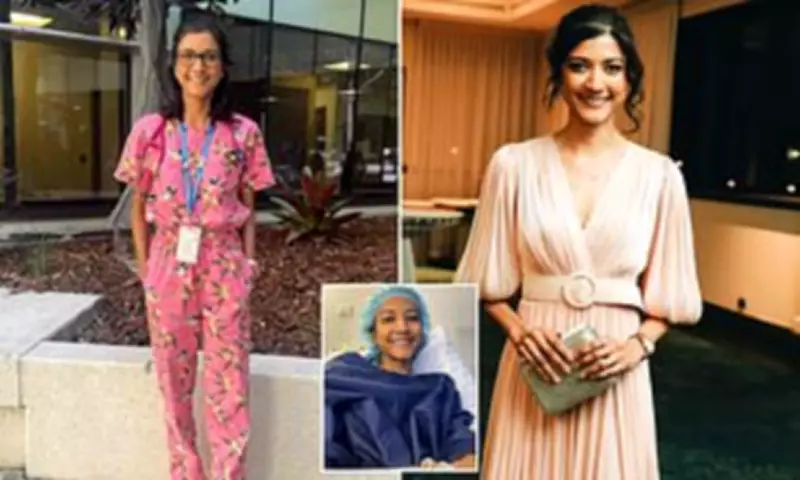
Shabnam Gujadhur dedicated years to mastering the delicate art of delivering difficult medical news, yet she never anticipated finding herself on the receiving end of a life-altering ovarian cancer diagnosis. In 2022, shortly after celebrating her 30th birthday, the Gold Coast physician was immersed in grueling shifts as an emergency medicine intern. With borders reopening and COVID-19 cases flooding the department, she pushed through exhaustion, determined not to let anything hinder her professional momentum.
A Subtle Onset of Symptoms
Gradually, her body began sending distress signals. "I started experiencing some abdominal pain," she recounted to the Daily Mail. "It just felt like cramps. I didn't really put much to it—I was taking Panadol and just pushing through. Then I experienced some intermenstrual bleeding." As a doctor herself, Shabnam initially sidelined her symptoms, prioritizing her demanding workload over personal health concerns. "I didn't really see anyone because I was working as a doctor. I prioritised work and pushed it aside. I didn't want to take any days off because there were so many people who were sick—I felt guilty."
It took several weeks and persistent urging from a friend before she finally scheduled a general practitioner appointment. Initial tests provided temporary reassurance; an ultrasound indicated an ovarian cyst, and a subsequent CT scan led a radiologist to recommend monitoring and follow-up imaging in a few months. "At 30, I had no family history of ovarian cancer," Shabnam noted. "I was fit and healthy. I didn't meet the risk factors." Even with her medical background, cancer remained an unconsidered possibility, as she attributed her symptoms to a family history of fibroids and endometriosis.

A Critical Decision
Despite the recommendation to wait, her GP expressed unease and advised surgical removal. Shabnam heeded this counsel, a choice that would profoundly alter her trajectory. She underwent surgery to excise what was presumed to be a benign cyst. A week later, during a follow-up consultation, the gynaecologist's demeanor signaled grave news. "The look in her eyes—I knew it wasn't good. I've had that same look myself when I've broken bad news to patients," Shabnam recalled. The diagnosis was delivered bluntly: "Unfortunately, it came back as cancer." In that moment, everything blurred into white noise.
Within hours, she was referred to a gynaecological oncologist, and within a week, she underwent emergency staging surgery, which involved removing her left ovary and tube, along with washings to assess disease extent. "One day I was a doctor working. The next day, I was a patient. That was really confronting," she reflected. The subsequent months were fraught with uncertainty, as ovarian cancer's notorious complexity delayed a definitive classification. Eventually, results revealed a rare mixed germ cell tumour—two tumour types in one—detected at Stage 1, making her fortunate for early detection.
Navigating Treatment and Aftermath
Medical opinions diverged on whether chemotherapy was necessary, but given the early stage and complete surgical removal, Shabnam opted for strict surveillance over chemotherapy, embarking on a decade-long pathway of regular blood tests, tumour marker checks, and scans. Now approaching four years post-diagnosis, every scan has returned clear, though lingering "what ifs" persist. "If I'd followed the CT recommendation and just monitored it, I don't know if it would've progressed and been picked up later," she mused, noting that 70% of women are diagnosed at advanced stages due to such gaps.
The experience ignited a mix of gratitude and frustration within her. "The radiologist recommended monitoring it in six months," she expressed. "That's really frustrating. It makes me angry to share that, because we still don't know enough about the biology." She emphasized the absence of a reliable early detection test for ovarian cancer, lamenting the lag in screening and detection research. This knowledge deficit has fueled her advocacy; she now collaborates with local and international organizations to champion better funding, early detection studies, and enhanced treatment options—efforts recognized with a World Ovarian Cancer Coalition Award last year.

Personal and Psychological Toll
Beyond the physical ordeal, the diagnosis exacted a heavy personal cost. "I think denial was a big part of it," Shabnam admitted. "It took me months to process what it meant for my career, my future, my family planning." During surgery, doctors also discovered endometriosis, which has since progressed, necessitating further operations. With one ovary removed, her fertility diminished, adding another layer of loss. The psychological impact emerged later, culminating in health anxiety and a mild depression diagnosis, leading her to seek ongoing psychological support. "There's always that fear of the cancer coming back. Before scans, blood tests, follow-ups—that anxiety is very real," she confessed.
Her support network proved invaluable, especially as her parents lived overseas and could only visit briefly. Tragically, on the day of her second surgery, her aunt, who had been battling cancer, passed away. "It was devastating for my mum, losing her sister and having me going through a cancer diagnosis at the same time," Shabnam shared. Her friends provided solace not through platitudes but by simply being present. "Rather than telling me, 'You'll be okay', they just stayed with me," she appreciated.
A Message of Empowerment and Hope
Nearly four years on, Shabnam has resumed her medical training in internal medicine, aspiring to specialize in oncology. To women experiencing unexplained symptoms, she urges self-advocacy: "You know your body best. If something doesn't feel right, advocate for yourself. See your doctor. Get another opinion if you need to." For those newly diagnosed, she offers a beacon of hope: "There is light at the end. It's taking it day by day. Some days are harder than others. Reach out. Build a village around you." Her journey underscores the critical need for heightened awareness, improved diagnostic tools, and compassionate care in the fight against ovarian cancer.