On a quiet Monday morning in the historic Dutch city of Amersfoort, a group of elderly attendees listened intently as Australian physician Dr Philip Nitschke presented his latest controversial invention. The founder of Exit International, known globally for his advocacy of assisted dying, was demonstrating the 'Kairos Kollar', a new device he claims offers a peaceful and lawful method to end one's life.
The Workshop and the New Device
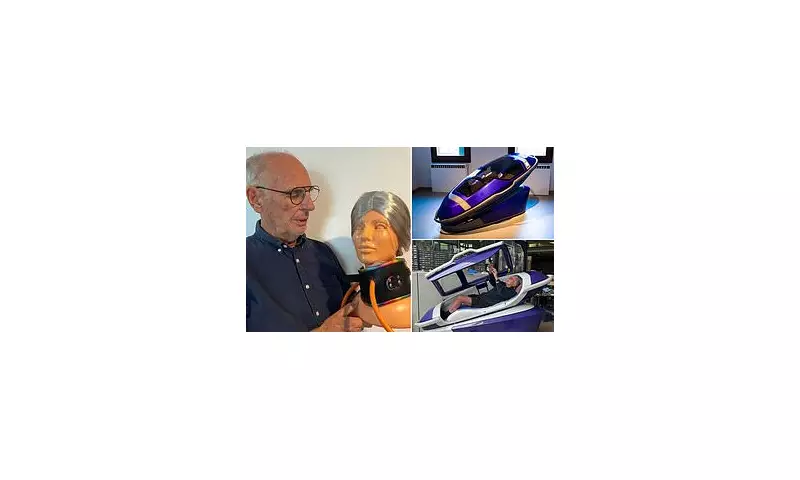
The gathering was one of Dr Nitschke's 'Exit workshops', which the 78-year-old runs to discuss end-of-life choices. According to his organisation's website, these sessions cover legal issues, the physiology of death, and various suicide methods. The focus of this particular meeting was the live demonstration of the Kairos Kollar, performed on a silver-haired mannequin.
The collar works by applying pressure to the carotid arteries and baroreceptors in the neck, cutting off blood flow to the brain and causing unconsciousness before death. Dr Nitschke has enthusiastically promoted the technology on social media, calling it a "fast, reliable, drug free" development in the quest for assisted dying, and, crucially, "unrestrictable".

He told attendees, as reported by the Herald Sun, "You can build your own collar and suicide is not a crime. It will work like an airbag in the car, when you press a button, bang, faint and die." The version shown featured a surprisingly cheerful design with a rainbow-coloured rim and bright orange tubes.
A History of Controversy and Legal Battles
Dr Nitschke is no stranger to controversy. He was the first doctor in the world to administer a legal, lethal voluntary injection under the short-lived Rights of the Terminally Ill Act in Australia's Northern Territory in 1996. After that law was overturned, he continued his activism, earning the nickname 'Dr Death', which he dislikes.
His previous invention, the 3D-printed Sarco pod, caused an international uproar in 2024 when a 64-year-old woman with skull base osteomyelitis used it to end her life in a Swiss forest. Swiss authorities arrested several people associated with the group 'The Last Resort', which facilitated the death, on suspicion of aiding suicide. The pod's co-facilitator, Dr Florian Willet, was detained for 70 days before being released without charge. He died by assisted suicide in Germany in May 2025, with Dr Nitschke stating the arrest had left him "broken".
The fallout from the Sarco case was palpable at the Amersfoort workshop. Dr Nitschke was forced to present an inflatable version of the human-sized capsule because the actual Sarco pod was seized by Dutch police in a raid on his office last year.
Future Projects and the 'Dementia Dilemma'
Undeterred by legal challenges and criticism, Dr Nitschke continues to develop new end-of-life technologies. He is currently working on a dual Sarco pod to accommodate couples wishing to die together. Perhaps his most ambitious project is a proposed 'kill switch' implant for dementia sufferers.
This mechanism would be implanted, likely in a person's leg, and contain a timer that beeps and vibrates daily, warning the user to turn it off. If the person fails to deactivate it due to advanced cognitive decline, the device would release a lethal substance. Dr Nitschke believes this could solve the "dementia dilemma", where patients are often deemed to lack the mental capacity to consent to assisted dying at the final stage of their illness.
Despite having his medical licence suspended in 2014 for supporting a suicidal man's decision—a ruling later overturned—Dr Nitschke publicly burned his medical certificate after it was reinstated with restrictive conditions. He left the profession, declaring the rules an attempt to restrict information on end-of-life choices.
As the debate over assisted dying continues globally, campaigners like Dr Nitschke push the boundaries of technology and law. While some accuse his futuristic designs of glamorising suicide, his supporters see them as offering autonomy and a peaceful exit. For now, the Kairos Kollar is his latest offering, but given his history, it is unlikely to be his last.