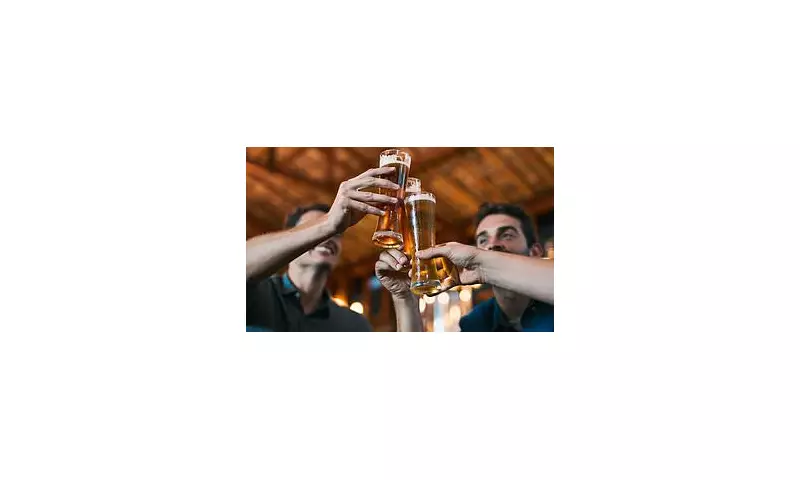
Millions of Britons participating in Dry January this year could be inadvertently sabotaging their own efforts by making a common but critical mistake, health experts have cautioned. The well-intentioned switch to non-alcoholic beers, wines, and spirits might, for some, actually increase the likelihood of returning to alcohol consumption.
The Psychological Pitfall of 'Fake' Drinks
Survey data from YouGov reveals the scale of the challenge. Last year, a significant 29 per cent of participants admitted they had already slipped and consumed alcohol just one week into January. An even more striking 16 per cent confessed to drinking by January 3rd.
According to Ian Hamilton, an associate professor in addiction at the University of York, the problem is rooted in modern production. "While they don't contain alcohol, they can taste very similar – something the alcohol industry has improved in recent years," he explained. "For some people this could trigger a craving for the equivalent drink that does contain alcohol."

Hidden Dangers for Dependent Drinkers
Professor Hamilton issued a stark warning for specific groups. For individuals who are physically dependent on alcohol, abruptly stopping – even by switching to zero-alcohol products – can be dangerous. This sudden withdrawal can provoke seizures and, in some cases, prove fatal.
Heavy drinkers, typically consuming more than 50 units weekly, fall into this high-risk category. A separate at-risk group are those psychologically dependent on alcohol, who rely on it for relaxation, sleep, or socialising. For them, non-alcoholic alternatives often fail to provide the desired mental effect, leading to discouragement and relapse.
The context of this annual campaign is sobering. Alcohol continues to claim thousands of lives in the UK, with 7,673 alcohol-related deaths recorded in England in 2024 alone.
Navigating Healthier Choices and Hidden Risks
So, what should Dry January participants drink instead? Denise Hamilton-Mace, founder of Low No Drinker and an ambassador for Alcohol Change UK, advises caution. "Be careful – some drinks, especially alcohol-free beers, are almost identical to their full-strength versions," she said.
She suggests exploring different substitutes:
- Sparkling tea as an alternative to wine.
- Functional drinks that offer a physical or mental boost.
- Beverages designed to replicate the feeling of one or two drinks, but without any alcohol.
However, dietitian Katie Sanders highlights that non-alcoholic alternatives are not without their own health concerns. Some contain high sugar levels, leading to blood-sugar spikes and energy crashes. Others rely on sweeteners like sorbitol, which can cause bloating. Hidden caffeine in botanical drinks may also disrupt sleep.
"For anyone trying to reduce overall evening calories, it's worth remembering that some alcohol-free wines and cocktails can be similar to soft drinks in terms of sugar and calories, so the 'health halo' isn't always guaranteed," Sanders added.
The Lasting Impact of a Dry Month
Despite the challenges, the benefits of Dry January are well-documented. Short-term gains include reductions in liver fat, blood glucose, and cholesterol, alongside better sleep. Crucially, research led by Dr Richard de Visser from the University of Sussex indicates the campaign can foster lasting change.
A study of 3,791 participants from the 2014 campaign found that 71 per cent successfully completed the month. Follow-ups six months later showed sustained reductions in drinking frequency and quantity, lower levels of hazardous consumption, and increased confidence in refusing alcohol. These positive outcomes were observed even among those who didn't manage the full 31 days.
With an estimated 17 million people taking part in Dry January 2024, the public health implications are significant. The campaign, launched by Alcohol Change UK in 2013, tackles a serious national issue. NHS guidelines advise a maximum of 14 units per week, yet 30% of men and 15% of women regularly exceed this limit.

The average UK adult consumes 10.11 litres of pure alcohol annually, equivalent to roughly 505 pints of lager, placing Britain 25th globally for alcohol consumption. Trends show a twelve-fold increase in wine consumption since the 1960s, partly driven by rising rates among women, while beer intake has more than halved over the same period.