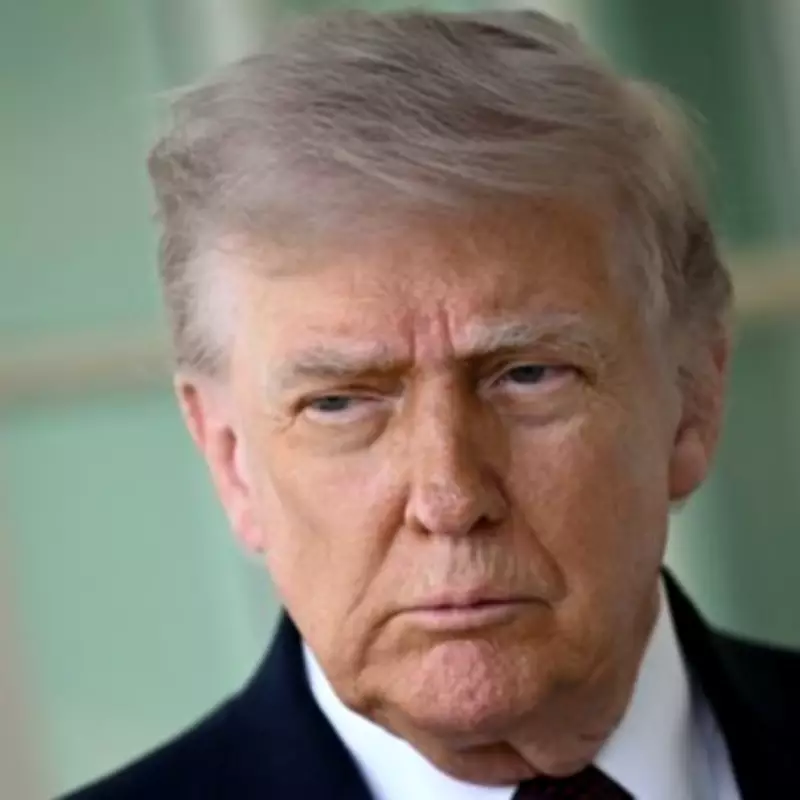
Medical specialists have issued a strong rebuttal to former US President Donald Trump's latest unfounded health assertion, which suggested that diet soft drinks possess cancer-killing properties. This controversial claim emerged during a recent podcast episode featuring Trump's eldest son, Don Jr., and has since drawn sharp criticism from healthcare professionals across the United Kingdom and beyond.
Trump's Bizarre Health Assertion
During an appearance on the podcast Triggered with Don Jr., Dr Mehmet Oz recounted a conversation with Trump aboard Air Force One. According to Dr Oz, Trump defended his consumption of an orange soft drink by stating, "You know, this stuff's good for me, it kills cancer cells." This remark appears to stem from Trump's belief that because diet soda can kill grass when poured on it, the same effect might apply to cancerous cells within the human body.
Expert Rejection of the Claim
Umar Razzaq, a registered UK pharmacist with over two decades of experience, provided a clear dismissal of Trump's assertion. "There is no scientific evidence to support the claim that diet or any soft drinks can kill cancer cells in the human body," Razzaq stated. He emphasized that while some beverages contain acids capable of damaging surfaces like grass, this has no relevance to cancer treatment in people.

Dr Andy Gaya, a consultant oncologist from Cromwell Hospital London, offered further clarification. "Your body tightly controls its acid levels, and drinking soda does not make your body acidic enough to kill cancer cells," he explained. Dr Gaya noted that although very acidic environments can damage cells in laboratory settings, this does not translate to therapeutic effects within the complex human biological system.
History of Controversial Health Statements
This incident is not an isolated case in Trump's engagement with medical science. During the COVID-19 pandemic, he falsely claimed that "99 per cent" of cases were "totally harmless" and controversially suggested injecting disinfectant as a potential treatment. The former president has also promoted the widely discredited link between autism and vaccines, while making misleading statements about abortion healthcare that caused significant concern among medical professionals.
The Dangers of Health Misinformation
Dr Tony Banerjee, a GP and founder of HarleyDoc who has personally recovered from advanced bowel cancer, expressed particular concern about the impact of such claims. "This is the sort of claim that sounds amusing until you remember how easily misinformation spreads," he warned. "When influential figures speak casually about health, some people will inevitably take those remarks seriously."
Banerjee highlighted the broader implications: "Cancer is not something that should be trivialised with pub-science logic. If a substance genuinely killed cells indiscriminately in the body, that would raise concerns about toxicity, not prove it is a treatment."
Context of Widespread Misinformation
Trump's comments arrive during a period of heightened concern about health misinformation. According to reliability assessment website NewsGuard, nearly half of Americans fell for false online claims in 2025, with artificial intelligence-generated content playing a significant role in misleading the public. A substantial 46 percent of Americans believed at least one false claim between June and December of that year.
Medical experts stress that even seemingly casual or humorous remarks from influential figures can have serious consequences. "Powerful people shape public understanding, and that comes with a responsibility not to amplify myths that could confuse or mislead patients," Dr Banerjee concluded, emphasizing the importance of evidence-based health messaging in an era of fragile public trust in medical advice.