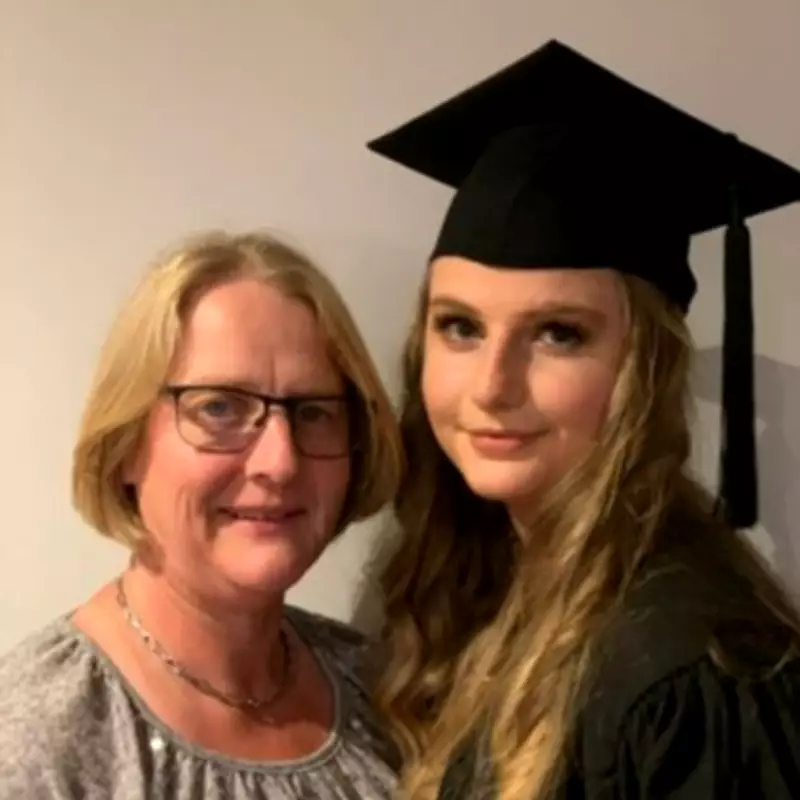
When Chloe Nightingale, a newly qualified teacher aged just 26, experienced a sudden and severe stroke in June, her family was confronted with the heart-wrenching instruction to say their final goodbyes. The incident occurred while she was visiting her father in Norfolk, where she began to feel unwell and lost sensation down her left side.
A Mother's Initial Disbelief
Chloe's mother, Wendy, recalls the distressing phone call from her daughter, who tearfully expressed, "Mum, I think I'm having a stroke." Wendy responded with disbelief, saying, "Don't be silly, you're not having a stroke, you're 26, perhaps something else has happened." Given Chloe's history of back issues, including bulging discs and a trapped nerve that had previously affected her left leg, Wendy initially attributed the symptoms to these pre-existing conditions.
Additionally, the family was awaiting a diagnosis for Tourette's syndrome, as Chloe exhibited some tics that could resemble epileptic fits. However, when Chloe started speaking incoherently and became confused, they immediately dialled 999. Paramedics arrived swiftly and placed Chloe into an induced coma to stabilise her condition.

Devastating News and a Glimmer of Hope
Upon arriving at the hospital, Wendy received the devastating news from doctors. "The doctor said to me, 'We've done a CT scan and there's nothing we can do for her. Come and say your goodbyes,'" she recounts. The medical team described the stroke as too severe, leaving the family in a state of shock and despair.
Miraculously, just ten minutes later, there was a turn of events. Addenbrooke's Hospital in Cambridge agreed to attempt a life-saving operation. Chloe was transferred that evening and underwent an intensive six-and-a-half-hour brain surgery. Wendy describes this period as "the longest six-and-a-half hours of my life." The procedure was successful, but doctors cautioned that due to the severity of the stroke, Chloe might never walk or talk again, and her recovery capacity remained uncertain.
The Long Road to Recovery
The neurosurgeons at Addenbrooke's Hospital saved Chloe's life, marking the beginning of an arduous recovery journey. She awoke from an eight-day coma unable to see, speak, walk, or eat. It would be 229 days before she was discharged from hospital, moving into the care of her mother in Bishop's Stortford, Hertfordshire.
Chloe's two brothers, Luke, 28, and Ben, 19, have been steadfast in their support. Wendy reports that her daughter is making remarkable progress, now able to walk short distances, talk again, and grow stronger each day. "She's been amazing and has fought and defied all the odds. She's very determined," Wendy adds, noting that doctors are impressed by her advancements despite initial grim predictions.
Ongoing Medical Challenges
A scan revealed that Chloe still has a rare arteriovenous malformation (AVM), an inoperable tangle of veins and blood vessels deep in her brain. This condition necessitates ongoing radiotherapy treatment. Furthermore, her short-term memory has been affected, though her long-term memory remains intact. The stroke impacted the left side of her brain, which controls the right side of her body, requiring additional therapy for full rehabilitation.
Financial Struggles and Community Support
The family faces significant financial hurdles in securing support for Chloe. She was deemed ineligible for disability benefits because she had not paid National Insurance during her unpaid teacher training course. To address this, Chloe's friend Hayley Bart-Williams has launched a GoFundMe campaign aiming to raise £15,000. The funds will cover private specialist physiotherapy, adapt Chloe's new home in Barking for her needs, and provide the stability and independence essential for her recovery.
Wendy has sought assistance by writing to Hertford and Stortford MP Josh Dean, while her partner, Claire, is fundraising by planning to run 229 kilometres, symbolising the 229 days Chloe spent in hospital. Wendy expresses immense gratitude for the support from family and friends, particularly during the initial weeks when she had to close her childminding business. "All my parents looked after each other's children and came together to support me. I couldn't have done it without them," she says.

Chloe's story highlights the unpredictable nature of strokes in young adults and underscores the critical importance of timely medical intervention and robust community support in overcoming such life-altering events.