A Father's Heartbreaking Journey from Bowel Cancer to Brain Tumour
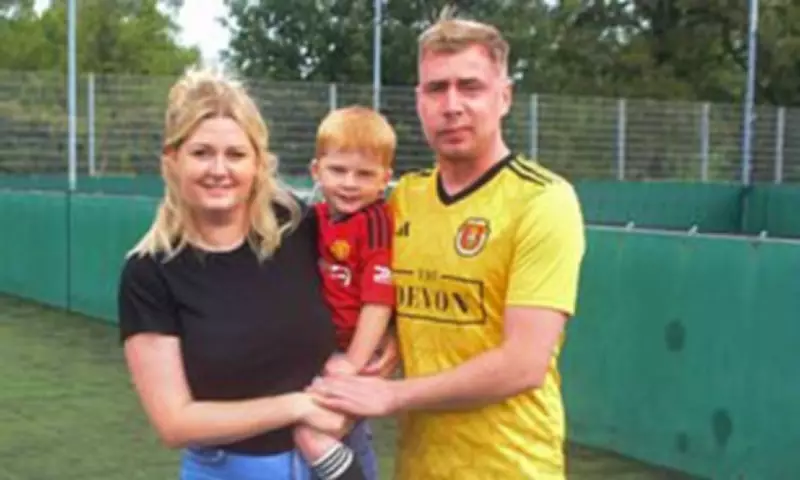
Just nine months after receiving the all-clear from bowel cancer, Phil Edmondson was dealt a shattering blow: he has less than 18 months to live, as the disease has returned, this time in his brain. The 39-year-old lorry driver from the Lake District, Cumbria, and his wife, Natalie, are now confronting the devastating reality that their two young children may grow up without a father.
Early Symptoms Dismissed as Clumsiness
In April 2025, Mr Edmondson began experiencing a loss of feeling in his right hand. 'It started with him dropping things more than usual,' Mrs Edmondson recalls. 'Then he kept getting pins and needles. We thought it might just be from driving all day.' Concerned, he visited his GP, who referred him for a CT scan and an MRI in late May. The results revealed a tumour on the left side of his brain.
Two weeks later, a biopsy confirmed the diagnosis, and on July 3, 2025, Mr Edmondson was told he had a primary grade four glioblastoma—an aggressive and malignant brain tumour that cannot be safely removed through surgery. 'It was a huge shock for all of us,' says Mrs Edmondson. 'Especially considering we have two children under five.'

A Swift Turn from Recovery to Crisis
The diagnosis came just a year after he was informed he had bowel cancer, for which he was given the all-clear in October 2024. 'He was just getting back to normal—playing football again and doing the things he loves—and then everything changed,' she explains. A lifelong football player who trained three times a week, Mr Edmondson now struggles with weakness down his right side and can only manage the occasional fundraising match.
With his mobility affected, he is no longer able to work or drive, and even simple daily tasks have become challenging. 'You don't realise how often you use your dominant hand until you can't,' his wife says. 'Even making a sandwich or filling our little one's milk bottle can be frustrating because it's so much harder for him now.'
Campaigning for Greater Awareness and Funding
Mrs Edmondson is speaking out on her husband's behalf, campaigning for increased awareness and funding for research into brain tumours. According to Cancer Research UK, this devastating disease affects 13,000 people in the UK every year, with over 5,400 losing their lives annually. Treatment typically involves surgery, radiotherapy, and chemotherapy, but due to the size and location of Mr Edmondson's tumour, surgeons have ruled out an operation.
Thanks to the support of his consultant, Mr Edmondson is receiving an immunotherapy drug as part of a clinical trial. However, access to such cutting-edge treatments is tightly restricted, and many patients do not meet the strict eligibility criteria. High-grade brain tumours like glioblastoma carry a bleak prognosis, with around 87% of patients dying within five years.
Despite this, brain tumours receive just one per cent of the national spend on cancer research in the UK—a figure that has remained largely unchanged for over two decades, even though the disease is the leading cause of cancer deaths in children and adults under 40. 'Because of the lack of government funding, there are limited treatment options,' says Mrs Edmondson. 'Compared to our experience with Phil's bowel cancer, there are far fewer choices for brain tumour patients.'
Challenges in Accessing Specialist Care
The couple also highlight a shortage of neurologists and neurosurgeons, with limited specialist treatment available in their area. 'We have to travel to Lancashire every day for six weeks for radiotherapy. It's a three-hour round trip. That's exhausting for someone going through treatment,' she explains. 'When he had bowel cancer, everything was handled locally. It's very different this time.'
Despite the devastating prognosis, the couple are determined to remain hopeful for the sake of their sons, aged four and 18 months. 'He's incredibly resilient and has such a positive attitude,' she says. 'We're not sitting around moping. We're trying to stay upbeat, keep doing normal things, and keep life as stable as possible for the children.'

Pushing for Change and Making Memories
The couple are backing a petition calling on the government to invest more in brain cancer research, which has already surpassed 100,000 signatures and will be considered for debate in Parliament. They have received support from public figures like Davina McCall, Frank Bruno, and Piers Morgan, who have shared their campaign on social media.
'The next step is to keep pressing our MPs and raising awareness,' says Mrs Edmondson. 'Brain cancer research needs to be taken seriously.' In the meantime, she adds, the focus remains simple: 'You've just got to throw everything at it. We don't know what the future holds. But right now, we're focusing on making memories with our boys.'
What is Glioblastoma?
Glioblastomas are fast-growing brain tumours and the most common type of cancerous brain tumour in adults. They develop from glial cells, which support the brain and spinal cord. All glioblastomas are grade 4, meaning they are fast-growing and cancerous. Around 32 out of every 100 primary brain tumours diagnosed in England between 1995 and 2017 were glioblastomas, according to Cancer Research UK.