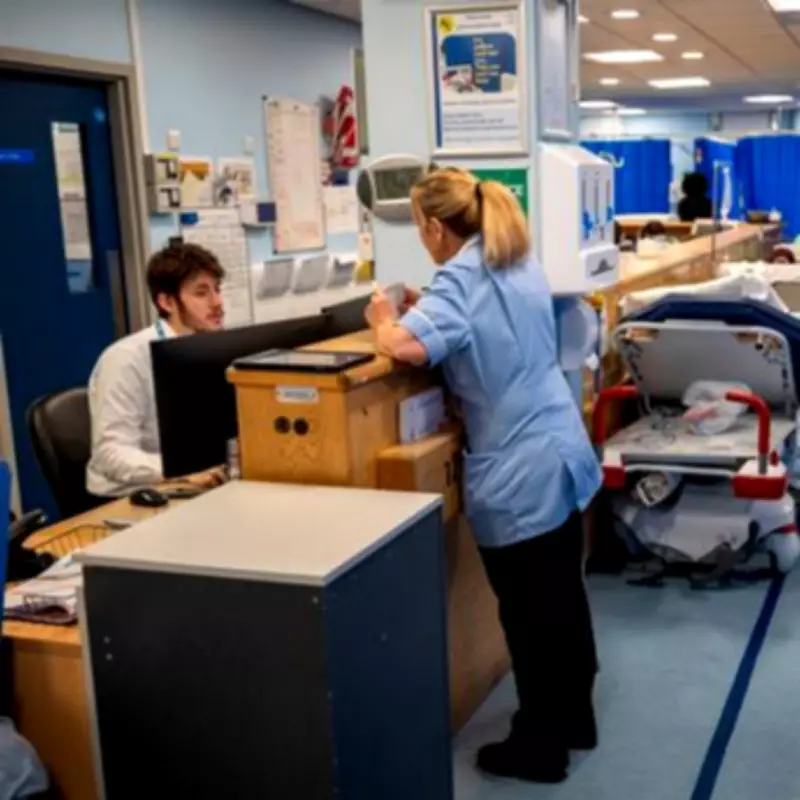
NHS Emergency Care in Crisis as Half a Million Patients Face 24-Hour A&E Waits
New data has exposed a severe crisis in NHS emergency care, with nearly half a million patients spending over 24 hours in A&E departments last year. Research published in the British Medical Journal reveals that 493,751 individuals endured these prolonged waits before being admitted to a hospital bed, transferred, or discharged.
Alarming Statistics on Extended Delays
Among these patients, a staggering 13,386 waited at least three days in emergency departments. The numbers of people spending a full day or more in A&E surged by one-third between 2023 and 2025, despite recent minor improvements in turnaround times.
Mumtaz Patel, President of the Royal College of Physicians, emphasised that such extensive waits were "almost unheard of" before 2020. She recounted distressing accounts from patients who now prefer to risk dying at home rather than face interminable hospital delays.

Normalisation of Long Waits and Corridor Care
Over a decade of Conservative governance has steadily normalised lengthy A&E waits, whereas delays exceeding 12 hours were previously exceptional. Official NHS England figures illustrate this deterioration: in December 2019, 2,356 patients waited over 12 hours on trolleys for beds, but by December 2025, this number skyrocketed to 50,775.
Doctors have expressed profound shame over these conditions. Dr Den Langhor, lead of the British Medical Association's consultants committee for emergency medicine, stated that the data "exposes the depth of the corridor care crisis in our emergency departments." He described scenarios where medical staff leave for the night only to return the next morning to find the same patients still waiting in corridors or waiting rooms, sometimes for a third consecutive day.
"This is undignified and unsafe," Dr Langhor asserted. "There is no excuse for hospital patients in a developed country being treated this way, and doctors are ashamed that it has come to this."Record Attendances and Official Responses
NHS England reported a record 2.43 million A&E attendances in March, driven partly by a meningitis outbreak in Kent, marking an increase of 16,000 from the previous high in May 2024. An NHS spokesman acknowledged that while waits over four hours are at a five-year low due to staff efforts, too many patients still face unacceptable delays in inappropriate spaces.
The spokesman highlighted ongoing reforms to the urgent and emergency care system, including targeted support for struggling trusts, which has shown early signs of reducing corridor care.
Political and Institutional Backdrop
The Mirror has documented how "corridor care" was quietly institutionalised by NHS England from 2022 onwards. Health Secretary Wes Streeting recently pledged to eliminate this practice by the next general election.
Nicola Ranger, now head of the Royal College of Nursing, resigned from her senior NHS leadership role in protest against the introduction of corridor care. Having risen from hospital cleaner to top nurse, Professor Ranger ended her frontline career early to avoid overseeing changes she believed would "take years to recover from."
Historically, caring for patients in "temporary escalation spaces" like corridors and store cupboards was an emergency measure limited to 24-72 hours. However, in 2022, NHS England decided to normalise these spaces to expedite ambulance availability, a move that has exacerbated the crisis.
A prolonged NHS funding squeeze under Tory administrations since 2015, compounded by the Covid pandemic's impact on ambulance delays, has fueled this surge in waiting times. The pandemic saw 999 responses become dangerously delayed as ambulances queued outside overcrowded A&Es.