The National Health Service in England is bracing for severe disruption this week as resident doctors begin a five-day strike, having overwhelmingly rejected a last-minute government offer. The industrial action, the 14th since March 2023, coincides with a record winter flu surge, leading health officials to fear a perfect storm that will hit patient care hard.
Strike Proceeds Amid Record Winter Pressures
Resident doctors, formerly known as junior doctors, voted by 83% to 17% to reject the deal proposed by Health Secretary Wes Streeting. This decisive vote means a planned five-day walkout, starting at 7am on Wednesday, will now go ahead. NHS bosses estimate the strike has already forced the rescheduling of approximately 38,500 outpatient appointments and treatments, including vital cancer care such as chemotherapy and radiotherapy.
The timing is described as particularly dangerous due to a concurrent "flu-nami" sweeping the country. Currently, 2,660 people are hospitalised with flu, a record high for this time of year, with NHS England chief executive Sir Jim Mackey warning numbers could soon reach 8,000.

Government and Union Locked in Verbal Battle
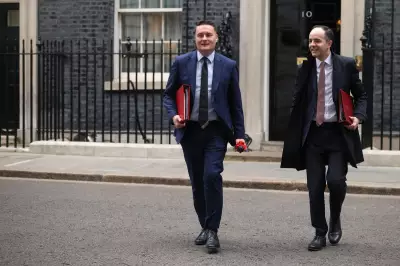
The breakdown in talks has ignited a fresh war of words between the government and the British Medical Association (BMA). Wes Streeting labelled the industrial action "self-indulgent, irresponsible and dangerous", criticising the BMA's pursuit of a further pay rise as a "fantasy demand". He highlighted that junior doctors' salaries have already increased by 28.9% since 2022.
His rejected offer included a pledge to double the number of training places for early-career doctors from 2,000 to 4,000, but did not include an additional pay rise for 2025/26, which he has ruled out.
The BMA hit back strongly. In a Guardian comment piece, Dr Jack Fletcher, head of the BMA's junior doctors committee, accused the government of "spin". He argued the offer merely "repurposed" existing locally employed doctors and was akin to "just shuffling the deck chairs on a sinking ship". He stated the 2.5% pay uplift offered for 2026/27 represented a "real-terms pay cut" with inflation closer to 4%.
Patient Safety Fears and Calls for Mediation
The Patients Association has urgently called for independent, third-party arbitration to break the deadlock in the nearly three-year dispute. Its chief executive, Rachel Power, said mediation was the "only credible path to a lasting solution that protects patients," and must happen immediately to end the "endless cycle of disruption, cancellations and anxiety".
Hospital leaders echoed deep concerns. Rory Deighton, acute and community director at the NHS Confederation, warned the strikes were "disproportionate" and could put patient safety at risk during the flu surge. He urged the BMA to call off the action and moderate its demands.
NHS England's national director for emergency planning, Mike Prentice, stated that due to the combination of winter pressures and the proximity to Christmas, the operational impacts of this strike are expected to be more severe than previous rounds. A senior NHS official admitted hospitals may be unable to provide the 95% of planned, non-urgent care they managed during the last stoppage.
Furthermore, the strike threatens to derail hospitals' traditional pre-Christmas efforts to discharge well-enough patients to free up beds. Consultants will be too busy covering for striking juniors to facilitate this, potentially leaving the NHS exposed during the expected festive cold snap.