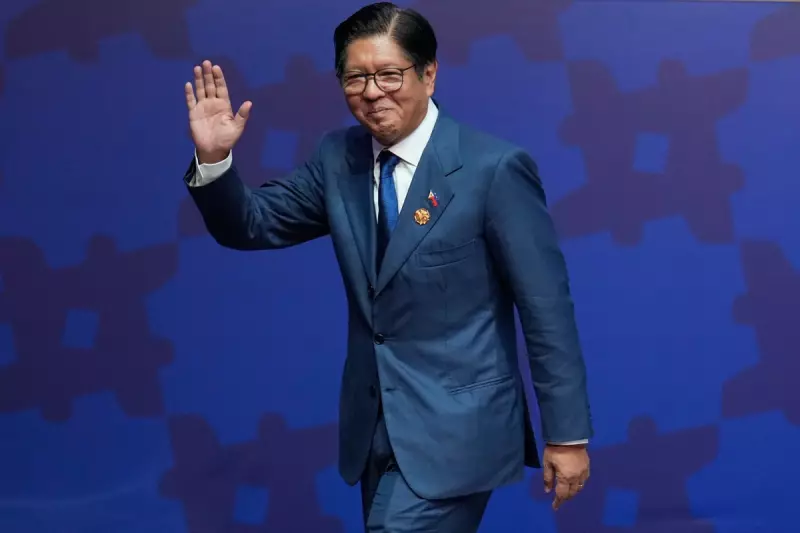
Philippine President Ferdinand Marcos Jr. has been discharged from hospital after receiving overnight treatment for an abdominal ailment, with the leader attributing his condition to the combined effects of stress and advancing age.
President's Health Update and Video Statement
The 68-year-old president was admitted to hospital overnight for medical observation concerning an abdominal complaint. According to Communications Undersecretary Claire Castro, Marcos was subsequently released back to his residence and managed to attend two private meetings on Thursday, demonstrating his return to normal activities.
In a video statement released by Castro, a smiling Marcos appeared in a white long-sleeve office shirt and reassured the public about his condition. "I'm fine," he stated confidently. "I'm feeling very, very different from the way I was feeling before, but the problem has been fixed."

Diagnosis and Medical Explanation
Marcos revealed that he has been diagnosed with diverticulitis, describing it as a "common complaint amongst, apparently people who are heavily stressed and people who are, I have to admit, growing old." This medical condition involves inflammation of small pouches that develop in the digestive tract, typically within the colon, which can lead to symptoms including abdominal pain, fever, nausea, and constipation.
Addressing Political Rumours with Humour
When questioned by Castro about what message he had for political opponents who might wish for his departure from the presidency, Marcos responded with characteristic humour. "Don't get too excited yet because it's not a life-threatening condition," he remarked with a laugh.
The president further quipped, "Don't worry. The rumors of my death are highly exaggerated," directly addressing circulating speculation about his health status and political future.
Leadership Challenges During Presidency
Since assuming office in mid-2022, President Marcos has navigated numerous complex challenges and political dilemmas that have undoubtedly contributed to the stress he mentioned. These significant pressures include an increasingly tense territorial dispute with Beijing in the strategically vital South China Sea, which remains a persistent foreign policy challenge.
Domestically, the administration has confronted devastating natural disasters including earthquakes, typhoons, and widespread flooding that have tested national resilience and emergency response capabilities. Economic difficulties continue to present substantial governance challenges, while tumultuous relations with the vice president have added political complexity to the administration's operations.
Furthermore, a corruption scandal involving powerful legislators has sparked considerable public outrage, creating additional pressure on the presidential administration to demonstrate transparency and accountability in governance.
The combination of these substantial international and domestic pressures provides context for the president's comments about stress contributing to his recent health episode, highlighting the demanding nature of leadership during particularly challenging political and economic periods.