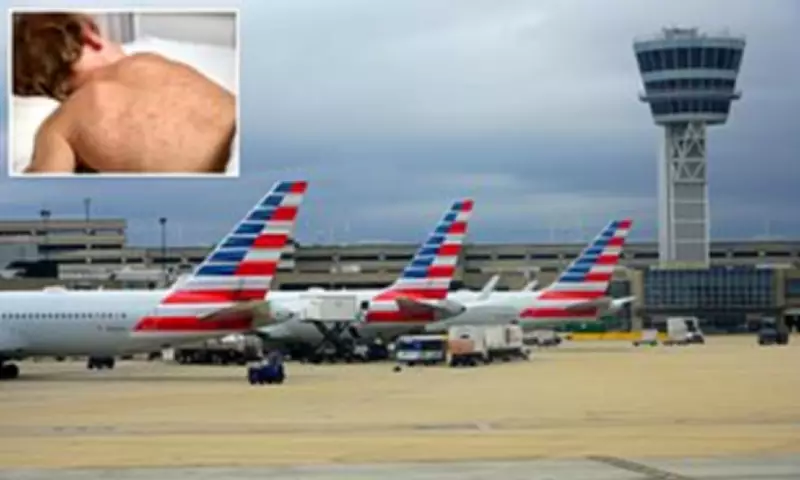
Health authorities in Philadelphia have issued a significant public health alert after confirming that a person with measles traveled through Philadelphia International Airport earlier this month. Officials revealed that the unidentified individual passed through Terminal E on Thursday, February 12, between 1:35pm and 4:30pm Eastern Time.
Potential Exposure for Thousands of Travelers
The Philadelphia Department of Public Health announced the concerning situation, noting that thousands of travelers passing through the busy airport may have been exposed to the highly contagious virus. No further details were provided about the individual, including their vaccination status or current location.
Dr. Palak Raval-Nelson, health commissioner for the Philadelphia Department of Public Health, stated on Monday: 'We believe there is no threat to the general public associated with this case of measles.' However, she emphasized the importance of vaccination for those who might have been exposed.

Understanding the Measles Risk
While officials maintain the overall risk is low, they have issued specific warnings for unvaccinated individuals. People who have not received both doses of the measles, mumps, and rubella (MMR) vaccine can contract the virus up to two hours after an infected person has left the same room or airspace.
Measles represents a serious public health concern characterized by:
- Flu-like symptoms including cough and fever
- A distinctive, blotchy rash that typically begins on the face before spreading downward
- Tiny white spots inside the mouth called Koplik spots
Severe Health Consequences
In severe cases, the measles virus can travel to the lungs and brain, leading to potentially life-threatening complications:
- Pneumonia
- Brain swelling (encephalitis)
- Seizures
- Death in extreme cases
Dr. Raval-Nelson emphasized the importance of vaccination: 'We encourage people who were possibly exposed to take action if they are not protected against measles. Many countries, including travel destinations, are experiencing measles outbreaks, so the risk of travel-related measles cases remains.'
Vaccination Effectiveness and Current Outbreaks
The measles vaccine demonstrates remarkable effectiveness, with a 97 percent success rate at preventing infection. According to CDC estimates, unvaccinated individuals face a 90 percent chance of contracting measles if exposed to the virus.
Current outbreak data reveals concerning trends:
- South Carolina has reported 950 measles cases since October 2025
- Nationwide data shows 842 measles cases in 2026, with 605 concentrated in South Carolina
- Pennsylvania has reported eight cases in 2026, six of which occurred in Lancaster County
Transmission Dynamics and Historical Context
Measles spreads through direct contact with infectious droplets or through airborne transmission. Infected individuals remain contagious from four days before the rash appears through four days after it emerges. Enclosed spaces like airports and airplanes present particularly risky environments for disease transmission.
The virus initially invades the respiratory system before spreading to lymph nodes and throughout the body, potentially affecting the lungs, brain, and central nervous system.
Complications and Immune System Impact
Beyond the immediate symptoms, measles can cause serious complications:
- Pneumonia develops in approximately six percent of otherwise healthy children
- Brain swelling occurs in about one in 1,000 cases, with 15-20 percent mortality
- Approximately 20 percent of encephalitis survivors experience permanent neurological damage
Perhaps most concerning is measles' ability to severely damage a child's immune system, leaving them vulnerable to other bacterial and viral infections they were previously protected against.
Vaccination Schedule and Herd Immunity
The MMR vaccine follows a standard administration schedule:
- First dose between ages 12 and 15 months
- Second dose between ages four and six
Herd immunity requires vaccination rates of at least 95 percent, yet Lancaster County reports only 88.5 percent of kindergarteners have received both MMR doses.

Historical Perspective and Progress
Before MMR vaccines became available in the 1960s, measles caused devastating global epidemics with up to 2.6 million deaths annually. By 2023, vaccination efforts had reduced this number to approximately 107,000 deaths worldwide, demonstrating the critical importance of maintaining vaccination coverage.
Philadelphia International Airport, which handles between 50,000 and 90,000 passengers daily (approximately 31 million annually), continues to monitor the situation while urging vaccination for all potentially exposed individuals.