Health officials are urging the public to consider wearing face masks again as the National Health Service braces for what is being described as a 'historic crisis' this winter. The warning comes amid a record number of people hospitalised with flu, the threat of further industrial action, and a concerning surge in multiple respiratory viruses.
'Flunami' of Viruses Prompts Mask Guidance Revival
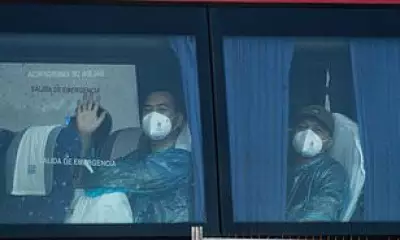
The UK Health Security Agency (UKHSA) has reissued guidance stating that face coverings 'continue to be a useful tool' in curbing the spread of respiratory infections. Officials emphasise that a well-fitting mask worn by someone who is unwell can significantly reduce the number of virus particles they release. Masks also offer protection to the wearer from viruses like Covid-19 and Respiratory Syncytial Virus (RSV).
This advice follows the imposition of mandatory mask rules in specific hospital areas. The United Lincolnshire Teaching Hospitals NHS Trust now requires face coverings in high-risk zones across four hospitals due to rising flu, Covid, and RSV cases. Similarly, the Shrewsbury and Telford Hospital NHS Trust is asking patients to mask up in emergency departments, cancer wards, and neonatal units.

Professor Lawrence Young, a virologist at the University of Warwick, told the Daily Mail: 'We're heading for a very challenging flu season... This includes wearing face masks in crowded and poorly ventilated spaces.'
Record-Breaking Flu Wave Hits Hospitals
Data reveals the immense pressure already facing the NHS. Last week, an average of 1,717 flu patients were in hospital beds each day in England, with 69 in critical care. This figure is 56% higher than the same week last year and marks a record level for this time of year.
Professor Julian Redhead, NHS national medical director for urgent and emergency care, stated the latest figures 'confirm our deepest concerns: the health service is bracing for an unprecedented flu wave this winter.' He warned that ballooning flu cases coinciding with strikes could stretch staff 'close to breaking point'.
UKHSA data shows the hospital admission rate for flu has jumped sharply to 7.8 per 100,000 people, nearly double the rate at this point in 2023. The highest rates are among the over-85s and children under four.
Industrial Action and Systemic Strains Compound Crisis
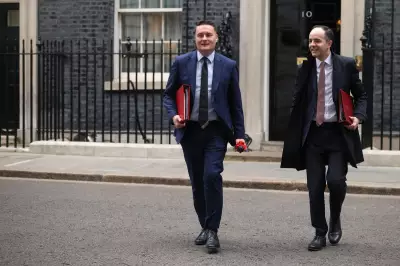
The health service's challenges are multiplied by planned industrial action. Junior doctors in England are set to begin a five-day strike from December 17th, a move Health Secretary Wes Streeting labelled 'irresponsible and high risk' given current pressures. New YouGov polling suggests public support for this strike action has waned.
Further strain is evident in ambulance handover delays, with 30% of patients waiting over 30 minutes at A&E last week. Meanwhile, a sharp 49.6% drop in the number of internationally educated nurses joining the Nursing and Midwifery Council register has sparked warnings over deepening workforce shortages.
Sarah Woolnough of The King's Fund think tank summarised: 'The NHS is entering the most challenging period of the year with pressures hitting the health and care service from all directions.'
Amid the turmoil, officials stress that vaccination remains the best defence, urging all eligible groups to get their flu and Covid jabs promptly to build protection before the festive period, when viruses are expected to peak.