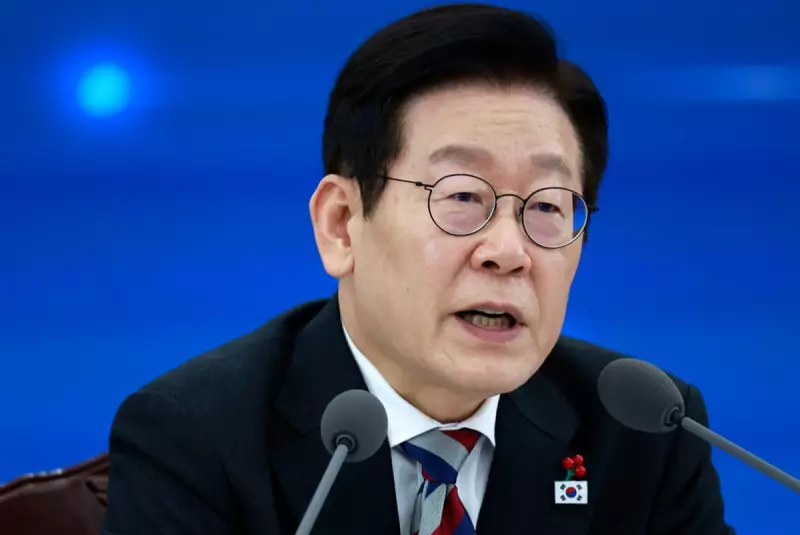
South Korea's President, Lee Jae Myung, has directed his government to explore a significant expansion of the country's public health insurance to include treatments for hair loss. He frames the issue as a critical 'matter of survival' for young people, moving it beyond mere cosmetic concern.
A Policy Reborn Amidst Cultural Pressure
The instruction was issued during a government policy briefing on Tuesday. President Lee argued that the current system creates a 'sense of alienation' among young citizens who pay insurance premiums but see no benefit for a condition causing them significant distress. He first floated this idea during his 2022 presidential campaign, where critics dismissed it as populist, before dropping it from his recent platform.
This proposal underscores South Korea's intense societal focus on appearance. A striking 2024 survey found that 98% of young adults believe attractive people receive tangible social advantages. While women face acute pressure over makeup and body shape, the issue for men, though less openly discussed, remains potent, driving many to seek expensive, out-of-pocket treatments or adopt hairstyles to disguise thinning hair.

Financial Strain and Fierce Opposition
The timing of the proposal is contentious. South Korea's National Health Insurance Service is under severe financial pressure, with internal projections warning of a potential deficit of 4.1 trillion won (£2.1bn) by 2026. Currently, the universal scheme, funded by income-based premiums, only covers hair loss from specific medical causes like alopecia areata, excluding the common male pattern baldness.
The backlash has been swift. The powerful Korean Medical Association stated that funds should be prioritised for cancer and serious diseases, aligning better with core health insurance principles. Conservative media outlets have been scathing. The Chosun Ilbo editorialised that the president should not issue such instructions without consulting the premium-paying public.
Even within the government, Health Minister Jeong Eun Kyeong urged caution. She interpreted Lee's 'survival' comment as relating to young people's confidence in job searches and mental health, acknowledging that expanding coverage would likely have a substantial financial impact requiring deep analysis.
The Scale of the Issue and a Lone Voice of Support
The domestic hair-loss treatment market is estimated to be worth around 188 billion won (£95m). Industry groups claim up to 10 million South Koreans experience hair loss, though this figure is not officially verified. Popular hair-loss shampoos have also faced scrutiny over efficacy claims.
Amid the criticism, a notable voice of support came from ruling party MP Park Joo-min, known for advocating on hair-loss issues and having undergone a transplant himself. He posted 'truly Korea!' on social media platform X in an apparent endorsement. However, figures like former lawmaker Yoon Hee-sook, whose relative is undergoing cancer treatment, argued that the social consensus still prioritises treatments for life-threatening conditions over hair loss.
The debate now centres on whether addressing the psychological and social ramifications of baldness for millions constitutes a valid use of public health funds, or if it risks undermining the financial and ethical foundations of a system designed for critical medical care.