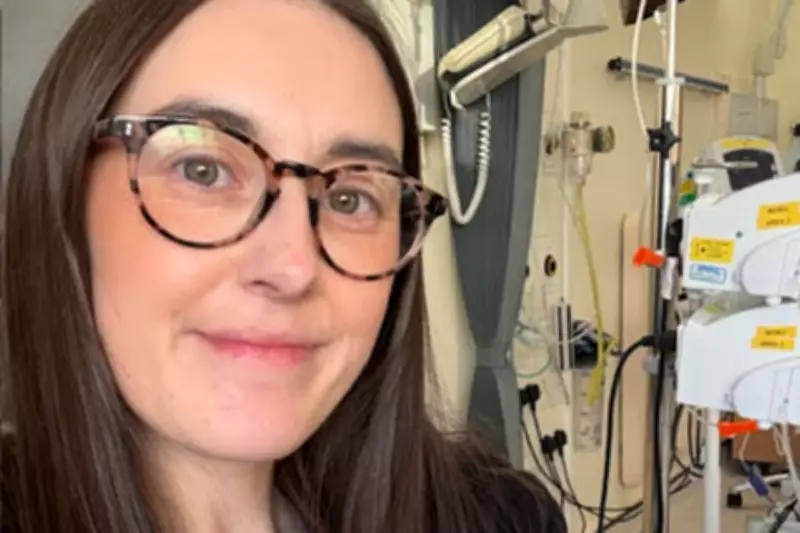
Mother's Stage 4 Bowel Cancer Diagnosis at 34 Sparks Urgent Screening Age Campaign
Kirsty Laing, a 34-year-old mother working in the radiology department at the Royal Alexandra Hospital in Paisley, Scotland, initially dismissed her stomach cramps as a minor issue. However, her intuition told her something was seriously wrong, leading to a devastating diagnosis of stage four bowel cancer that had spread to her liver.
From Stomach Twinges to Life-Altering Diagnosis
When Kirsty first noticed a "twinge" in her stomach during the summer, she never imagined it could be bowel cancer. As weeks progressed, the cramps intensified, eventually leaving her bedbound and unable to attend scheduled colonoscopy examinations. Her concerned partner, James Mills, took her to hospital where doctors performed an urgent CT scan.
The scan revealed a tumour on her bowel that had metastasized to her liver. Medical professionals warned that without immediate surgery, the tumour could perforate at any moment. "From that point, I think my whole world stopped," Kirsty recalled. "Those four days in hospital were just like a blur. I don't remember being scared. I don't remember crying. It all just happened so quickly."

Launching a Vital Campaign for Earlier Screening
Following her formal diagnosis, Kirsty began curative chemotherapy and is now in the final stages of treatment. Her shocking experience has motivated her to launch a crucial campaign advocating for the bowel cancer screening age to be lowered from 50 to 30. Her petition has already garnered nearly 50,000 signatures, demonstrating significant public support for this change.
"I just want as many people to have a fighting chance at surviving if they are diagnosed with bowel cancer," Kirsty explained. "My main thing is I beat myself up so much over why didn't I catch this sooner? Because I physically couldn't have. They asked me all the time: 'Have you noticed any kind of changes in your bowel habits?' I didn't notice a lot of change."
Rising Early-Onset Bowel Cancer Cases
Key symptoms for bowel cancer typically include blood in stools, altered bowel habits, abdominal pain or lumps, unexplained weight loss, and extreme fatigue. However, Kirsty's case highlights how symptoms can be misleading, particularly for younger individuals who might attribute them to menstrual pains or other common issues.
Early-onset bowel cancer affecting those aged 25 to 49 has seen a dramatic 52 percent increase in diagnosis since the 1990s, according to Cancer Research UK. Genevieve Edwards, CEO of Bowel Cancer UK, expressed concern about this trend: "What we've seen over recent years is the number of younger people being diagnosed going up around the world and here in the UK. The number is small but significant."
Current Screening Protocols and Future Considerations
The UK National Screening Committee (UK NSC), an independent advisory body, currently determines screening age thresholds based on comprehensive evidence reviews. Nicola Smith, senior health information manager at Cancer Research UK, explained that evaluations must balance benefits against potential harms like overdiagnosis of harmless cancers.
Despite these considerations, NHS England announced plans in January to lower the threshold for home-screening kits to trigger urgent cancer testing. A Department of Health and Social Care spokesperson confirmed: "This government is committed to making it easier to get tested for bowel cancer. The NHS is rolling out a higher-sensitivity test for bowel cancer home-screening kits which would detect around 600 more bowel cancers early in England."
Government Responses and Expert Perspectives
Scottish public health minister Jenni Minto expressed sympathy for Kirsty's situation but noted that screening policies follow UK NSC recommendations: "While I understand her desire for bowel screening to be offered to people from the age of 30, the Scottish government, along with the other UK nations, relies on screening advice from the independent expert advisory group."

Genevieve Edwards emphasized the importance of awareness for younger individuals: "For people under the age of 50, there isn't a screening programme available to them. But if you've got any symptoms of bowel cancer, go to your GP and ask for a test to do at home. It's the same test as the screening test, and you don't have to be over the age of 50 for that."
Experts continue to investigate why early-onset bowel cancer cases are rising, with theories pointing to genetic factors, lifestyle changes, and environmental influences. More research is urgently needed to understand this troubling trend and develop effective prevention strategies for younger populations.