Steffni Randle's Remarkable Journey with Duchenne Muscular Dystrophy
As a toddler, Steffni Randle experienced frequent falls that doctors initially dismissed as ordinary childhood clumsiness. However, her mother Sally sensed something more serious was at play. At just two years old, Steffni received a devastating diagnosis: Duchenne muscular dystrophy, a progressive genetic disorder that weakens muscles over time. Now 27 years old, Steffni has not only survived well beyond the age of seven—the lifespan doctors predicted—but she lives a full and active life thanks to a revolutionary medical device.
The Life-Saving Halo Brace: A Permanent Solution
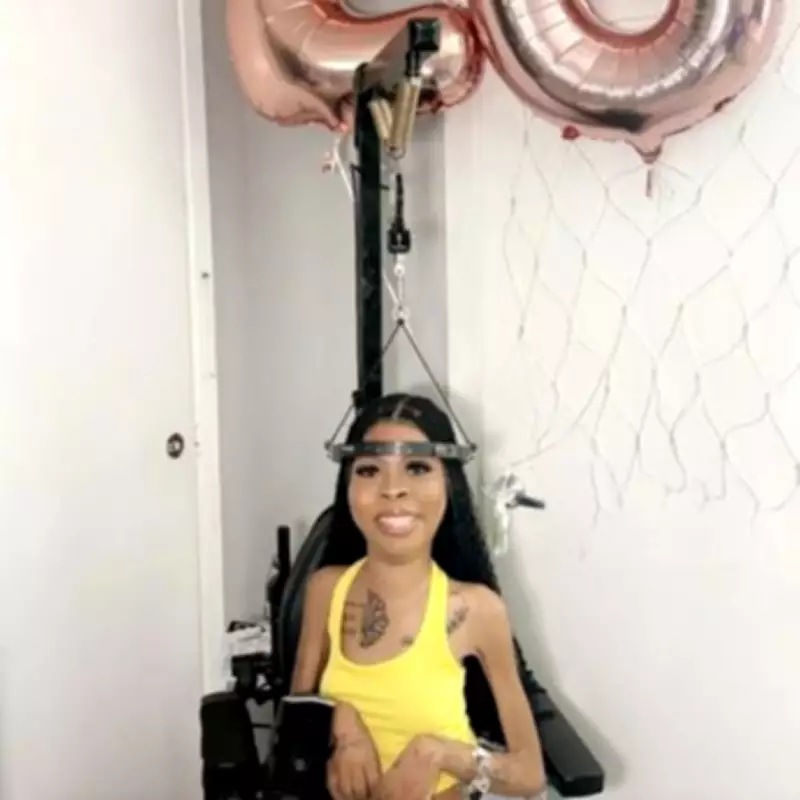
Steffni's condition led to severe scoliosis, causing her spine to curve into an S-shape that dangerously compressed her right lung. At age 11, she underwent surgery to attach a Halo brace, a metal frame secured by 15 screws anchored directly into the outer layer of her skull. This device connects to traction that supports and straightens her spine, providing stability she desperately needed.
Originally intended as a temporary measure before major spinal surgery, the Halo became a permanent fixture in Steffni's life. Tests revealed that spinal surgery would be too risky due to her weakened respiratory muscles, making the Halo the safest long-term option. Sixteen years later, it has become an integral part of her identity and daily routine.

Defying Odds and Embracing Independence
"It has completely changed my life in positive ways," Steffni explained. "It's allowed me to be more independent and do things I thought I would never be able to do." Despite relying on a power wheelchair full-time since age seven when her muscles could no longer support walking, she has achieved milestones once deemed impossible. With the aid of a specialist walker, Steffni can now take assisted steps, a feat she once believed unattainable.
Her journey hasn't been without challenges. Steffni uses a breathing machine at night to prevent dangerous pauses in breathing, as Duchenne also affects her respiratory muscles. "There is no cure for my condition, and it is slowly progressive," she acknowledged. "But I promised myself I'm going to live life to the fullest for as long as I can."
Social Media Advocacy and Personal Resilience
Steffni shares glimpses of her life on social media with her 90,000 followers, using her platform to encourage others facing disability, illness, or mental health struggles. As one of 50 million women with Duchenne muscular dystrophy, she aims to inspire and educate. However, she also faces cruel comments online, which she meets with unwavering resilience. "You could never make me hate my life," she declared. "If people can't accept me with my Halo and my wheelchair, then they were never meant to be in my life."
Her confidence has grown steadily over the years, supported by her mother and brothers. "I was very self-conscious when I was younger," Steffni admitted. "You definitely feel different when people are always looking." Now, she embraces her appearance and the stares it sometimes attracts. Her brother Tyrone praised her spirit, saying, "She's living life to her best and doing what she likes to do," while her other brother Trey added, "She's the strongest person I know."
A Message of Hope and Perseverance
Steffni's story is a testament to human resilience and medical innovation. From the early days of misdiagnosed clumsiness to thriving with a complex medical device, she continues to defy expectations. Her advice to others facing adversity is simple yet powerful: "But always remember, it's just a bad day, not a bad life." Through her advocacy and personal journey, Steffni Randle exemplifies courage and determination, proving that even the gravest predictions can be overcome with strength and support.