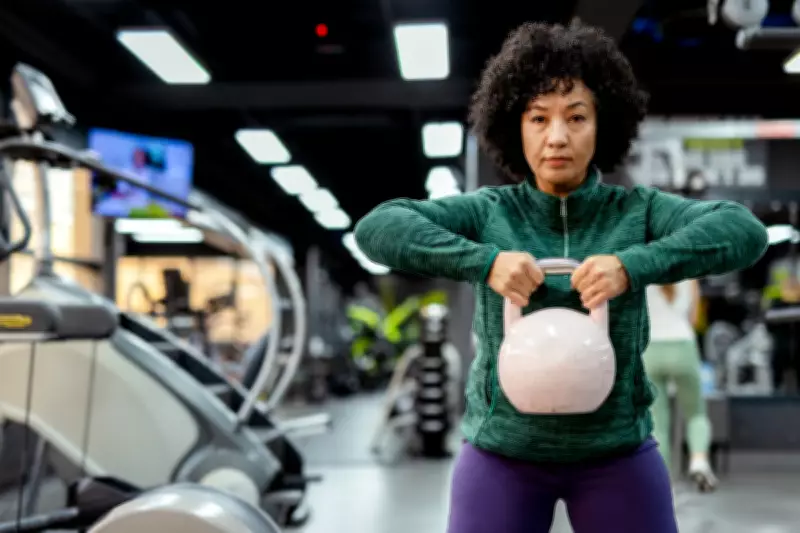
Strength Training Emerges as Key to Longevity for Older Adults
While walking is widely praised for its accessibility and health benefits, forming the core of most government exercise advice, new research suggests that strength training may be far more vital for long-term fitness, especially as we age. A study led by Dr Michael LaMonte at the University at Buffalo underscores the immense value of building skeletal muscle, revealing that greater strength levels are strongly linked to a reduced risk of death in older women.
The Critical Role of Muscle in Aging
Walking is brilliant—it's affordable, enjoyable, and offers numerous health perks. However, strength underpins all movement. Without the ability to rise from a chair or take steps, walking advice falls short. Dr LaMonte's research, involving over 5,000 women aged 63 to 99, found that higher strength levels significantly lowered the risk of death from any cause over an eight-year period. Maintaining muscle is not just about physical function; it's a savvy investment in independence, with muscles powering breath, regulating blood sugar, emitting anti-inflammatory myokines, and communicating with other bodily systems to ensure smooth operation.
In essence, muscle is a medical marvel we all possess, and preserving it is crucial for decades of health.

Why Strength Training Deserves More Attention
Aerobic exercise like walking, running, swimming, and cycling dominates government guidelines due to extensive research, but strength training has been understudied, often focusing on young, fit men. By examining older women, this study could reshape future exercise recommendations. Dr LaMonte explains that menopause accelerates muscle loss as estrogen declines, leading to unhealthy fat accumulation in the belly. Both men and women face sarcopenia—age-related muscle loss—exacerbated by reduced activity, which triggers inflammatory processes.
This shift not only affects mobility but disrupts chemical signaling between muscles and systems like the heart. Fat tissue secretes pro-inflammatory cytokines, while contracting muscles release anti-inflammatory myokines, discovered by Bente Pedersen in the 2000s. Though exact interactions remain unclear, strong muscles act as a powerful force for overall health.
Simple Tests to Gauge Your Strength
Dr LaMonte's study used straightforward assessments to evaluate strength in older women:
- Grip strength: Measured with a dynamometer, indicating upper-body strength.
- Sit-to-stand: Timed test of standing up and sitting down five times, showing lower body strength.
- Gait speed: Timing a 2.5m walk, a potent predictor of mortality.
Greater grip strength and faster sit-to-stand times correlated with significantly lower death risk. Dr LaMonte advocates for healthcare to prioritize functional health over drug prescriptions, as strength is a behavior, not a treatable condition. He also suggests the pickle jar test: difficulty with everyday tasks like opening jars or climbing stairs signals declining strength, potentially indicating disease or fitness loss.
Starting Strength Training at Any Age
The human body reflects its life experiences, with active individuals often maintaining robustness as they age. Dr LaMonte emphasizes that age shouldn't limit enjoyment; many seniors thrive in gyms. For beginners, start conservatively with bodyweight exercises like wall press-ups or sit-to-stands, breaking up prolonged sitting—common in older adults—with frequent movements. Resistance bands or household items like soup cans provide effective stimulus.
The key is overcoming slightly challenging resistance to trigger muscle growth. If lifting a can feels tough, that's the right level; progress gradually as strength improves. Older adults should consult healthcare providers before starting. Building strength early pays off lifelong, supporting healthy aging and independence.
In conclusion, strength training is essential at any age, with Dr LaMonte noting, "We want to live as long as we can healthily, and resistance exercises are a part of that." When we lose the ability to move, we face serious trouble, making muscle maintenance a cornerstone of longevity.