Toxic Relationships Accelerate Cellular Ageing by 1.5% Per Hassler
A groundbreaking new study has issued a stark warning: having difficult people in your life could be ageing you faster on a biological level. Whether it's a lingering ex-partner, a toxic friend, a rude neighbour, or a frustrating colleague, most individuals encounter at least one person who consistently creates problems and stress. Researchers have now discovered that these so-called 'hasslers' genuinely impact your health, elevating stress levels and accelerating biological ageing by approximately 1.5 per cent for each additional problematic individual.
Internal Age Versus Chronological Age
This acceleration means your 'internal age'—determined by the health and functionality of your cells—becomes higher than your actual chronological age. The implications for long-term health and life expectancy are significant, as it indicates your cells are deteriorating more rapidly than they should. This accelerated cellular decline is closely linked to the development of chronic diseases, including cancer and dementia. The research team from New York University emphasised, 'Each additional hassler is associated with faster biological ageing,' with particularly pronounced effects observed when the hassler is a family member.
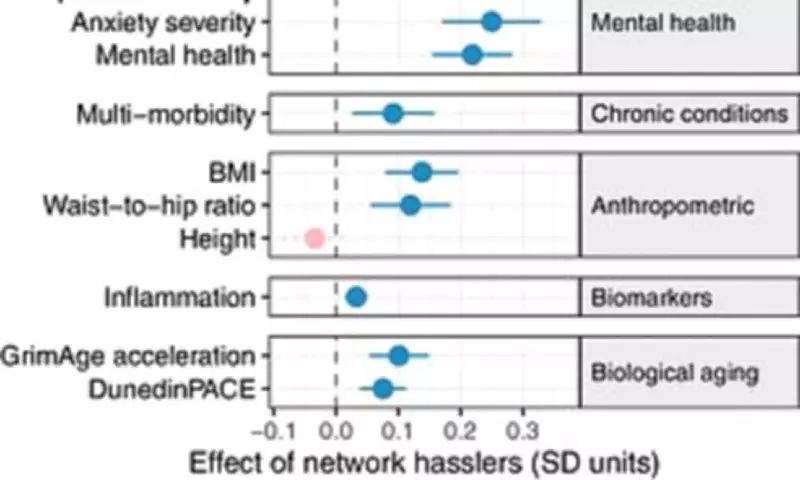
The study underscores that the 'dark side' of social connections can erode physiological resilience, hasten the ageing process, and promote the onset of multiple health conditions. Researchers found that having more hasslers in one's social network not only led to quicker biological ageing but also correlated with increased mental health issues and higher levels of systemic inflammation.

Study Methodology and Key Findings
For their investigation, the researchers analysed comprehensive data from over 2,000 participants in a detailed health survey. Participants provided insights into their relationships over the preceding six months, specifically reporting how frequently someone in their lives 'hassled them, caused problems, or generally made their lives more difficult.' Additionally, they supplied saliva samples, enabling scientists to measure epigenetic changes in their DNA, which serve as markers for biological ageing.
The analysis revealed a clear pattern: for every additional hassler a person regularly interacted with, their rate of biological ageing increased by around 1.5 per cent. This translates to an individual contending with a hassler potentially ageing by about 1.015 biological years for each calendar year. 'Although this yearly increase is modest, it accumulates over time,' the team noted in their publication in the journal Proceedings of the National Academy of Sciences. 'Over a 10-year period, this faster rate results in about 1.8 extra months of biological aging for those with an additional hassler.'
Understanding Biological Ageing
Biological ageing refers to how old your body functions internally, based on cellular health and overall physiological condition—which can differ substantially from your chronological age, the number of years you have been alive. For instance, two individuals both aged 40 could have vastly different biological ages: Person A, who exercises regularly, maintains a balanced diet, and gets adequate sleep, might have a body functioning like that of a 35-year-old. In contrast, Person B, who smokes, leads a sedentary lifestyle, and experiences high stress, could have a body functioning akin to a 50-year-old.
Demographic Insights and Relationship Dynamics
Further analysis uncovered notable demographic trends: women tended to report more difficult people in their lives compared to men. Additionally, parents and children were more frequently identified as sources of stress than spouses. Interestingly, spouses who were considered hasslers did not appear to significantly affect biological age, possibly because the supportive aspects of a marital relationship 'buffered' the negative impacts. Outside familial contexts, participants were more likely to name roommates, neighbours, and co-workers as hasslers rather than friends.

'In everyday life, many individuals routinely encounter people who create problems or make life more difficult—who we refer to as hasslers,' the researchers elaborated. 'Their familiarity often leads people to normalize and endure them, which has resulted in surprisingly little attention to their long-term health implications.' Individuals with a higher number of hasslers reported poorer general health, worse mental health, and diminished physical well-being.
Physiological Mechanisms Behind Ageing Acceleration
The authors explained that negative social interactions contribute to faster biological ageing by straining the body's hypothalamic-pituitary-adrenal axis, the primary system responsible for managing stress responses. This axis involves a series of organs that release hormones. When individuals frequently encounter hasslers, their bodies activate stress-related systems, triggering the release of hormones such as cortisol and adrenaline.
While these hormones are crucial for addressing immediate challenges, their prolonged activation can detrimentally affect mental health, heightening feelings of anxiety and depression. Concurrently, chronic social stress can exacerbate inflammation within the body, further accelerating the biological ageing process. The findings provide robust evidence that negative social relationships 'operate as potent, chronic stressors.'
The researchers concluded that hasslers in one's social environment may represent an overlooked yet significant biological risk factor, emphasising the need for greater awareness and management of toxic relationships to safeguard long-term health.