In a significant policy shift, the Trump administration has unveiled sweeping regulatory actions designed to effectively ban gender-affirming medical care for minors across the United States.
The US Department of Health and Human Services (HHS) announced the proposals on Thursday, 18 December 2025. The rules represent the administration's most substantial move yet to restrict access to puberty blockers, hormone therapy, and surgical interventions for transgender youth.
Core Components of the New Healthcare Restrictions
The proposed regulations include a pivotal financial measure: cutting off federal Medicaid and Medicare funding from hospitals that provide gender-affirming care to children. Furthermore, the rules would explicitly prohibit federal Medicaid funds from being used for such procedures.

These funding restrictions would also apply to the State Children's Health Insurance Program (SCHIP). The actions build upon a broader series of Trump administration policies targeting transgender Americans, but mark a new frontier in limiting care specifically for young people.
Broader Political and International Context
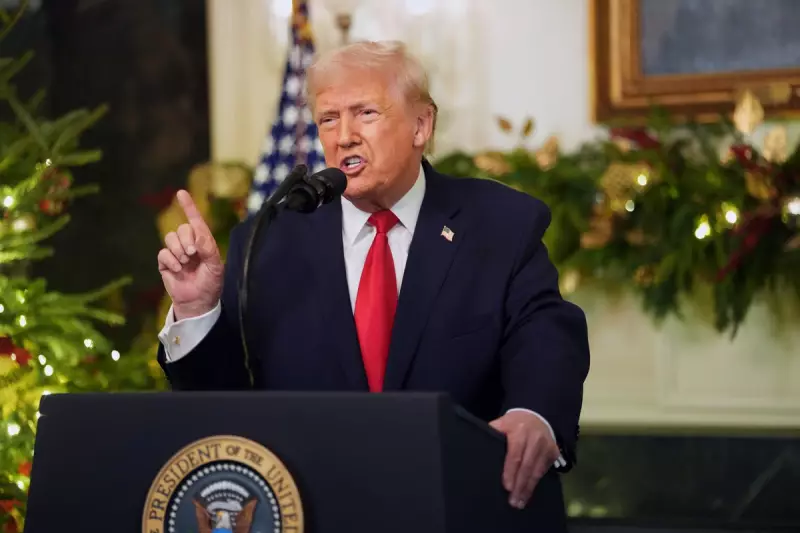
The healthcare announcement came amidst a flurry of other political developments. In a prime-time address on Wednesday, President Donald Trump sought to blame Democrats for ongoing economic challenges, though his messaging has done little to alleviate public concern over the cost of living.
He also announced a plan to give $1,776 'warrior dividend' payments to U.S. troops for Christmas, claiming they would be funded by tariff revenues. However, a senior administration official later clarified to The Associated Press that the checks, totalling roughly $2.6 billion for 1.45 million personnel, would actually be drawn from congressionally approved housing allowance funds.
International Repercussions and Domestic Legal Challenges
The administration's actions have sparked international controversy. The UN Security Council has scheduled an emergency meeting for Tuesday at Venezuela's request to discuss "ongoing U.S. aggression." Venezuela's ambassador accused the US of attempting "one of the greatest acts of plunder in human history" by claiming ownership of Venezuelan oil reserves.
Domestically, the administration faces legal pushback. A federal judge in San Francisco, Susan Illston, has ordered the reinstatement of roughly 300 federal workers fired during the recent government shutdown and blocked the termination of 400 more. Her ruling, however, is on hold pending a potential administration appeal.
Furthermore, a Justice Department effort to prosecute protestors disrupting Trump's immigration crackdown has largely faltered in court. An AP analysis of 166 cases found that aggressive charges and rhetoric labelling defendants as domestic terrorists have frequently failed to hold up before judges.
Other Key Developments from Washington
Immigration enforcement remains a flashpoint. In a highly unusual case, Milwaukee County Circuit Judge Hannah Dugan is on trial for obstruction and concealment charges, accused of helping a Mexican immigrant evade federal authorities. Her supporters argue the prosecution is politically motivated to intimidate the judiciary.
In foreign policy, the US imposed new sanctions on 29 ships in Iran's alleged "shadow fleet" used to sell oil. Secretary of State Marco Rubio also sanctioned two International Criminal Court judges involved in investigations of Israeli officials.
On the education front, rural school districts are struggling after the administration cut millions in federal grants for mental health, academic enrichment, and teacher development. Officials argue the grants supported diversity efforts counter to White House priorities.
Finally, over 20 Republican senators, including leadership figures, have urged President Trump not to reclassify marijuana from a Schedule I drug, warning it would undermine his agenda and benefit adversaries like China.