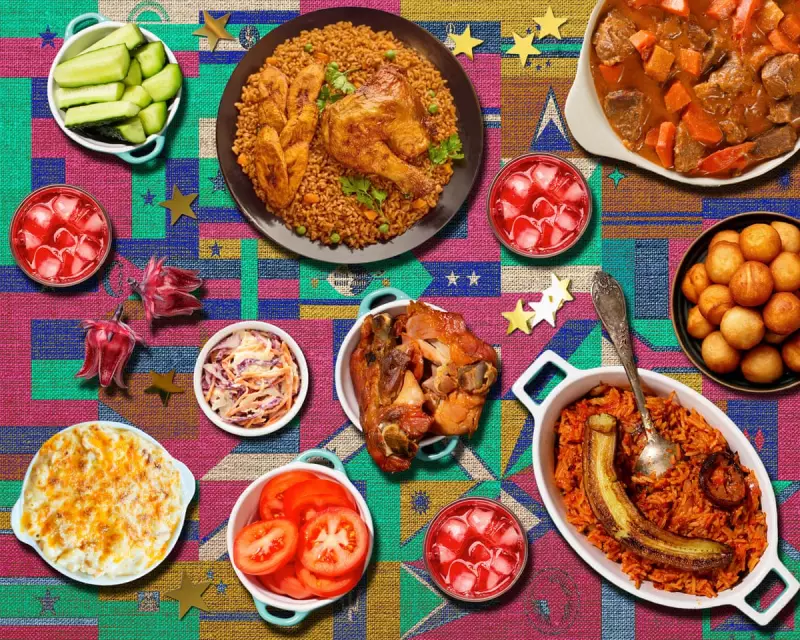
For communities across the diaspora, the Christmas period is a profound time where deeply personal celebrations intersect with widely shared traditions. At the heart of these gatherings lies the festive table, a powerful symbol of familial identity and communal history that transcends borders.
A West African Christmas Table: Staples and Shared Flavours
There is no single blueprint for a Nigerian Christmas feast. While customs differ between families, certain celebratory staples are almost always present. These include generous portions of plantain, coleslaw dressed in salad cream or mayonnaise, and an assortment of starters affectionately known as "small chops" – such as spring rolls, chicken wings, puff puff, and samosas. The meal is anchored by two types of rice: fried rice and the beloved jollof rice.
In many homes, a turkey – a legacy of colonial influence – takes centre stage, though chicken or beef, often roasted or stewed, is a popular alternative. The festive version, known as "party jollof", is distinguished by its unique smoky flavour, achieved by cooking in a large pot over an outdoor flame.

Ghanaian celebrations share many similarities. The centrepiece is often perfectly roasted chicken or lamb. A particularly flavourful dish enjoyed is turkey or chicken gizzards, cooked in a peppery tomato stew and served skewered. Both Nigerian and Ghanaian tables famously feature elaborate, multi-ingredient salads, combining vegetables with proteins like boiled eggs or sardines, all generously bound with dressings of salad cream, mayonnaise, or ketchup.
Roots and Roasts: The Black British Christmas Fusion
Within Black British households, the Christmas spread masterfully blends traditional British fare with dishes that offer a taste of heritage and spice. Alongside classic roast trimmings like parsnips and Brussels sprouts, you will commonly find mac and cheese, rice and peas, plantains, and various stews and soups.
This culinary fusion serves as a celebration of community in a home away from home. As highlighted in the original piece, the presence of traditional dishes like Fufu – a boiled and pounded cassava dough – dipped in a spicy goat meat soup (aponkye nkra kra), allows families to honour their roots. This connection extends across the Atlantic, where cassava reappears in Brazilian Christmas cuisine as Farofa de Natal, a toasted cassava flour stuffing for turkey, mixed with bacon, sausage, and olives.
The Crimson Thread: Hibiscus Drinks Link the Diaspora
After the feast, a vibrant, ruby-red drink often aids digestion and extends the celebration. This is the hibiscus-based beverage, known by many names across the diaspora: sorrel in the Caribbean, sobolo in Ghana, zobo in Nigeria, and agua de Jamaica in Latin America.
These drinks carry deep historical significance. The hibiscus plant, indigenous to Africa, was brought to the Americas during the transatlantic slave trade. Thriving in similar climates, it became integral to regional culinary traditions. In the Caribbean, sorrel is a festive main event, often infused with ginger, pineapple, and spices like cloves and allspice. Ghanaian versions may include the spice hwentia (negro pepper), while Trinidadian recipes frequently use angostura bitters.
This tradition echoes in African American gatherings where "red drink" – a descendant of West Africa's hibiscus history – is enjoyed during Juneteenth and the festive season. It is crucial to remember that these communal traditions predate Christmas. Festivals like Nigeria's New Yam festival (Iwa ji) and Ghana's Aboakyer festival underscore that gathering around food has always been central to cultural identity. The Christmas table, in all its diverse glory, continues this ancient, unifying practice.