From a classic fry-up to a delicate poach, Britons are devoted egg lovers, consuming an average of 200 each per year. Yet for decades, this breakfast staple has been shadowed by claims it raises cholesterol and harms heart health. Leading UK nutritionists now confirm this reputation is not only outdated but unjust, positioning the humble egg as a dietary powerhouse when prepared correctly.
From Villain to Nutritional Hero: The Egg's Redemption
Rob Hobson, a registered nutritionist and author, explains that the egg's bad rap stems from flawed 1950s research. Early studies mistakenly linked egg consumption to heart disease, an idea that persisted in dietary guidelines for decades. "Eggs were part of an overall less healthy diet in those studies," Hobson clarifies, noting that high egg consumption often coincided with diets rich in processed meat and sugary drinks, which muddied the scientific waters.
Fears surrounding salmonella from runny yolks are also largely historical. Since the late 1990s, UK hens have been routinely vaccinated against the bacteria, dramatically reducing the risk. Today, nutritionists emphasise that a single large egg offers around 7.5g of high-quality protein, vital vitamins B and D, and a form of vitamin A more easily absorbed than from vegetables, all for just 78 calories.

The Healthiest Cooking Methods, Ranked from Best to Worst
How you cook your egg significantly impacts its nutritional value. Experts stress that the healthiest methods avoid excessive heat and added saturated fats.
1. Boiled (Soft or Hard)
Topping the list, boiling changes nothing in the egg's nutrient profile, adding no extra fat or calories. A soft boil (4-6 minutes) preserves heat-sensitive nutrients like choline and lutein, crucial for brain and eye health. A hard boil (10-12 minutes) maximises protein bioavailability, allowing your body to absorb about 91% of the protein, compared to just 51% from a raw egg. Experts warn against boiling for over 14 minutes, as this can reduce vitamin A and D content.
2. Poached
A very close second, poaching preserves nutrients well. However, if the white is undercooked and slimy, the protein is not as readily absorbed. The method's main drawback is the sodium often introduced from salting the poaching water.
3. Coddled & Baked
Coddling—cooking in a ramekin in hot water—keeps the yolk soft, aiding the absorption of fat-soluble vitamins. Baking at lower temperatures, often in dishes like shakshuka, helps preserve protein quality and makes it easy to incorporate healthy vegetables and pulses, boosting fibre intake.
4. Scrambled
This method's healthiness hinges on preparation. Using butter or cream can more than double the fat content. For a healthier version, scramble over low heat in a good non-stick pan with just a splash of milk.
5. Fried
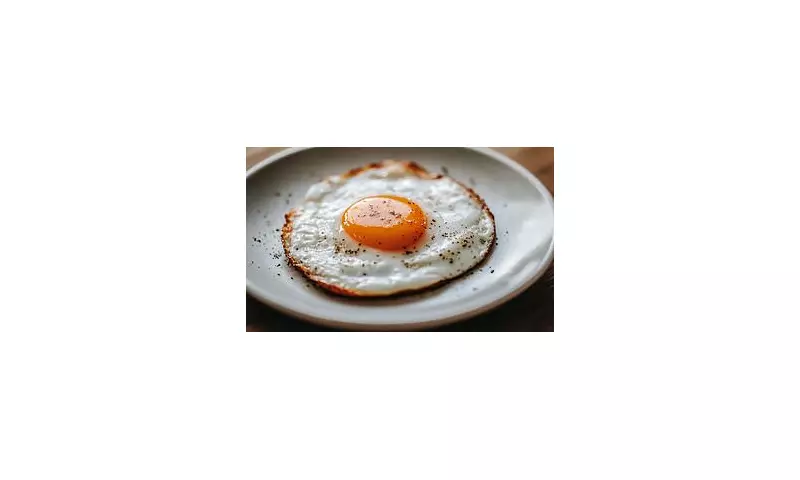
Unsurprisingly, frying ranks last. Very high temperatures can oxidise fats and alter cholesterol in the yolk. Using stable fats like butter and opting for sunny-side up to reduce cooking time can mitigate some risks, but fried eggs still contain nearly 10g of fat per portion.
Key Myths Debunked: Yolks, Organic, and Cholesterol
Discarding the yolk to save calories is a major nutritional misstep. "Around 90% of the vitamins, minerals and antioxidants are found in the yolk," says Hobson. The yolk contains vitamins A, D, E, K, and antioxidants that support eye health.
While organic eggs may have modestly higher omega-3 levels, standard eggs remain a high-quality, cost-effective source of nutrition. For those wanting variety, quail eggs are nutrient-dense, and duck eggs are richer, but portion control is key.
Finally, for most people, dietary cholesterol from eggs is not a concern. The NHS has no official limit on egg consumption for those with high cholesterol. The focus is now on reducing saturated fat and increasing fibre overall, not singling out eggs. Only individuals with specific conditions like hypercholesterolaemia may need to monitor intake, and even then, within the context of their whole diet.

Ultimately, eggs are a versatile, affordable nutritional asset. As Lily Soutter, a registered nutritionist, concludes, it's as much about what you pair them with—think vegetables over processed meats—and how you cook them, as it is about how many you eat.