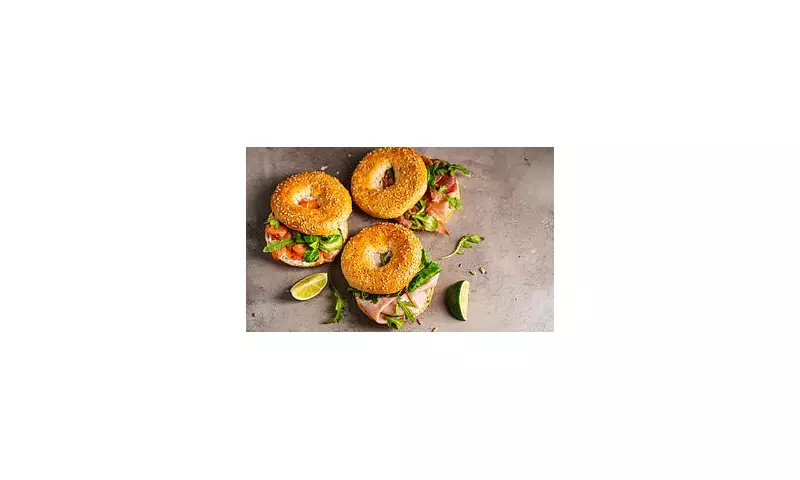
While many consider the bagel a quintessential American food, this ring-shaped bread has a much longer history on British shores. The Jewish community first introduced bagels to the UK nearly two centuries ago, where they were originally sold in London's East End.
From Humble Origins to Supermarket Staple
The traditional preparation method, involving boiling dough before baking, remains unchanged since Polish immigrants brought it here in the 1800s. However, the bagel itself has undergone a dramatic transformation in size and calorie content.
Just twenty years ago, a typical bagel measured around three inches wide and contained roughly 140 calories. Today, standard supermarket bagels can be six inches across and pack over 300 calories. A handful of traditional beigel bakeries still operate in the East End, preserving the original style.

Rosie Carr, a dietitian with the NHS-backed healthy eating plan Second Nature, explains the defining characteristic. "While the ring shape is iconic, it's the boiling process that makes a bagel a bagel," she tells the Daily Mail. "This step gives bagels their signature chewy texture and slightly glossy crust."
Nutritional Reality: More Than Just Carbs?
Traditional bagel dough uses high-gluten flour, water, yeast, salt, and often malt syrup. It is denser and lower in water than standard bread dough, contributing to its satisfying chew. The boiling process primarily alters texture, not nutrition.
"Because bagel dough uses less water and more flour than standard bread, the end result is a denser product," explains Ms Carr. "A bagel contains more flour, and therefore more carbohydrates and calories, per unit volume than a fluffy bread roll."
Erin Viljoen, a Nutritional Therapist at W-Wellness, adds a note of caution about common varieties. "Most supermarket bagels are still made with refined white flour, so while boiling affects texture, it doesn’t dramatically improve the nutritional profile unless wholegrains or seeds are used."
As for the famous hole? It ensures even cooking and historically made the bagels easy to stack on poles or string for sale.
Choosing and Using Bagels Wisely
There is no escaping the fact that bagels are carbohydrate-dense. A medium plain bagel contains approximately 50-55g of carbs, equivalent to three or four slices of bread. This can cause blood sugar spikes, especially with sweet toppings.
Both experts agree that pairing is key. "Bagels aren't 'bad' per se, but are more energy-dense," says Ms Carr. "Combining it with a good source of protein, healthy fats, and vegetables creates a more balanced meal." Ms Viljoen warns that pairing them with protein, fibre, and healthy fats "makes a big difference" to the body's response.
When shopping, look for bagels with shorter ingredient lists and higher fibre. "Plain bagels are typically the simplest option," advises Ms Carr. Wholegrain or seeded versions offer significantly more fibre (4-5g compared to 1-2g in plain white).
Flavour matters too. 'Everything' and onion bagels offer minimal calorie differences from plain. Sweeter varieties like cinnamon raisin contain more sugar (10-15g vs 5-6g), while chocolate chip or blueberry bagels can have 20-40 extra calories and are best as occasional treats.
Protein Bagels, Thin Bagels, and the Toasting Debate
High-protein bagels, containing 15-30g of protein, can be convenient but aren't essential. "You can achieve a similar result by topping a regular bagel with protein-rich foods like eggs, smoked salmon, or nut butter," notes Ms Carr.
Bagel thins (100-150 calories) offer portion control but may be less filling. "Gram for gram, the nutritional profile is essentially the same," says Ms Carr. "You're simply eating less of it."
Toasting is purely preferential. Fresh bagels are best untoasted to appreciate their texture, while toasting revives stale ones. The choice of filling also dictates the best approach: cream cheese spreads better on untoasted, while melted cheese suits a toasted base.
Homemade Alternatives and Balanced Serving Ideas
Making bagels at home is straightforward, allowing control over ingredients like wholemeal flour and seeds. Simplified recipes using Greek yoghurt skip the boiling step for a quicker, high-protein alternative.

For a balanced meal, experts recommend adding protein, healthy fats, and vegetables. Some ideal combinations include:
- Smoked salmon with cream cheese, capers, and rocket.
- Scrambled eggs with avocado and tomato.
- Cottage cheese with cucumber and fresh herbs.
- Hummus with grilled vegetables and feta.
The key takeaway is that a bagel can be part of a healthy diet when chosen wisely and paired thoughtfully with nutritious toppings. Whether opting for a classic beigel from a East End bakery or a seeded wholemeal version from the supermarket, mindful consumption is the recipe for enjoyment without overindulgence.