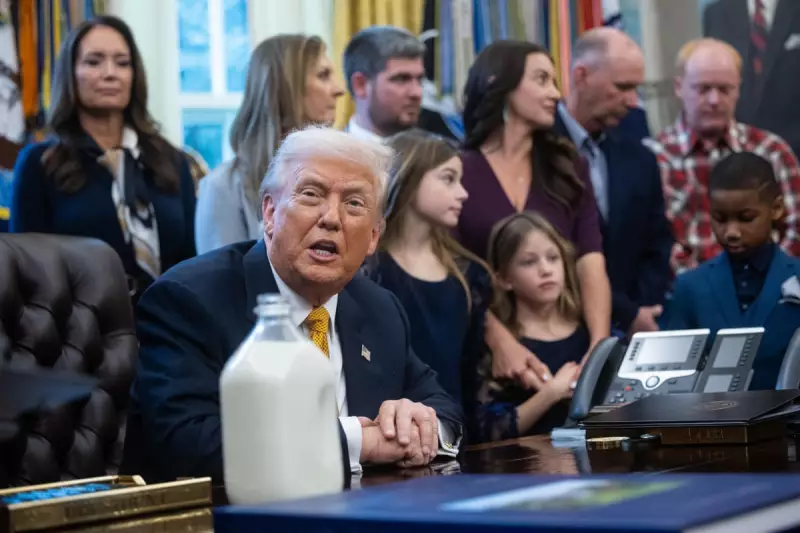
In a significant shift for American school nutrition policy, former President Donald Trump has signed legislation that will see whole and 2% fat milk return to school cafeterias across the United States.
Reversing a Decade-Old Policy
The Whole Milk for Healthy Kids Act, signed into law at a White House ceremony on Wednesday, overturns provisions of the Healthy Hunger-Free Kids Act of 2010, championed by former First Lady Michelle Obama. That Obama-era law had limited schools in the National School Lunch Program to serving only skimmed and low-fat (1%) milk since 2012, in an effort to reduce children's intake of saturated fat and calories to combat rising obesity rates.
"Whether you're a Democrat or a Republican, whole milk is a great thing," Trump stated during the signing event, which was attended by lawmakers, dairy farmers, and their children. The new law permits schools to offer whole and 2% fat milk alongside the existing lower-fat options. It also mandates that schools provide a non-dairy alternative if a student presents a note from a parent—not just a doctor—citing a dietary restriction.

Aligning with New Dietary Guidance
The policy change arrives just days after the publication of the 2025-2030 Dietary Guidelines for Americans, which now emphasise the inclusion of full-fat dairy products in a healthy diet. This marks a notable departure from previous editions, which advised that individuals over the age of two should consume primarily low-fat or fat-free dairy.
Agriculture Secretary Brooke Rollins hailed the move as a fix for Michelle Obama's "short-sighted campaign to ditch whole milk." The US Department of Agriculture had recently promoted the change with a social media post showing Trump with a glass of milk and a 'milk mustache', captioned: "Drink Whole Milk."
Nutritional Debate and Practical Impact
The decision culminates a long campaign by the dairy industry and some nutrition experts, who argue that whole milk is both nutritious and palatable, and that its previous exclusion was misguided. Critics of the old rules pointed out that many children disliked the taste of skimmed milk, leading to wasted nutrition and food waste.
Prominent nutrition expert Dr Dariush Mozaffarian of Tufts University has stated there is "no meaningful benefit" in choosing low-fat over high-fat dairy, noting that the saturated fats in dairy have a different composition to other fats and contain beneficial compounds.
The new rules will affect meals served to roughly 30 million students enrolled in the National School Lunch Program. While the change could technically take effect as early as this autumn, school nutrition officials caution that it may take longer for some districts to assess demand and adjust their supply chains accordingly.
The law also creates an exemption, meaning milk fat will not be counted towards federal requirements that stipulate average saturated fats must constitute less than 10% of calories in school meals. Furthermore, while the new dietary guidelines call for "full-fat dairy with no added sugars"—potentially banning flavoured milks—agriculture officials must now translate this into specific requirements for schools.