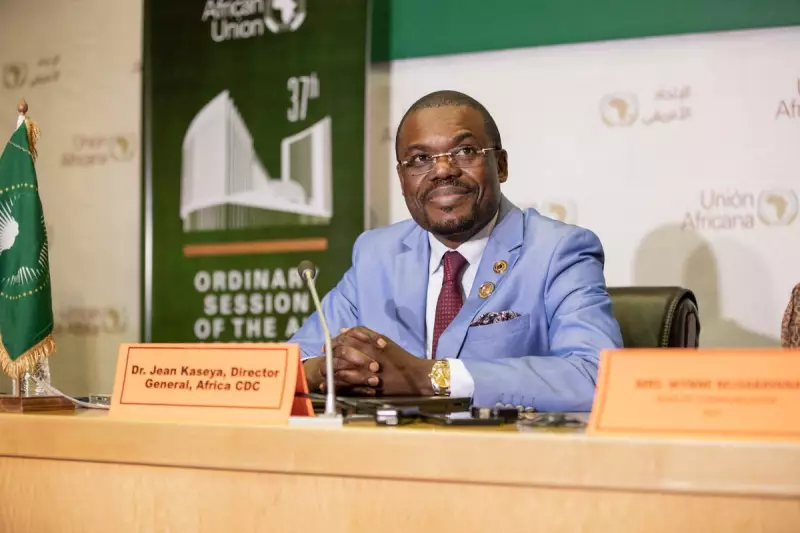
The head of Africa's leading public health agency has described deep cuts to international aid by nations like the UK and US as a "painful experience," but argues they present a critical opportunity for the continent to take control of its own health destiny.
A Wake-Up Call for African Health Sovereignty
In an exclusive interview with The Independent, Dr Jean Kaseya, Director General of the Africa Centres for Disease Control and Prevention (Africa CDC), stated that while the funding reductions are damaging, they should act as a catalyst for change. "It's not a blessing for us, but today it becomes an opportunity to see how to build a sovereign health system in Africa," he said.
Dr Kaseya's comments come amid significant reductions in overseas development assistance. The UK government plans cuts of 40 per cent over the next three years, while the US has enacted even deeper slashes. "It's a painful experience to see that," Dr Kaseya admitted. "It's our choice to sit, to cry, or to wake up and to act, and I think now the action that African countries are taking is to wake up and to move on."

Combating Corruption and Ghost Workers
The Africa CDC chief pointed to substantial untapped domestic funding sources that do not rely on foreign donors. A primary target is systemic corruption within health procurement and the widespread issue of "ghost workers" on government payrolls.
This scam involves salaries being paid to non-existent, deceased, or duplicate employees, with funds often siphoned off by officials. Dr Kaseya revealed that in some nations, ghost workers can constitute up to 40 per cent of civil servants, costing his home country, the Democratic Republic of Congo (DRC), an estimated $800 million annually.
He recounted a conversation with an African head of state who feared the worst after cuts from the global vaccine alliance Gavi. "His first reaction was, 'we'll die here'," Dr Kaseya said. The solution proposed was not despair, but action: the country has since initiated a new tax collection system specifically to fund its health sector.
The Double-Edged Sword of Aid and Local Manufacturing
Dr Kaseya acknowledged that aid has played a vital role, particularly in relieving the burden of out-of-pocket spending—the primary source of health expenditure for many Africans. Programmes targeting HIV, tuberculosis, malaria, and maternal health had been lifelines. When such aid stops, "someone must pay," he warned, often meaning the poorest citizens must pay more.
The immediate impact of cuts is stark. He cited the Mpox outbreak in the DRC, where broken donor pledges for vaccines, testing, and health workers saw testing rates plummet from 60 per cent to less than 32 per cent.
The path forward, he argues, lies in self-reliance. Boosting local manufacturing of medicines and medical equipment is crucial. Dr Kaseya noted there are already over 500 medical manufacturers across Africa, in countries including South Africa, Egypt, Rwanda, and Senegal. Progress is visible, with the continent moving towards self-sufficiency in syringes and some countries now sourcing 97 per cent of antibiotics locally.
"We need to see how to be more balanced and more positive and optimistic," Dr Kaseya concluded, emphasising a three-pillar strategy: raising domestic funding, building local manufacturing capacity, and enhancing pandemic preparedness. This shift, he believes, will reform the global health architecture. "When we do that, we start a conversation with our brothers and sisters from around the world: 'Do you still think that you have to dictate to us how we can sit and talk together?'"