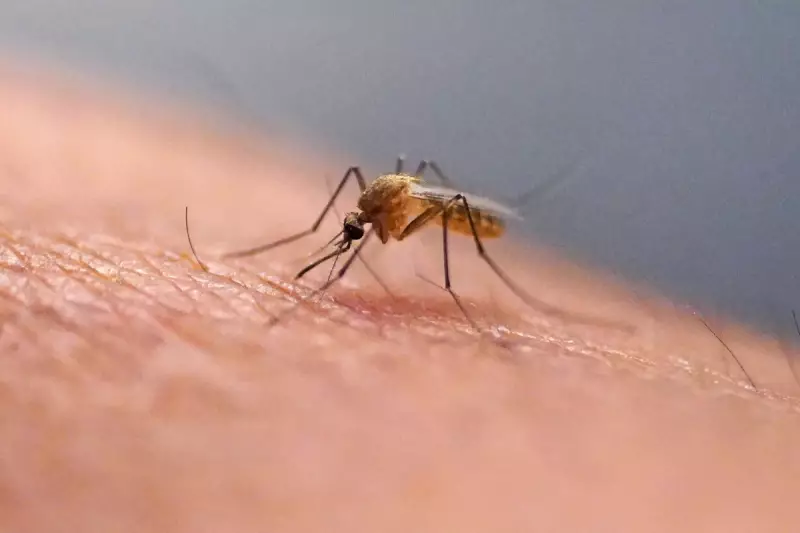
Mosquitoes, the world's deadliest animal, are being pushed to feed on humans more frequently as deforestation and biodiversity loss leave them with fewer wild animals to target, a new scientific study has revealed.
Human Blood Becomes the Default Option
The crucial findings come from Brazil's Atlantic Forest, a region once teeming with wildlife that has now lost around two-thirds of its original area. Researchers from the Oswaldo Cruz Institute and the Federal University of Rio de Janeiro captured and analysed 1,714 mosquitoes from two natural reserves in Rio de Janeiro state.
By using DNA sequencing on blood from recently fed female mosquitoes, the team identified the source animals. Out of the 145 mosquitoes that had fed on blood, scientists successfully traced 24 meals back to 18 different humans, six birds, one amphibian, one dog, and one mouse. Some insects had consumed blood from more than one species.

"Here we show that the mosquito species we captured in remnants of the Atlantic Forest have a clear preference for feeding on humans," stated the study's senior author, Jeronimo Alencar.
Deforestation Drives Dangerous Shift
The shift in feeding behaviour is directly linked to habitat destruction. As human activity and deforestation shrink complex forest ecosystems, many native animals disappear. This collapse in biodiversity leaves mosquitoes with a severe shortage of their natural blood sources, forcing them into closer contact with people.
"With fewer natural options available, mosquitoes are forced to seek new, alternative blood sources," explained researcher Sergio Machado. "They end up feeding more on humans out of convenience as we are the most prevalent host in these areas."
This behavioural change is not merely an inconvenience. Mosquitoes in this region are known vectors for yellow fever, dengue, chikungunya, Zika, Mayaro, and Sabiá viruses. An increased preference for human blood significantly raises the risk of pathogen transmission and potential disease outbreaks.
Implications for Global Disease Prevention
The study, published on Thursday 15 January 2026, also exposed gaps in current scientific understanding. Blood sources could only be identified in about 38% of cases where mosquitoes had recently fed, and mixed blood meals were particularly hard to analyse, pointing to the need for more detailed research.
Despite these challenges, the researchers assert their work provides vital intelligence for public health strategies. "Knowing that mosquitoes in an area have a strong preference for humans serves as an alert for transmission risk," said Mr Machado.
This knowledge enables targeted surveillance and prevention measures. "In the long term, this may lead to control strategies that consider ecosystem balance," added Mr Alencar, emphasising that preserving biodiversity is not just an environmental goal but a critical public health defence.