Quantum Physics Could Explain Consciousness, Study Suggests
Groundbreaking research from Wellesley College proposes that quantum processes in the brain generate consciousness, potentially connecting individuals to the entire universe.


Groundbreaking research from Wellesley College proposes that quantum processes in the brain generate consciousness, potentially connecting individuals to the entire universe.

Scientists develop a blood test measuring p-tau217 protein levels to predict when Alzheimer's symptoms will appear, potentially revolutionizing preventive care and clinical trials for dementia.

Scientists and philosophers explore how our inner thoughts and experiences can shed light on the mysterious nature of consciousness, revealing gaps in our understanding.

A newly discovered horned Spinosaurus species found in the Sahara reveals the iconic predator was not fully aquatic but a wading 'hell heron' that hunted in shallow inland waters.

Shared lists with real-time sync. No signup needed — just open and shop together.
Recommended
A man clinically dead for seven minutes describes abstract elliptical visions, not heavenly light, attributing them to brain activity and his astrophysics studies.

A team of researchers has challenged recent claims that the Shroud of Turin was created by laying cloth over a flat sculpture, pointing to critical flaws in the digital reconstruction methodology and key characteristics of the relic.

Groundbreaking research reveals genetic parallels between feline and human breast cancers, offering potential for shared treatments and deeper understanding of environmental cancer risks.
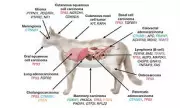
A world-first study of cat tumours finds genetic similarities to human cancers, offering new hope for treatments across species. Researchers analysed nearly 500 cats to identify shared driver genes.
John Dobbs, a groundbreaking physicist known for his work in quantum mechanics and dedication to mentoring young scientists, has passed away at age 78.
Shared lists with real-time sync. No signup needed — just open and shop together.
Recommended
Dog walkers discovered rare 2,000-year-old human and animal footprints on a Scottish beach after storms exposed them, offering a unique snapshot of Iron Age life.
Deep funding cuts under the Trump administration are driving young American scientists abroad, risking the US's position as the world's leading biomedical innovator and the fight against superbugs.

A Norwegian government scientist attempting to debunk 'Havana syndrome' tested a secret microwave weapon on himself, resulting in neurological damage matching victims' symptoms, amid ongoing US investigations.

Scientists have identified a specific gene in male mice that influences paternal behaviour, with lower levels linked to nurturing care and higher levels to aggression or indifference toward offspring.

New research challenges the link between early childhood BMI and lifelong obesity risk, revealing distinct genetic factors influence body size at different ages.
Shared lists with real-time sync. No signup needed — just open and shop together.
Recommended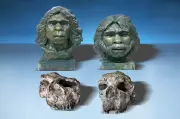
New fossil evidence from China reveals Homo erectus arrived in East Asia 1.7 million years ago, rewriting the timeline of early human migration across Asia.

A University of Bristol scientist has created a revolutionary smart shoe featuring 253 sensors that monitors walking patterns to detect fall risks in elderly individuals, inspired by his 89-year-old mentor.

New research indicates Brachycephalic Obstructive Airway Syndrome affects a wider range of flat-faced dog breeds, with Chinese-origin breeds at high risk.

Scientists explore how inner speech and thoughts provide insights into the nature of consciousness, using brain imaging and AI to decode mental processes.

A new podcast episode investigates the use of psychedelics, including dart frog poison, in treating depression through human trials, exploring potential breakthroughs and risks.
Shared lists with real-time sync. No signup needed — just open and shop together.
Recommended
A Lancet study indicates over 75,000 deaths in Gaza's first 16 months of war, exceeding official figures by 25,000, with accurate demographic reporting by health authorities.

A groundbreaking trial reveals that just one dose of the psychedelic compound DMT, combined with therapy, can significantly reduce depressive symptoms for months.

New research reveals that specific gut bacteria in dogs can predict survival rates after cancer treatment, potentially extending lifespans for millions of pets.

Frank Burnet, the Nobel Prize-winning immunologist known for his groundbreaking work on immune tolerance and clonal selection theory, has passed away at the age of 94.

Research on male African striped mice identifies the medial preoptic area as a critical brain region influencing paternal behaviours, with Agouti gene levels linked to care or aggression.
Shared lists with real-time sync. No signup needed — just open and shop together.
Recommended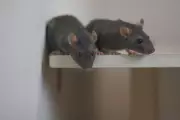
Scientists identify a specific brain region and gene in male mice that correlate with parenting styles, from nurturing to aggression, offering insights into paternal behaviour mechanisms.
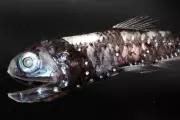
Scientists have discovered hybrid visual cells in deep-sea fish larvae that combine rod and cone features, challenging traditional vertebrate vision theories and revealing evolutionary adaptability.
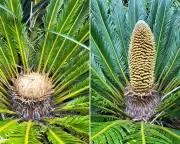
Scientists discover that the oldest known seed plants, cycads, generate heat during reproduction to attract pollinating insects, revealing an ancient evolutionary strategy.
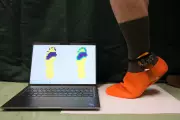
Dr. Jiayang Li, a University of Bristol engineer, has invented a shoe with 253 sensors and a microchip to analyse gait in real-time, aiming to reduce fall risks for the elderly.
South Korean researchers found blocking the NSMF protein triggers irreversible aging in cancer cells, slowing tumor growth in lab and mouse studies without harming healthy tissue.
Shared lists with real-time sync. No signup needed — just open and shop together.
Recommended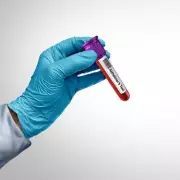
Researchers in China have created a laser-based blood sensor that detects lung cancer biomarkers at subatomic levels, potentially enabling diagnosis before tumors appear on scans.
