Ancient Indonesian Cave Handprints Rewrite History of Human Art
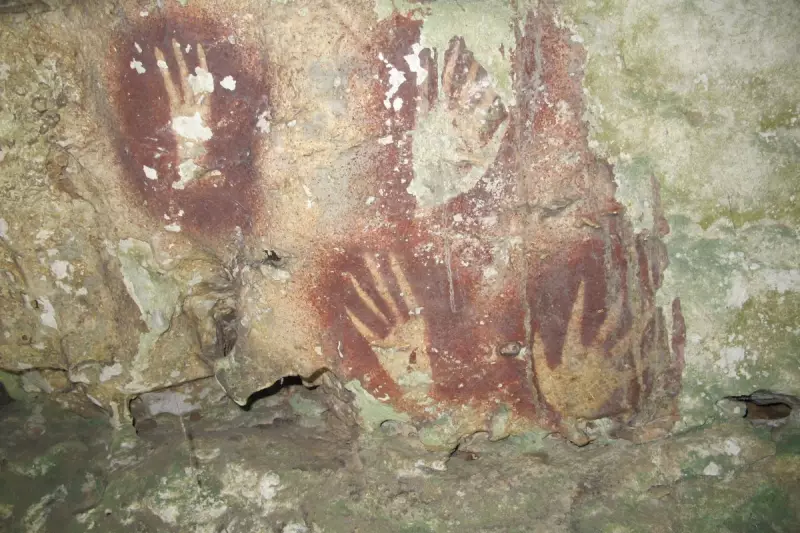
Archaeologists have made a groundbreaking discovery in the remote caves of Indonesia that is reshaping our understanding of when humans first began creating art. Remarkable hand stencils found on the walls of Sulawesi caves have been dated to an astonishing 67,800 years old, making them the oldest cave art ever studied by researchers.
A Prehistoric Masterpiece Preserved in Stone
The tan-coloured prints, discovered in a largely unexplored region of the Indonesian island, were created using a sophisticated technique that involved blowing pigment over hands placed firmly against the cave walls. This method left behind clear, detailed outlines of prehistoric hands, with some intriguing modifications that suggest artistic intention beyond simple marking.
"Some of the fingertips were deliberately altered to appear more pointed," explained researchers from the joint Indonesian-Australian team that conducted the analysis. This subtle artistic tweaking indicates that these were not accidental marks but rather intentional creations with possible symbolic meaning.

Dating the Dawn of Human Creativity
To establish the age of these ancient artworks with scientific precision, researchers employed advanced dating techniques on mineral crusts that had formed over the handprints during millennia of geological processes. The results confirmed that these stencils predate all previously known cave wall art by thousands of years.
The discovery has sent ripples of excitement through the archaeological community. Independent paleoanthropologist Genevieve von Petzinger described her reaction upon seeing the study: "I let out a little squeal of joy. It fits everything I'd been thinking about the origins of symbolic expression."
Indonesia's Rich Archaeological Heritage
Indonesia has long been recognised as hosting some of the world's earliest examples of cave drawings, but this finding pushes back the timeline significantly. While simple marks on bones and stones have been found dating back hundreds of thousands of years, and cross-hatched markings on South African rock have been dated to approximately 73,000 years ago, the Sulawesi handprints represent something distinct.
"This is the oldest art to be discovered on cave walls anywhere in the world," emphasised study author Maxime Aubert from Griffith University, whose research was published in the prestigious journal Nature. "The stencils represent a more complex tradition of rock art that likely constituted a shared cultural practice among prehistoric communities."
The Mystery of the Artists' Identity
One of the most intriguing questions surrounding the discovery concerns who exactly created these ancient handprints. Researchers are considering several possibilities that could rewrite our understanding of human migration and interaction.
- The prints could belong to the mysterious Denisovans, an ancient human group known to have inhabited the region and potentially interacted with our Homo sapiens ancestors before their eventual extinction
- Alternatively, they might have been made by modern humans venturing from Africa, who may have travelled through the Middle East and reached Australia around this period
- The intentionally modified fingertips strongly suggest human agency, though precisely which human species remains uncertain
A Broader Artistic Landscape
Interestingly, other drawings discovered in the same Sulawesi region, including depictions of human figures, birds, and horse-like animals, were found to be created much more recently—some as recent as 4,000 years ago. This suggests the area maintained artistic traditions across tens of thousands of years.
Scientists believe there is likely more ancient art waiting to be discovered on nearby Indonesian islands, potentially even older than these remarkable handprints. Future research may help unravel how artistic traditions spread across the globe and became woven into the fabric of early human societies.
"For us, this discovery is not the end of the story," Aubert reflected in an email. "It is an invitation to keep looking, to continue exploring the deep roots of human creativity and symbolic expression."

The Associated Press Health and Science Department receives support from the Howard Hughes Medical Institute's Department of Science Education and the Robert Wood Johnson Foundation. The AP maintains full editorial responsibility for all published content.