Groundbreaking research suggests a cure for Alzheimer's disease is a realistic prospect, with transformative treatments potentially arriving within the next five to ten years. Scientists speaking on BBC Radio 4's Today programme expressed unprecedented optimism, stating that advances mean the devastating condition could ultimately be treated, prevented, and even cured.
A New Era of Hope in Dementia Research
This renewed confidence marks a significant shift for a field that has long faced daunting challenges. Almost one million people in the UK are currently living with dementia, the majority with Alzheimer's disease, and numbers are projected to rise sharply in the coming decade. For years, treatment options have been severely limited, focusing only on managing symptoms rather than addressing the underlying disease.
Researchers from the University of Edinburgh told the BBC that the future looks radically different. They believe it will soon be possible to halt Alzheimer's progression, prevent its onset entirely, and, over a longer timeframe, cure those already showing symptoms. Dr Claire Durrant stated there is now 'genuine optimism' in the scientific community. 'The evidence we have at the moment is that it's a disease, and that we know from past experiences that diseases can be cured,' she explained.

Pioneering Work with 'Precious' Human Brain Tissue
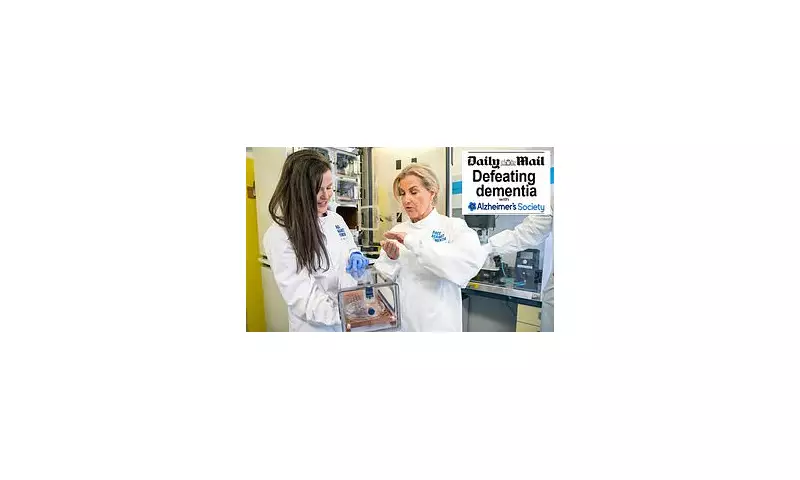
A key to this progress is innovative research using live human brain tissue, a method highlighted during the BBC's access to Edinburgh Royal Infirmary. During complex brain surgeries, small amounts of healthy tissue that would normally be discarded are instead rushed to Dr Durrant's laboratory within a critical two-hour window to remain viable.
Dr Durrant described this tissue, donated by patients on what is often the worst day of their lives, as a 'precious gift'. In the lab, the tissue is sliced into extremely thin sections and kept alive using oxygenated fluid. Scientists then expose it to toxic proteins linked to Alzheimer's, such as amyloid and tau, which are extracted from the brains of people who died with the condition.
This allows the team to observe in real-time how the connections between brain cells, known as synapses, are damaged. Most importantly, they can test how to intercept that damage. 'I've not seen so much hope in Alzheimer's disease research than I do right now,' Dr Durrant said. 'I'm really hopeful that we'll see meaningful change in my lifetime.'
Breakthrough Drugs Pave the Way for a Cure
The optimism is bolstered by recent clinical breakthroughs. The arrival of the first disease-modifying drugs, lecanemab and donanemab, which slow disease progression rather than just ease symptoms, has fundamentally changed the landscape. These drugs have proven that altering the course of Alzheimer's is achievable.
Professor Tara Spires-Jones, Director of the Centre for Discovery Brain Sciences at the University of Edinburgh, said these advances have transformed the outlook. 'I'm very optimistic that in the short term we will have treatments that can meaningfully slow or stop disease progression,' she stated. 'In the long term we should be able to prevent dementia entirely and hopefully we'll get to a cure.'
She emphasised that future treatments will likely combine multiple strategies. Furthermore, the success of these early drugs has catalysed the entire field, attracting more funding, talent, and crucial pharmaceutical industry partnerships needed to run large-scale clinical trials.
Professor Fiona Carragher of the Alzheimer's Society, which is running the Defeating Dementia campaign with the Daily Mail, echoed this sentiment: 'It's often felt like there's been little hope, but that's changing as we're on the cusp of huge breakthroughs... We can finally be confident that research and innovation built over decades is coming to fruition.'
While experts caution that the brain's immense complexity means certainty depends on future trial results, the consensus is clear: a decade from now, the approach to Alzheimer's disease could be fundamentally and positively transformed.