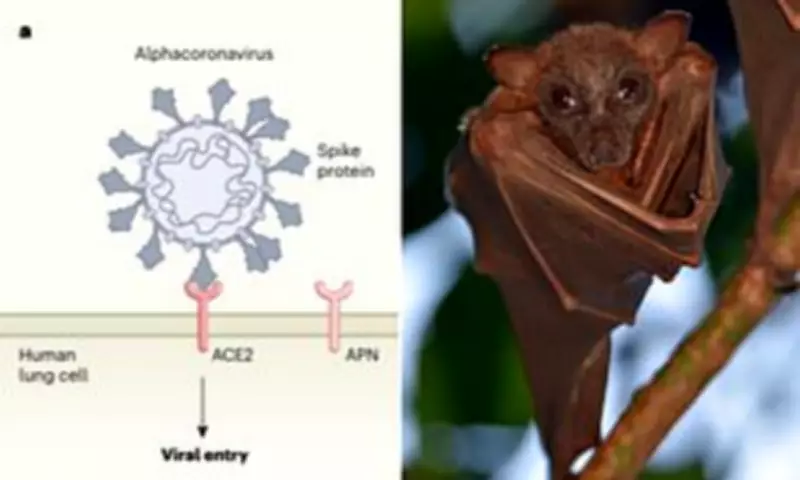
An international team of scientists has made a concerning discovery: a bat coronavirus with the ability to enter human cells, potentially setting the stage for another global pandemic. The virus, identified as KY43, is an alphacoronavirus that originates from heart-nosed bats in East Africa, specifically regions of Kenya, eastern Sudan, and northern Tanzania.
Key Findings on KY43 Virus
Through innovative research methods, scientists found that KY43 can bind to a cell receptor present in human lungs. Instead of working with live viruses, the team utilized a database of genetic sequences to synthesize alphacoronavirus spike proteins. They screened dozens of these proteins against a library of human receptors, ultimately discovering that KY43 could successfully infiltrate human cells.
Expert Insights and Warnings
Professor Benjamin Neuman of Texas A&M University commented on the significance of the discovery, stating, "This study shines a light on another of the depressingly many viruses lurking just outside public consciousness, awaiting a chance encounter that could open the door to spreading in people." He emphasized that while KY43 is currently not known to have spread to humans, its capability to bind to human cells marks a critical first step toward potential infection.

Dr. Dalan Bailey from The Pirbright Institute, a study author, highlighted a shift in understanding: "Before our study, it was assumed most alphacoronaviruses used just one or two possible receptors to enter their host. We now know alphacoronaviruses might use a whole variety of additional receptors to get into cells."
Pandemic Potential and Preparedness
The research, published in the journal Nature, underscores the uncharted pandemic potential of alphacoronaviruses. Preliminary testing indicates KY43 has not yet infected local human populations, but its ability to cross species barriers raises alarms. Dr. James Nyagwange of the KEMRI-Wellcome Trust Research Programme stressed the need for further study in East Africa to assess risks and develop vaccines or antivirals proactively.
Professor Aris Katzourakis from the University of Oxford, though not involved in the study, described the findings as a "key early warning." He noted, "This work is important in flagging that these viruses could overcome one of the key hurdles that could lead to a future crossover event. Such possible crossover events could be the first step in future epidemics or even pandemics."
How Coronaviruses Infect Humans
Coronaviruses typically enter the body through respiratory droplets, attaching to receptors on human cells in the respiratory tract. Once inside, they replicate and spread, triggering immune responses that can cause symptoms like fever and cough. KY43's ability to bind to human lung receptors suggests it could follow a similar pathogenic pathway if it ever spills over into humans.
Broader Implications and Future Research
Professor Neuman pointed out that this discovery is rare because it identifies a virus with pandemic potential before it causes harm. "This virus is able to bind and potentially enter human cells, but to spread between people, it would need to evade the immune system and other factors," he explained. Currently, there is no evidence of immune evasion by KY43, and its disease-causing potential remains unknown.
The study was accompanied by a commentary from Professor Huan Yan of Wuhan University, who wrote in Nature: "Coronaviruses are a vast and genetically diverse family, yet most of the molecular strategies that they use to enter host cells are unknown. Understanding viral entry mechanisms matters because the recognition of receptor proteins in host cells is the main barrier that a virus must overcome to infect a new species."
This research serves as a crucial reminder of the ongoing threats posed by zoonotic viruses and the importance of global surveillance and preparedness to mitigate future pandemic risks.