The Man Who Unlocked Life's Secret
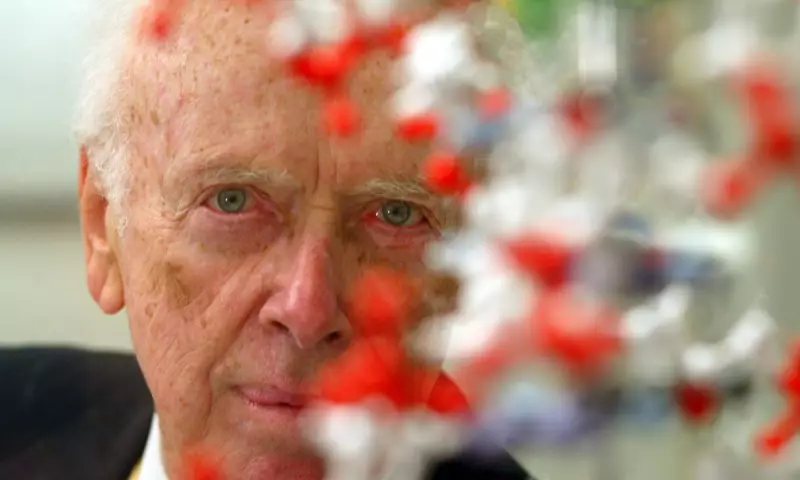
James Watson, the brilliant yet controversial Nobel prize-winning biologist who co-discovered the structure of DNA, has died at the age of 97. With his research partner Francis Crick, Watson solved one of science's greatest mysteries - the chemical basis of genetic inheritance - fundamentally changing biology forever.
The Race for the Double Helix
On 28 February 1953, Crick famously walked into Cambridge's Eagle pub and announced: "We have discovered the secret of life." Earlier that day, the two scientists had finally cracked the DNA code at Cambridge University's Cavendish Laboratory. They demonstrated that DNA carried the genetic code in a chemical alphabet of four letters - A, C, G and T - representing adenine, thymine, guanine and cytosine.
Their groundbreaking work revealed that the DNA molecule consisted of two strands forming a gently twisted ladder, the now-famous double helix structure, which could unzip to make copies of itself. This discovery explained how all inheritance could be understood through chemistry and physics.
The pair made an unlikely team. Watson was a brash, competitive 23-year-old American, while Crick, at 35, was a mature, intellectually confident Englishman whose research career had been interrupted by war work developing radar and magnetic mines for the Admiralty.
From Child Prodigy to Scientific Powerhouse
Born in Chicago in 1928, Watson was something of a child prodigy, entering the University of Chicago at just 15 to study zoology. By 19, he had graduated and developed a serious interest in genetics that would define his career.
After obtaining his PhD under Salvador Luria at Indiana University, Watson's conviction that genes were made of DNA rather than protein - contrary to mainstream scientific thinking - led him to Cambridge. There, he began working with John Kendrew at the Cavendish Laboratory but quickly found himself drawn into conversation with Crick, who shared his conviction about DNA's importance.
Their approach combined Watson's skill in model-building with Crick's mathematical expertise in interpreting X-ray diffraction patterns. Using data gathered by others, including crucial work by Maurice Wilkins and Rosalind Franklin at King's College London, they made the intuitive leap to the double helix structure.
Their 1953 paper in Nature contained one of science's most famous understatements: "It has not escaped our notice that the specific pairing we have postulated immediately suggests a possible copying mechanism for the genetic material." In 1962, Watson, Crick and Wilkins received the Nobel Prize in Physiology or Medicine for their discovery.
A Complex Legacy and Controversial Career
Watson's 1968 memoir, The Double Helix, caused considerable controversy by portraying the race for DNA's structure as dramatic conflict fuelled by ambition. The book revealed that he and Crick had used evidence from Rosalind Franklin without her knowledge, a revelation that haunted Watson throughout his life.
In 1968, Watson became director of Cold Spring Harbor Laboratory in New York, transforming it into a scientific powerhouse and steering it into cancer research. His administrative success led to his appointment in 1990 as head of the Human Genome Project, the ambitious international effort to sequence the entire human genetic code.
However, Watson's career was ultimately marred by controversial statements about race and intelligence. In 2007, he told the Sunday Times he was "inherently gloomy about the prospect for Africa" because of intelligence testing, comments that led to his suspension from Cold Spring Harbor and the cancellation of his UK speaking engagements.
Despite apologising and acknowledging there was no scientific basis for his remarks, Watson repeated similar views in a 2019 PBS documentary, prompting Cold Spring Harbor to revoke his honorary titles. In 2014, he had become the first living Nobel laureate to sell his medal at auction, fetching $4.1 million while claiming he had been made an "unperson" and had lost corporate board positions.
Watson received numerous honours during his career, including an honorary knighthood in 2002. He is survived by his wife Elizabeth, whom he married in 1968, their sons Rufus and Duncan, and a grandson.