

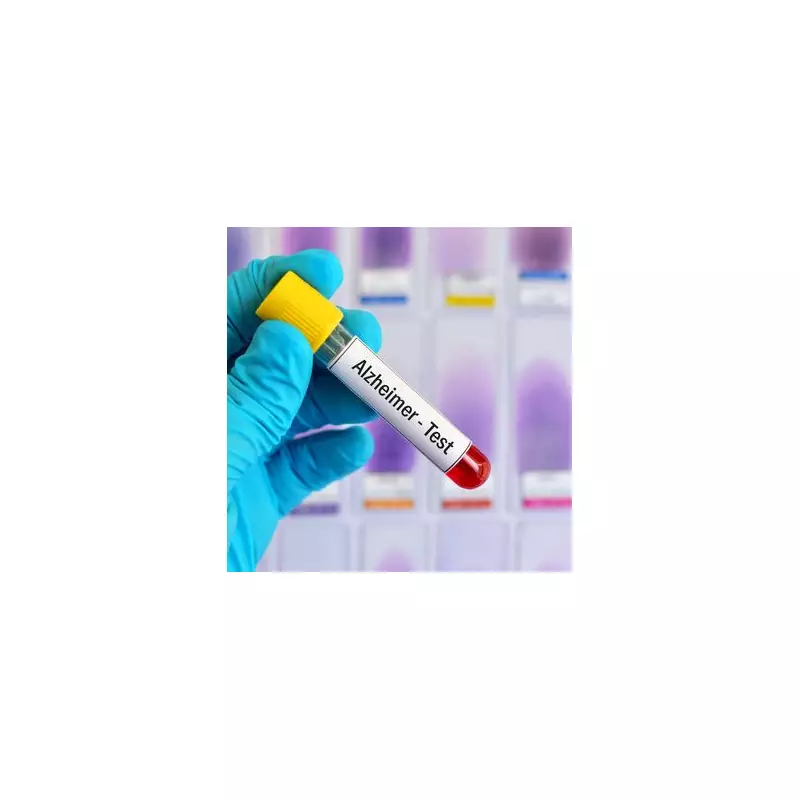
A revolutionary finger-prick blood test for Alzheimer's disease is now a major focus of an international research project, offering hope for a dramatically simpler and faster diagnostic process.
The Global Trial and Its Goals
The ambitious study, known as the Global Alzheimer’s Platform Foundation (GAP) Bio-Hermes-002 study, is backed by the not-for-profit medical research organisation LifeArc. It aims to validate a test that checks for three specific proteins in the blood associated with Alzheimer's. The trial has already enrolled 883 of the targeted 1,000 volunteers from 25 sites across the UK, USA, and Canada, including individuals with no symptoms, those with mild cognitive impairment, and some with mild to moderate Alzheimer's.
Dr Giovanna Lalli, Director of Strategy and Operations at LifeArc, highlighted the progress: “Over the last five years, there has been substantial progress in identifying blood-based biomarkers to identify people at high risk of developing Alzheimer’s disease before their symptoms present.” The finger-prick method would use a plasma separation card, making it a potentially accessible and cost-effective tool for widespread use.

Replacing Invasive Current Methods
If successful, this new test would represent a seismic shift from current diagnostic standards. At present, confirming Alzheimer's often requires complex and sometimes invasive procedures such as:
- Specialised brain scans (the current 'gold standard').
- Lumbar punctures (spinal taps) to analyse cerebrospinal fluid.
The proposed blood test would be far easier for patients to undergo, potentially enabling much earlier intervention. John Dwyer, President of GAP, stated that using a simple blood test has the potential to revolutionise diagnosis.
The Path Forward and Wider Impact
Scientists on the project, including Prof Henrik Zetterberg from the UK Dementia Research Institute, will rigorously compare the blood test results against the current gold-standard techniques. “If successful, being able to diagnose Alzheimer’s with a minimally invasive, cost-effective method will revolutionise diagnostics in this area,” Prof Zetterberg said.
The trial is expected to be completed in 2028. Its success could be transformative for the estimated 944,000 people in the UK living with dementia, about 60% of whom have Alzheimer's. In the US, that figure is closer to seven million. Earlier and easier diagnosis is seen as crucial for allowing patients to access new generation drugs designed to slow disease progression in its early stages.
The need for such innovation is underscored by recent data from Alzheimer's Research UK, which found that 74,261 people died from dementia in 2022, making it the country's biggest killer.






