Gates Foundation and OpenAI Forge $50 Million Partnership to Bolster African Healthcare with AI
The Bill & Melinda Gates Foundation and artificial intelligence leader OpenAI have announced a major new $50 million (£37 million) collaborative venture. Named Horizon1000, the partnership is specifically designed to assist several African nations in harnessing artificial intelligence to strengthen their health systems. This initiative comes as a direct response to mitigate the severe impact of recent international aid reductions.
A Lifeline Against Reversing Progress
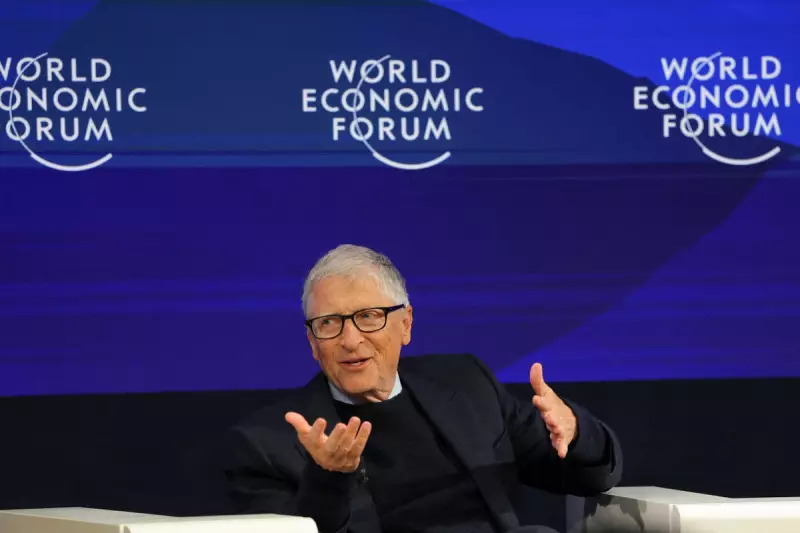
Bill Gates, in a blog post announcing the launch, emphasised the critical timing of the project. "In poorer countries with enormous health worker shortages and lack of health systems infrastructure, AI can be a gamechanger in expanding access to quality care," he stated. Speaking to Reuters at the World Economic Forum in Davos, Gates warned that AI has the potential to help the world recover its footing after a devastating setback.
This setback was highlighted in a Gates Foundation report published in December, which projected a tragic reversal in a decades-long trend. For the first time since the year 2000, the number of preventable child deaths globally is expected to rise in 2025, with an estimated 4.8 million deaths compared to 4.6 million the previous year. Mark Suzman, CEO of the Gates Foundation, attributed this dire shift primarily to cuts in international development assistance.

"By far, the largest single cause of death is the cuts in international aid," Suzman told The Independent. "When you pull back at short notice, that has consequences, and sadly those consequences are measured in human lives." The report further projected that if health funding decreases by 20 per cent, an additional 12 million children could die by 2045.
Global Aid Cuts Create an Urgent Void
The context for this initiative is a sharp global contraction in development assistance for health. The Gates Foundation estimates this funding fell by nearly 27 per cent last year compared to 2024. These cuts have been driven by policy shifts in several nations, most notably the United States under former President Donald Trump, who froze and later slashed foreign aid budgets.
The United Kingdom has also significantly reduced its global development spending, with plans to shrink the budget by 40 per cent. This has forced the Foreign, Commonwealth and Development Office (FCDO) to prioritise core international funds, which have themselves faced reductions.
How Horizon1000 Aims to Transform Care
The Horizon1000 initiative will begin its work in Rwanda, which last year established an AI health hub in its capital, Kigali. The partnership plans to collaborate closely with African leaders to identify the most effective applications for AI technology within their specific health contexts.
The ambitious goal is to reach 1,000 primary health clinics and their surrounding communities across multiple African countries by 2028. This is particularly vital in regions where doctor-to-patient ratios are critically low, sometimes as sparse as one physician per 50,000 people in urban areas.
Paula Ingabire, Rwanda's Minister of Information and Communications Technology and Innovation, outlined the vision in a video statement: "It is about using AI responsibly to reduce the burden on healthcare workers, to improve the quality of care, and to reach more patients."
Gates detailed practical applications for the technology, focusing initially on supporting pregnant women and HIV patients. AI could provide pre-clinic advice, especially overcoming language barriers between patients and providers. Upon arrival at a clinic, AI systems would streamline administrative tasks, link patient histories, and manage appointments more efficiently.
"A typical visit, we think, can be about twice as fast and much better quality," Gates told Reuters. He expressed a firm commitment to equity in technological advancement, adding, "Our commitment is that that revolution will at least happen in the poor countries as quickly as it happens in the rich countries."

By leveraging innovation, the Gates Foundation and OpenAI believe they can help counteract the damaging effects of aid cuts and put global health progress back on a positive trajectory.