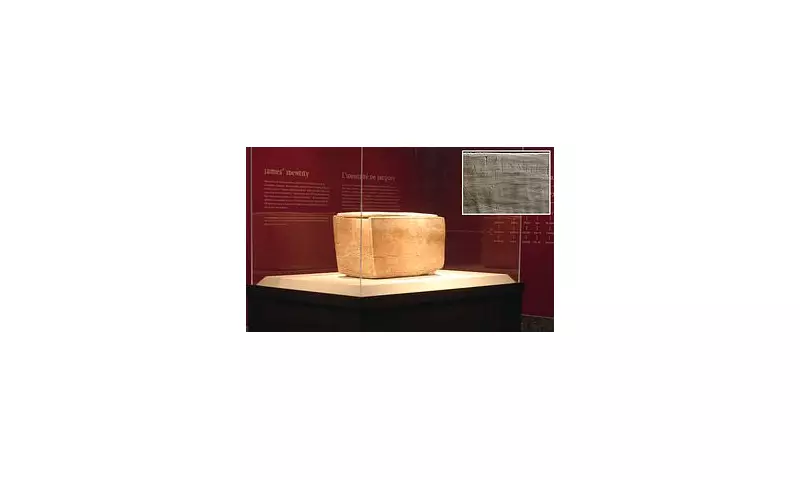
A first-century limestone burial box, known as the James Ossuary, has been labelled by some experts as potentially the most significant artefact ever discovered from the time of Jesus Christ. This 2,000-year-old relic sparked a global sensation in 2002 when it was displayed in Washington, promoted as the first possible physical evidence of Jesus's historical existence.
The Inscription That Shook the World
The ossuary's profound fame stems from a simple Aramaic inscription carved into its side: 'Ya'akov bar Yosef achui de Yeshua'. This translates directly to 'James, son of Joseph, brother of Jesus'. Given that these names correspond precisely to the family of Jesus of Nazareth—his brother James the Just and his father Joseph—many have speculated the box once contained the bones of James, the first leader of the Jerusalem church after the crucifixion.
Archaeologist Bryan Windle told the Daily Mail that the inscription 'has caused ripples worldwide', fuelling intense scholarly debate. The central controversy hinges on whether the latter part, 'brother of Jesus', is authentic or a later addition. 'In my view, the evidence suggests the James Ossuary is a legitimate first-century CE bone box and that the entire inscription is authentic,' Windle stated.

While most archaeologists agree the box itself is genuine and dates from the correct period, opinions on the inscription are sharply divided. The key evidence lies in whether the lettering and the ageing patina are consistent across the entire inscription.
A Controversial Provenance and a Landmark Trial
The James Ossuary was not uncovered in a controlled archaeological dig. It surfaced on the antiquities market in the 1970s, with its exact original find spot unknown, though it likely came from a tomb in the Jerusalem area or the West Bank.
Controversy erupted in 2003 when its owner, Israeli antiquities dealer Oded Golan, was accused of forging the inscription and artificially ageing it. The Israeli Antiquities Authority (IAA) declared the ossuary a forgery on 18 June 2003. Golan faced a lengthy trial but was ultimately acquitted of the major forgery charges, convicted only on lesser offences.
Following the verdict, Golan declared, 'The hot-air balloon released by the prosecution and the IAA has finally popped.' However, the presiding judge carefully noted that the acquittal 'does not mean that the inscription on the ossuary is authentic or that it was written 2,000 years ago.'
Modern Analysis and the Talpiot Tomb Theory
Despite the IAA's position, later analyses have supported the artefact's authenticity. A breakage during shipping to the Royal Ontario Museum in 2003 allowed for closer study. Edward J. Keall, former Senior Curator at the museum, argued that examination showed part of the inscription had been over-cleaned with a sharp tool, explaining differences in appearance.
Windle points to modern testing: 'Claims that the latter part of the inscription was added later have been undermined by further testing that demonstrates the presence of ancient patina in letters in both portions.'
Some researchers have proposed a tantalising theory: that the James Ossuary is the missing tenth ossuary from the Talpiot tomb, discovered in Jerusalem in 1980, which contained inscriptions naming Jesus, Mary, and Joseph. This would directly link it to Jesus's family. However, this idea is largely rejected by archaeologists due to stylistic and dimensional differences with the other Talpiot boxes.
The debate continues to engage scholars, collectors, and the public. Windle concludes firmly: 'In summary, I believe the ossuary once held the bones of James, who was known in the first century as the 'brother of Jesus.'' Whether definitive proof will ever be found, the James Ossuary remains one of archaeology's most captivating and contentious relics.