

A chilling new archaeological study suggests that Neanderthal children and young women were systematically butchered and consumed by cannibals in what is now Belgium some 45,000 years ago. The research points to a deliberate, violent selection of victims from outside the local group, raising profound questions about conflict and survival at the dawn of human history.
A Grisly Discovery in the Goyet Caves
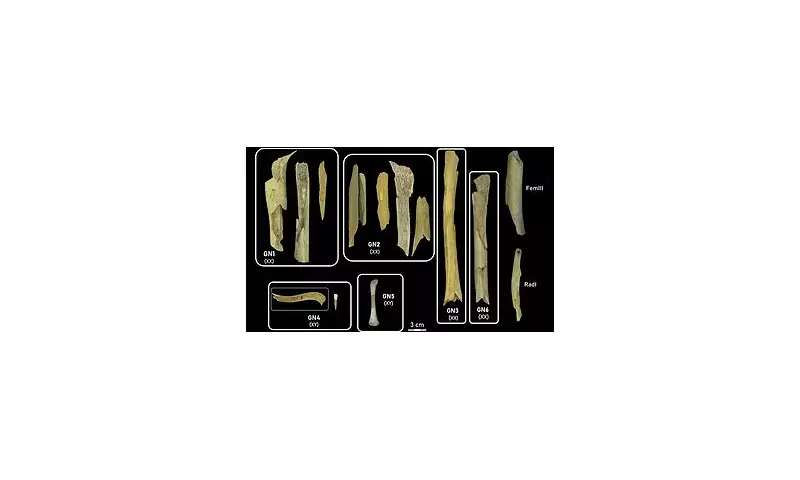
The evidence comes from the Goyet caves in Belgium, a site first excavated in the 19th century which holds northern Europe's most significant collection of Neanderthal remains. A fresh analysis of bones unearthed there has confirmed a horrifying reality: cannibalism was practised on at least six individuals.
Researchers from the French National Centre for Scientific Research and the Royal Belgian Institute of Natural Sciences led the investigation. They combined genetics, isotope analysis, and detailed morphological study to build a biological portrait of the victims. The team found that the demographic profile was anything but random. The four adult or adolescent victims were all women, of small stature around 1.5 metres tall, who were not from the local area. Alongside them were the remains of two male children—one infant and one child aged between 6.5 and 12.5 years old.

Evidence of Deliberate Butchery and Consumption
The bones, primarily from the lower limbs, tell a brutal story. They bear clear cut marks, notches, and circular impacts made to break the bones and extract the highly calorific marrow. This indicates the bodies were processed for consumption. "The composition – women and children, without adult men – cannot be coincidental: it reflects a deliberate selection of victims by the cannibals," stated Dr Isabelle Crevecoeur, a research director involved in the study.
This practice is identified as "exocannibalism"—the consumption of individuals from external groups. The fact that the women and children came from elsewhere suggests they were brought to the Goyet site specifically for this purpose. The researchers noted that similar behaviour is observed in chimpanzees, often to weaken a rival population or assert territorial dominance.
Who Were the Cannibals? Neanderthal vs. Homo Sapiens
The million-year-old question remains: who committed these acts? The study, published in Scientific Reports, presents two compelling hypotheses. The first, and more sensational, is that the cannibals could have been early Homo sapiens preying on rival Neanderthals. While Homo sapiens are not definitively documented in that exact region at that time, evidence places them roughly 600 kilometres to the east in Germany around the same period.
However, the authors lean towards a second, perhaps likelier explanation: conflict between Neanderthal groups. "We cannot rule out that the cannibals were Homo sapiens, but we rather think they were Neanderthals," said Patrick Semal, a co-author of the study. Supporting this is the discovery that some of the fragmented bones were used to retouch stone tools—a practice mainly associated with Neanderthal culture.
"The Goyet site provides food for thought," Semal added. "The results indicate possible conflicts between groups at the end of the Middle Paleolithic, a period when Neanderthal groups were dwindling and Homo sapiens was in full expansion in Northern Europe."
This grim window into the past challenges simple narratives of prehistoric life. It suggests that inter-group violence and strategic terror, including the targeting of the most vulnerable, may have been a feature of the struggle for survival as one branch of humanity faded and another rose to dominance. The study adds a dark, complex layer to our understanding of Neanderthal extinction and the turbulent crossroads where two human species met.






