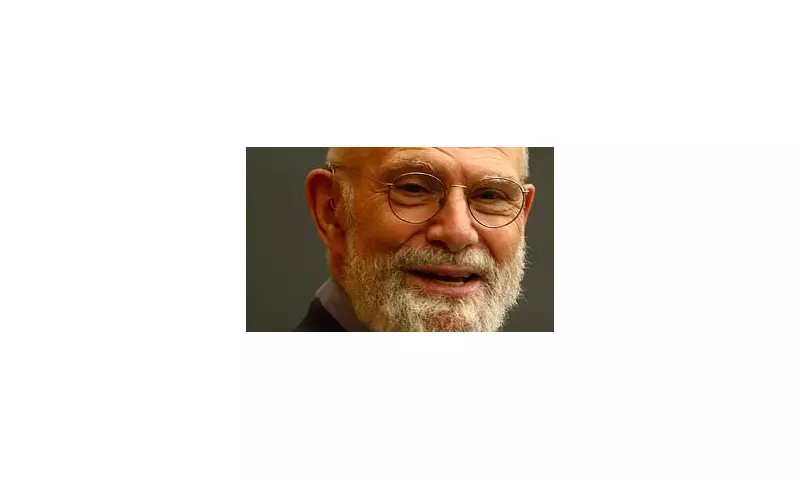
The revered legacy of British neurologist and author Oliver Sacks has been thrown into serious doubt following a damning investigation which reveals he fabricated key details about his patients in his celebrated works.
The Poet Laureate of Medicine's Fall from Grace
Upon his death from terminal cancer in 2015 at the age of 82, Oliver Sacks was globally venerated as the 'Poet Laureate of contemporary medicine'. His bestselling books, including Awakenings and The Man Who Mistook His Wife For A Hat, were praised for revealing the humanity and inner lives of people with severe neurological disorders. These works were adapted into successful films, plays, and operas, cementing his status as a unique voice who bridged science and literature.
Sacks, who moved from Britain to the United States in 1960, cultivated an image as an unconventional figure—a bodybuilding, drug-experimenting neurologist who once rode with the Hells Angels. He was celebrated for giving a voice to those with conditions like Tourette's syndrome, profound memory loss, and encephalitis lethargica (sleeping sickness), where other doctors had failed.

Unravelling a Web of 'Fairy Tales' and Fabrications
However, an investigation by The New Yorker magazine, for which Sacks himself often reported, has uncovered that the core case studies in his books were heavily embellished. The magazine, granted access to Sacks's vast private correspondence by the Oliver Sacks Foundation, found he 'reshaped patients' reality' and inserted pure inventions.
In his private diaries, Sacks expressed guilt over his deceptions, describing a 'sense of hideous criminality'. He admitted to giving patients 'powers (starting with powers of speech) which they do not have' and labelled some details as 'pure fabrications'. He defended his actions not as a quest for fame but as a form of 'self-therapy' or 'a sort of autobiography'.
Specific Cases of Embellishment
The investigation provides concrete examples of these fabrications by comparing his private writings with his published accounts:
In The Man Who Mistook His Wife For A Hat, Sacks wrote of autistic twins who could recite endless prime numbers—a feat no other researcher witnessed. It was later revealed this was a skill Sacks himself possessed as a child. Furthermore, the wife of the patient who inspired the book's title privately disagreed with Sacks's dramatic depiction of her husband's actions.
In his 1973 masterpiece Awakenings, about reviving sleeping sickness patients with L-dopa, Sacks quoted a patient named Leonard L comparing himself to the caged panther in a poem by Rainer Maria Rilke. In truth, Sacks had repeatedly used that same phrase in letters to friends to describe his own feelings of being trapped while writing. Leonard's own memoirs, written after treatment, revealed he was not the cultivated intellectual Sacks portrayed but a man who boasted of committing rape—a fact Sacks entirely omitted.
Another patient in Awakenings was quoted saying the drug made her feel like 'My blood is champagne'—a lyrical phrase Sacks had previously used to describe a love affair in his own life.
Reactions and a Damaged Legacy
These revelations will shock the millions of admirers, particularly on the political Left, who revered Sacks for his empathy towards marginalised people. While some may argue the 'wider point about the resilience of the human spirit' remains valid, his scientific credibility is now severely compromised.
Fellow neurologists who had long been sceptical, complaining they could not replicate his findings and suggesting he was 'a better writer than a clinician', may feel vindicated. Critics are now likely to demand his works be moved to the fiction shelves.
The investigation paints a portrait of a complex, troubled genius who blurred the lines between witness, writer, and subject, ultimately constructing powerful narratives at the cost of factual truth. The legacy of Oliver Sacks, once a beacon of medical humanity, now bears the indelible stain of deception.