

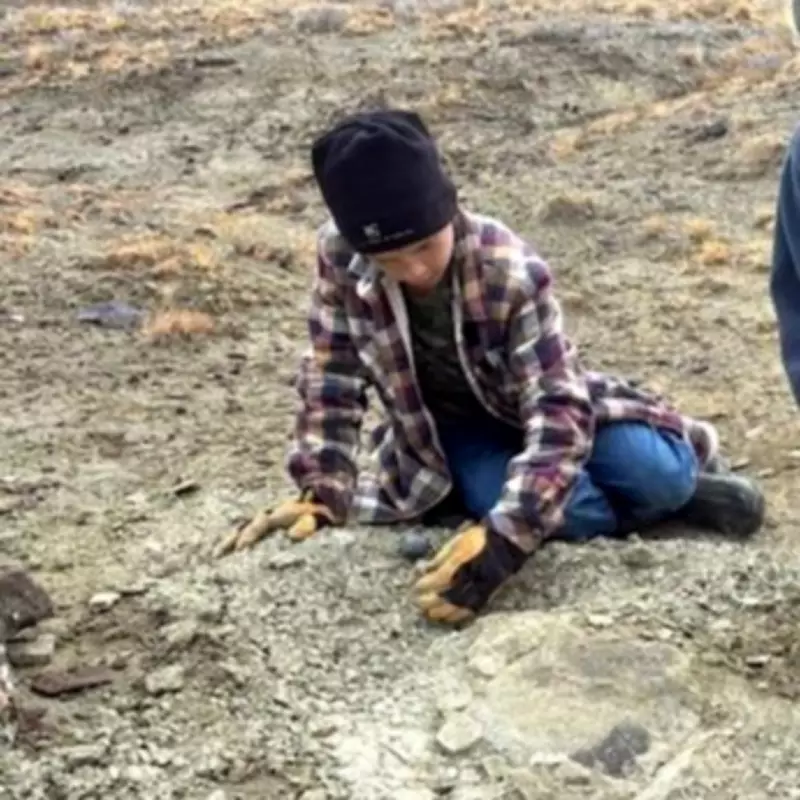
Schoolboy's Historic Fossil Discovery Stuns Scientific Community
An 11-year-old schoolboy has made a once-in-a-lifetime palaeontological discovery during a routine family outing with his grandparents in Wyoming, United States. Touren Pope's astonishing find of a near-perfect 48-million-year-old fossilised turtle shell has sent shockwaves through the scientific community and transformed a simple autumn exploration into a landmark historical moment.
The Moment of Discovery
While exploring public land in Wyoming last autumn, young Touren noticed something unusual that didn't quite fit with the surrounding landscape. What initially appeared as an oddity turned out to be a remarkably well-preserved soft-shell turtle fossil that had remained buried for approximately 48 million years. The discovery immediately elevated what began as a family outing into a significant scientific event for the entire region.
Touren's mother, Tessa Patterson, expressed her astonishment when she received photographic evidence of the find from her parents. "It blew all of our minds," she told Wyoming Public Media. "We're like 'What is this?'" The family demonstrated remarkable responsibility by immediately reporting their discovery to the Bureau of Land Management (BLM), triggering a professional investigation of the site.

Expert Excavation and Preservation
JP Cavigelli, museum collections specialist at the Tate Geological Museum in Casper, Wyoming, volunteered to lead the excavation efforts. "Within a few minutes we could tell it was a pretty complete turtle shell and worth collecting," Cavigelli reported. The fossil was carefully excavated, stabilised, and transported to the museum where it is currently being cleaned for research purposes and prepared for future public exhibition.
Officials from the Bureau of Land Management praised Touren's exceptional observational skills and quick decision-making in alerting authorities. A BLM spokesperson emphasised: "This discovery would not have been possible without Touren's keen observation for fossils and his decision to report the fossil to the BLM."
Scientific Significance and Historical Context
The crystallised turtle shell serves as a remarkable hinge between modern times and ancient history in southwest Wyoming. The preservation of this soft-shelled turtle offers scientists a rare glimpse into the once-tropical floodplain of what is now the arid Greater Green River Basin, revealing insights about the sea creatures that once inhabited its rivers and streams.
Craig Thomas, archaeologist and paleontology field coordinator for the BLM Rock Springs Field Office, explained the importance of timely discovery: "If we don't find them in time, they tend to denigrate rapidly when they reach the surface." Thomas emphasised that Touren's alertness helped save this rare specimen from potential damage due to exposure to the elements.
Public Recognition and Naming Rights
The Bureau of Land Management highlighted how this discovery underscores the vital role the public plays in protecting and responsibly reporting scientific resources found on public lands. In a final gesture of gratitude for his contribution to palaeontology, the BLM granted Touren the honour of naming the fossil.
At approximately 48 million years old, the prehistoric reptile has now been christened "Little Timmy" by its young discoverer. Touren was even able to assist with the excavation efforts and help transport the precious specimen safely, creating memories that will undoubtedly last a lifetime.
This extraordinary discovery not only preserves an important piece of Wyoming's paleontological history but also serves as an inspiring example of how curiosity and responsibility can lead to significant scientific contributions, regardless of age.






