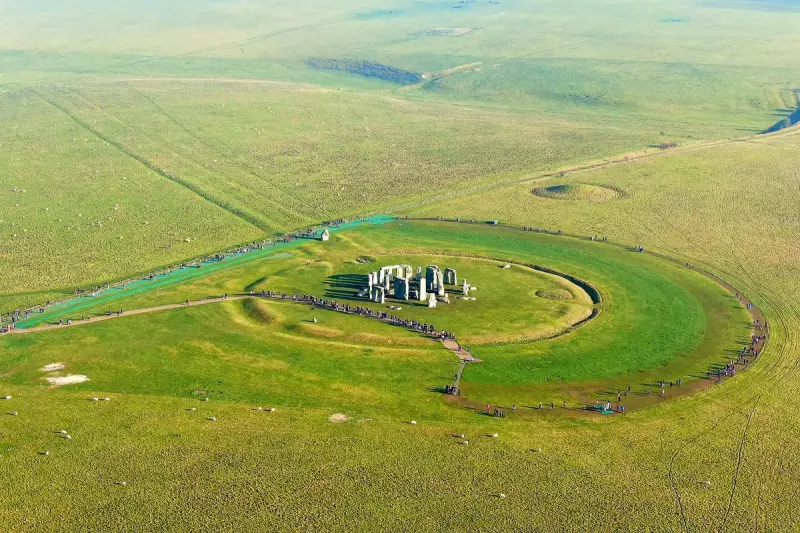
A new scientific investigation has cast significant doubt on the long-standing glacial transport theory regarding the origins of Stonehenge's iconic stones. For decades, it was widely believed that ancient glaciers naturally moved these massive bluestones from Wales and Scotland to Salisbury Plain. However, this latest research, employing advanced mineral fingerprinting techniques, provides compelling evidence to the contrary.
Cutting-Edge Mineral Analysis
Researchers utilised state-of-the-art U-Pb dating methods on zircon and apatite grains collected from rivers in the vicinity of Stonehenge. This approach allowed them to trace the geological origins of the sediment with unprecedented precision. By analysing over 700 mineral grains, the team sought to identify matches with known bluestone sources in Wales and the Altar Stone's Scottish origin.
Surprising Findings
The results were striking: virtually none of the zircon or apatite ages corresponded with the expected sources if glaciers had transported the stones. Instead, the zircon ages aligned closely with local sedimentary rocks, while the apatite ages reflected regional geological events, such as the Alpine mountain-building period. This indicates that these minerals have local origins, rather than being imported by glacial activity.

These findings offer clear evidence that glacial material never reached the Stonehenge area, effectively debunking the glacial transport theory. The study reinforces the belief that the monument's exotic stones were deliberately selected and transported by ancient human societies, highlighting their remarkable engineering and logistical capabilities.
This research not only challenges previous assumptions but also opens new avenues for understanding the cultural and technological achievements of Neolithic communities in Britain.