

Cambridge Archaeology Students Unearth Viking Age Mass Grave with Startling Discoveries
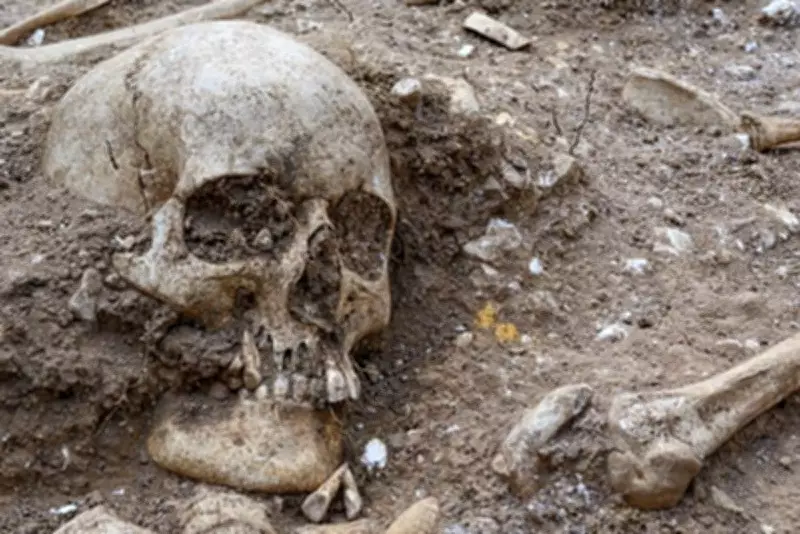
A group of Cambridge University archaeology students participating in a training excavation have made a remarkable discovery on the outskirts of Cambridge: a Viking-era mass grave containing the remains of ten individuals, including an "extremely tall" young man who appears to have undergone ancient brain surgery. The pit, measuring approximately 13 feet by 3.2 feet, was found to contain both fully articulated skeletons and dismembered remains, suggesting a complex and violent history dating back to the 9th century AD.
The 'Extremely Tall' Individual and Evidence of Ancient Medical Intervention
Among the most striking finds was the skeleton of a man measuring 6 feet 5 inches in height—exceptionally tall for the period when average height in the region was around 5 feet 6 inches. Archaeologists estimate this individual was between 17 and 24 years old at the time of death. Evidence suggests he may have suffered from a hormone-related growth condition such as gigantism, potentially caused by a pituitary gland tumor.
Most remarkably, scientists discovered a large oval hole approximately one inch in diameter in his skull, indicating he underwent trepanation—an ancient surgical procedure where a hole is bored through the living human skull. "The individual may have had a tumor that affected their pituitary gland and caused an excess of growth hormones," explained archaeologist Trish Biers from the University of Cambridge. "Such a condition in the brain would have led to increased pressure in the skull, causing headaches that the trepanning may have been an attempt to alleviate."

Violent Deaths and Execution Evidence in the Mass Burial
The mass grave presents a puzzling mixture of burial practices. While four complete skeletons were found, some in positions suggesting they were tied up, other remains showed clear evidence of dismemberment and violence. One man appears to have been "clearly beheaded" based on chop marks near the jaw, while other skeletons display trauma consistent with combat injuries.
Archaeologists discovered a cluster of skulls and a stack of legs among the disarticulated remains. "It may be that some of the disarticulated body parts had previously been displayed as trophies, and were then gathered up and interred with the executed or otherwise slaughtered individuals," suggested Dr. Oscar Aldred, director of the Cambridge Archaeological Unit (CAU).
The researchers are uncertain whether these individuals were battle casualties or victims of deliberate execution. "Those buried could have been recipients of corporal punishment, and that may be connected to Wandlebury as a sacred or well-known meeting place," Dr. Aldred added, referring to the site owned by local charity Cambridge Past, Present and Future.
Historical Context: Frontier Zone During Saxon-Viking Conflicts
The discovery provides valuable insights into the turbulent period of English history during the late 9th century. Around 870 AD, the Cambridge area existed as a "frontier zone" in the ongoing conflict between the Saxon-run kingdom of Mercia and the kingdom of East Anglia. During this time, a Viking army established a camp near the region and sacked the town of Cambridge.
"Cambridgeshire was a frontier zone between Mercia and East Anglia, and the continual wars between Saxons and Vikings as they clashed over territory across many decades," Dr. Aldred noted. "We suspect the pit may relate to these conflicts." While Cambridge was under Mercian control in the late 8th century, the political landscape shifted dramatically with Viking incursions in the following century.
Educational Significance and Archaeological Collaboration
The training dig formed part of Cambridge University's undergraduate archaeology degree program, conducted in collaboration with the Cambridge Archaeological Unit and the local charity Cambridge Past, Present and Future. This partnership highlights the importance of hands-on field experience in archaeological education while contributing to our understanding of England's early medieval history.

The discovery of the mass grave near Cambridge offers multiple layers of historical significance—from medical practices and physical abnormalities in the Viking Age to the violent realities of territorial conflicts between Saxon kingdoms and Viking invaders. As analysis continues, researchers hope to uncover more details about these individuals' lives, deaths, and the society that buried them in this collective grave.





