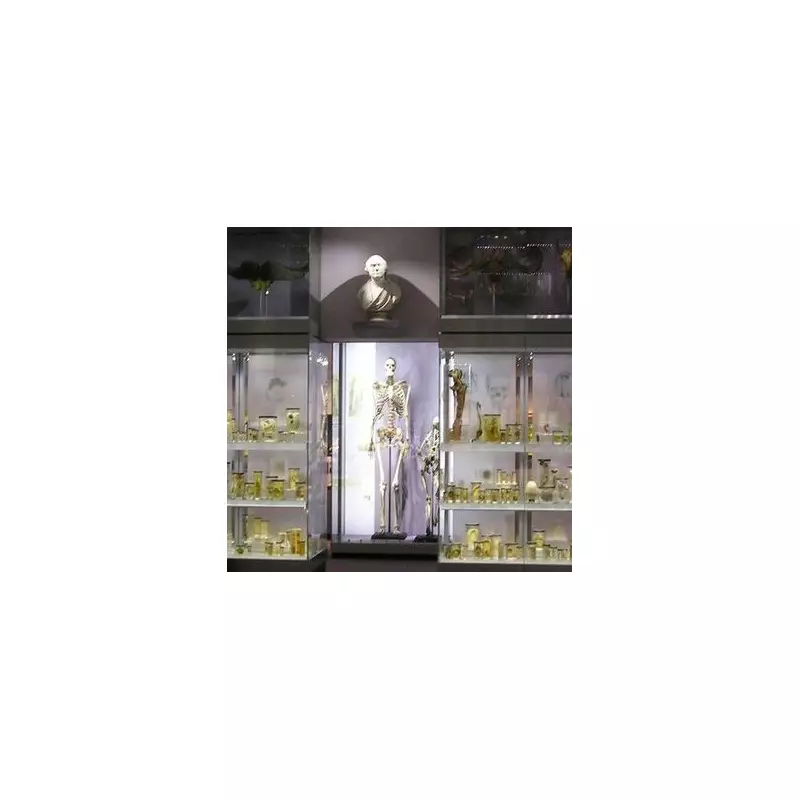
Behind the grand facade of a 200-year-old London building lies one of the UK's most confronting and historically significant medical collections, which issues a direct caution to potential guests.
A Collection Designed to Fascinate and Shock
Located within the historic Royal College of Surgeons building in a leafy Georgian square, the Hunterian Museum is a free-to-visit attraction dedicated to anatomical science. Its galleries are lined with floor-to-ceiling shelves, crammed with jars containing thousands of preserved specimens, most sourced from the animal kingdom.
However, the museum's most controversial exhibits are its human remains, which include foetuses and other anatomical preparations. The institution openly acknowledges that viewing such material can evoke powerful and difficult emotions, making the experience unsuitable for sensitive visitors.

A clear warning on the museum's website advises: "Visitors should consider whether visiting the Hunterian is right for them." It also requests that people refrain from photographing human remains or sharing such images on social media, recognising the complex history of consent surrounding many older specimens.
Contentious History and Macabre Artefacts
For over two centuries, the museum displayed the skeleton of Charles Byrne, a man who stood roughly 7 feet 7 inches tall. Despite Byrne's dying wish to be buried at sea to avoid body snatchers, his skeleton was acquired and publicly exhibited. It was only removed from display in 2023 following prolonged ethical campaigns.
The collection, founded in 1799, also includes an array of other arresting items:
- Teeth extracted from soldiers at the Battle of Waterloo.
- A pair of false teeth that belonged to Winston Churchill.
- A severed foot from Britain's first mummy dissection in 1763.
- The Evelyn Tables – some of Europe's oldest anatomical preparations, where human arteries, nerves and veins are dissected and varnished onto wooden slabs.
A Grim Reminder of Medical Progress
Perhaps the most chilling exhibits are the surgical tools used before the advent of anaesthesia. Seeing an 18th-century amputation kit or a period dental set starkly illustrates the terror of early surgery and underscores the advances of modern medicine.
The museum states it recognises "the debt owed to those people - named and unnamed - who in life and death have helped to advance medical knowledge." It operates as both a monument to medical pioneers and a challenging educational resource.
The Hunterian Museum is open from Tuesday to Saturday, 10am to 5pm. While entry is free, booking a slot online is recommended due to popularity.