For many people, leaving the house is a simple daily routine, but for journalist Matilda Boseley, it became a mission requiring strategic planning and clever systems. After years of struggling with forgotten items, missed medications, and last-minute dashes, she developed an innovative solution that transformed her daily life.
The ADHD Challenge: More Than Just Forgetfulness
Boseley describes spending up to 25 minutes searching for essentials like her wallet, sunglasses, and work pass, often missing trains and arriving with nearly-dead phone batteries. The medication she needed to take would remain untouched on the kitchen counter while she rushed out the door.
While she acknowledges her attention deficit hyperactivity disorder (ADHD) plays a role, she emphasises that remembering numerous items simultaneously challenges anyone, particularly when stressed or rushing. Rather than continuing to criticise herself for these struggles, she adopted a new approach: working with her brain's needs instead of against them.
Building Better Systems: From Checklists to Survival Pouches
Boseley implemented multiple organisational systems throughout her home, including a checklist of essentials taped to her door, a dedicated charging station for power banks near her sunglasses, and a wall-mounted brochure holder for important documents. She even designated a specific corner for her bag to prevent it from disappearing into what she calls "the abyss" of her home.
However, these fixed systems couldn't address the smaller, portable items that make daily life smoother. The solution emerged in the form of what she calls her "daily survival pouch" - a compact, transferable kit containing everything she might need while out and about.
Creating Your Ultimate Survival Kit
Boseley recommends a practical method for determining what belongs in your personalised survival pouch. Rather than theoretically listing potential useful items, she suggests gathering everything that might be helpful from around your house into a large temporary pouch.
After carrying this comprehensive collection for several weeks, lay everything out and conduct an audit, keeping only the items you actually used during that period. This realistic approach ensures your final kit contains genuinely useful items rather than hypothetical solutions.
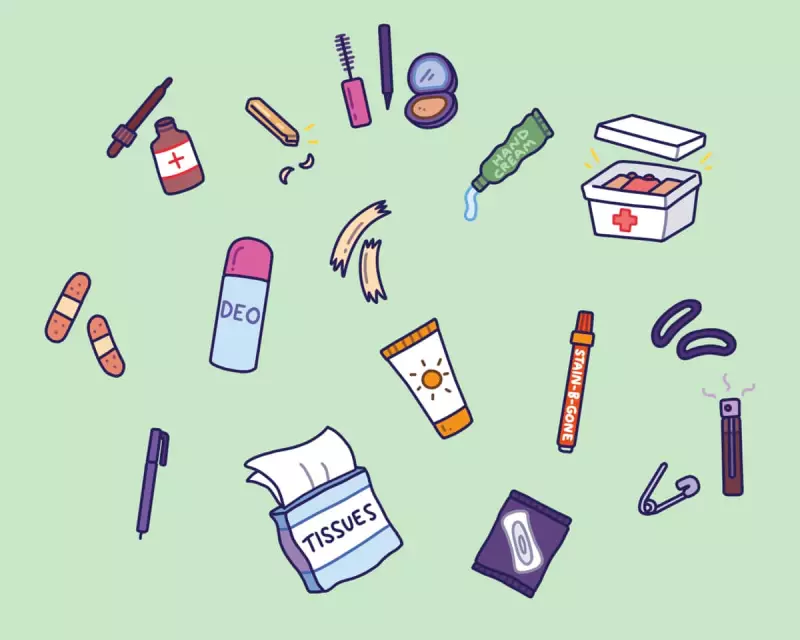
Through this process, Boseley refined her kit to include practical items like a stain-remover pen, silent fidget toy, tissues, antiseptic, Band-Aids, safety pins, nail clippers, fashion tape, feminine hygiene products, basic cosmetics, hair ties, lens-cleaning wipes, and a mini pharmacy containing her daily medications plus painkillers, allergy tablets, cold and flu remedies, throat lozenges, and mints.
Her entire kit weighs just 240 grams and fits into a 23 × 17 cm pouch that she barely notices in her bag. She organises smaller items within a separate pouch-within-a-pouch for easy access.
The Overflow Pouch for Additional Needs
Beyond her daily survival pouch, Boseley maintains an overflow "work pouch" that permanently lives in her work backpack. This contains travel-sized dry shampoo, wet wipes, makeup remover, high-glucose jelly beans for when medication suppresses her appetite, spare underwear, and even a deck of cards for unexpected downtime.
The most rewarding aspect of her system, she notes, is becoming the prepared person who can help others in need. "Now whenever someone says: 'Hey, does anyone have a –', you get to jump in and go: 'Yep, I do,'" she explains. For someone who previously struggled with forgetfulness, this transformation brings immense satisfaction.
These insights come from Boseley's book, The ADHD Brain Buddy, published by Penguin at £34.99, which offers comprehensive strategies for managing ADHD challenges through practical systems and self-acceptance rather than self-criticism.